
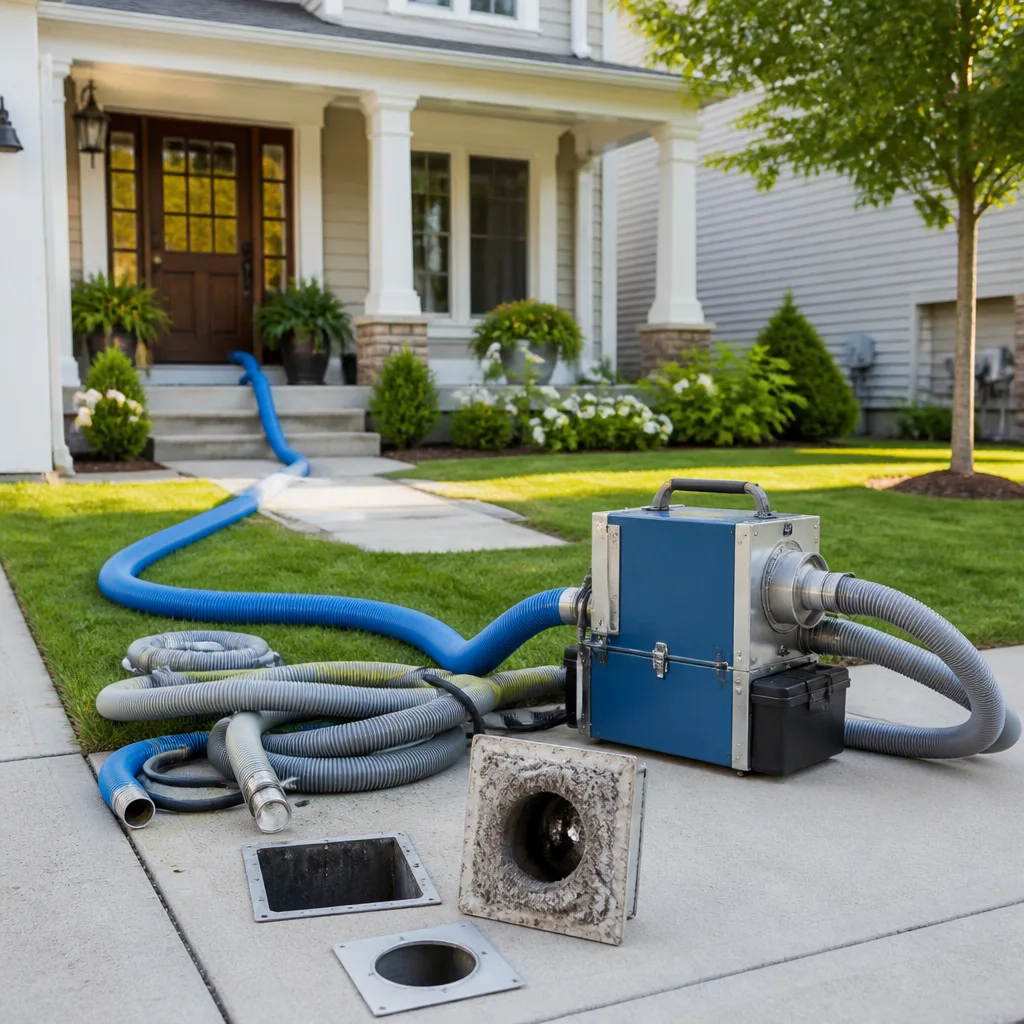
 Whole-home duct cleaning
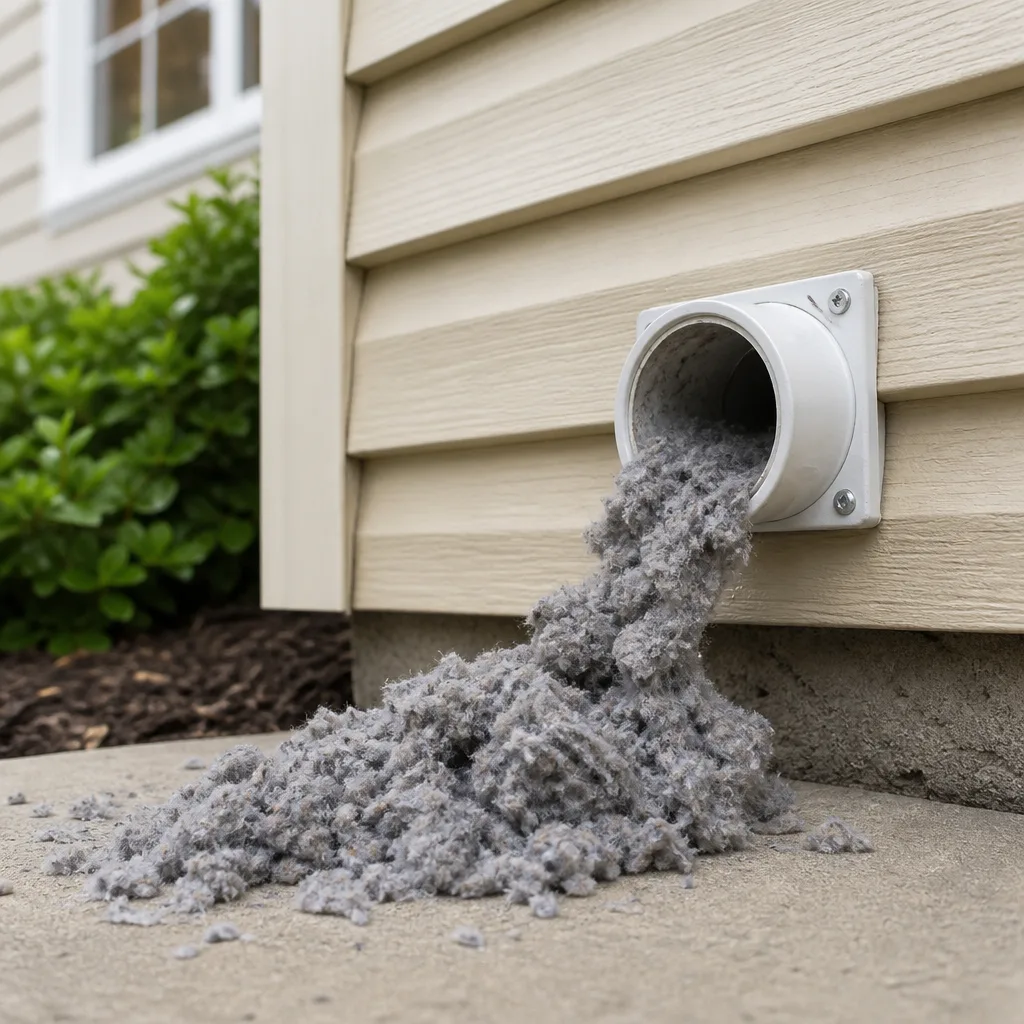 Dryer vent cleaning
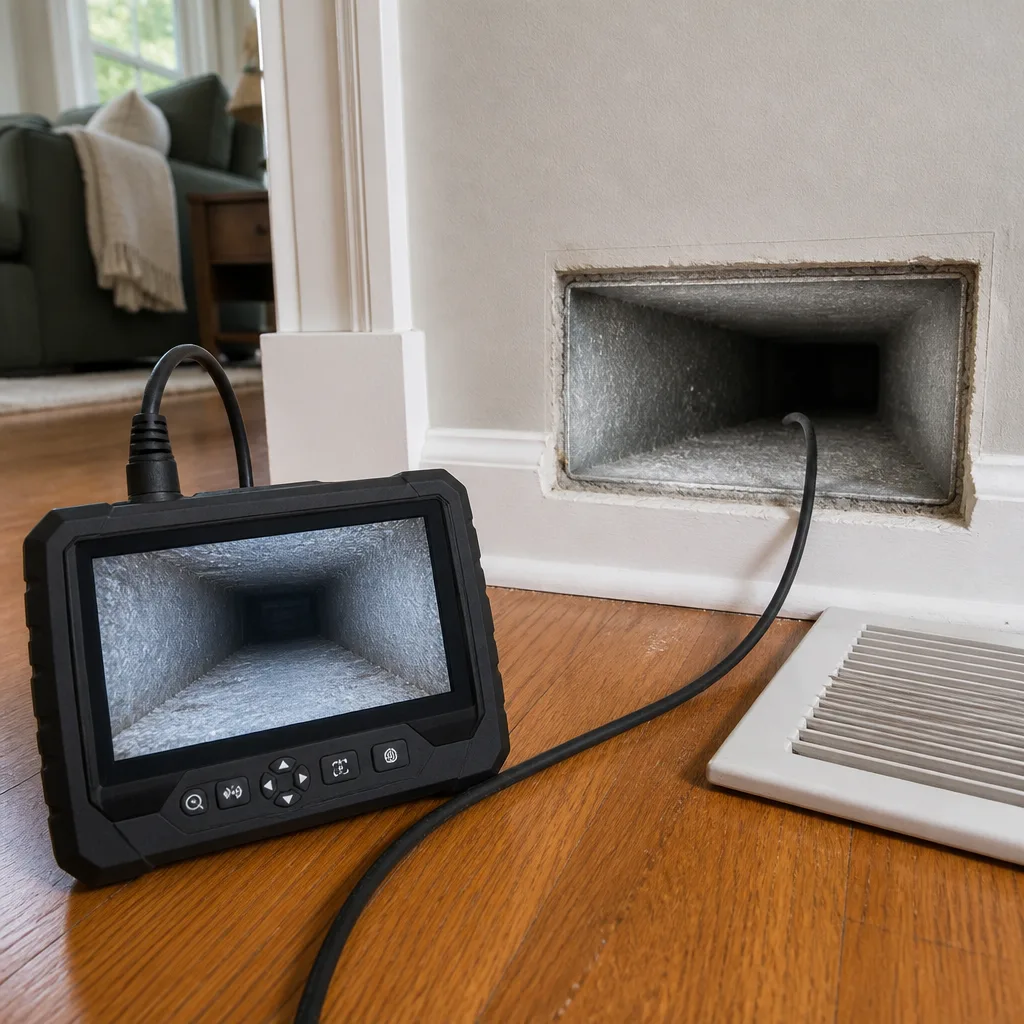 Camera inspection
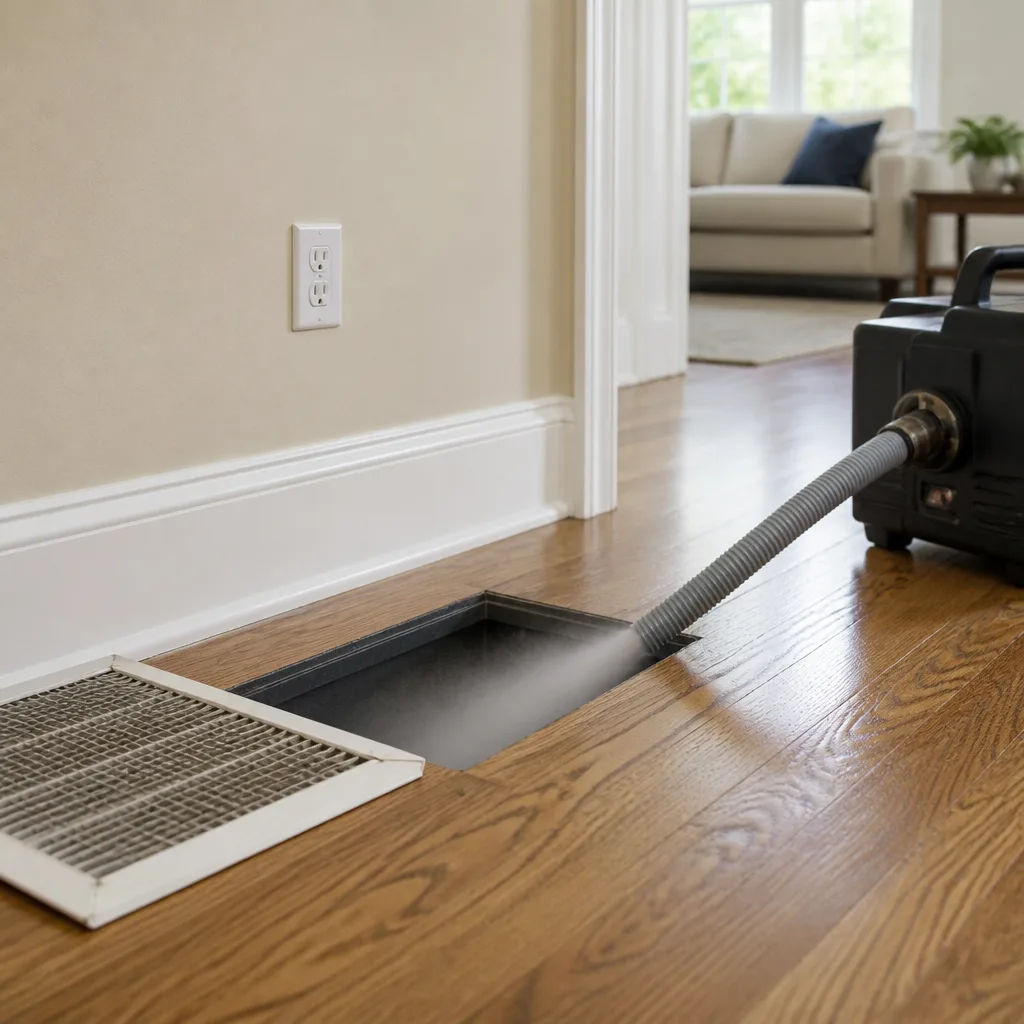 Sanitizing & deodorizing
Whole-system duct and dryer vent check with before-and-after photos - you see exactly what came out of your vents
That "$99 whole-house special" is a bait ad - the real number appears once they are in your hallway, or the "clean" is a shop-vac at the register. We photograph the inside of your ducts before and after instead.
Rotobrush Register & Grille Cleaning: The Dallas Owner’s Guide
If you’re looking for Rotobrush register & grille cleaning in Dallas, here’s the straight answer: we stock Rotobrush-compatible register and grille cleaning tools and brushes, and we can typically have the part matched to your system and installed for between $85 and $190, depending on which Rotobrush model you’re running and whether we’re swapping a brush head, a full register tool, or a complete hose-end assembly. Most Dallas jobs are completed in a single visit. The typical homeowner discovers they need this part when the register brush stops seating into a floor or ceiling register, or when the bristles have worn down far enough that the cleaning pass leaves visible dust behind.
What we see most often in Dallas homes is a register tool that looks fine in the case but performs like it’s tired. The bristles splay outward, the tool no longer spins true against the grille face, and suddenly a pass that used to take two minutes takes five, and still doesn’t pull the film off the louvers. That’s not a cleaning problem. That’s a worn part problem, and it’s a straightforward fix when the right replacement is on hand. Roy Castellanos has been pulling register tools out of service trucks since his days at Los Angeles Trade-Technical College, and the first thing he’ll tell you is this: the part either makes contact correctly or it doesn’t rotate at all. There’s no in-between worth paying for.
Which Rotobrush Models This Applies To
Rotobrush manufactures several rotary brush systems, and the register and grille cleaning tools are not universally interchangeable across every series. The most common units we work on in Dallas are the Rotobrush aiR+ series, the R5000, and the older R2000 units still running in plenty of North Texas homes. If you own an aiR+ or R5000, the register tool we install is typically a direct-match replacement with the standard quick-connect fitting. If you’re on a legacy R2000, the tool head may require an adapter collar, and that’s where a lot of Dallas owners get tripped up buying parts online without realizing the fitting differs.
Here’s the compatibility gotcha we see weekly: the hose-end connection may look identical between two Rotobrush models, but the locking detent position on the R2000 sits a quarter-inch deeper than on the aiR+. You can force it, and we’ve been called out to homes where someone did exactly that, and the tool either wouldn’t release or dropped mid-job. We check the model label on the machine body and the tool shank measurement before we quote anything. As for OEM Rotobrush versus aftermarket, we run OEM when the tool is in active warranty and quality aftermarket equivalents when the unit is older and out of coverage. The material difference matters: OEM register brushes hold their bristle pattern longer, but a well-built aftermarket head at half the price is the right call on a 15-year-old R2000 that’s nearing retirement anyway.
Styles & brands we work with
Signs Your Rotobrush Register & Grille Cleaning Tool Is Failing
- Bristles are flattened or splayed outward. Once the nylon bristles lose their snap-back memory, the tool skates across the register face instead of digging into the louver gaps. This usually shows up after two to three years of regular Dallas use, where fine clay dust acts like sandpaper on synthetic bristles.
- The tool won’t seat fully into the hose-end or quick-connect. This is the detent-wear failure we described above. The spring-loaded ball bearing inside the connector wears a groove, and the tool either pops off mid-pass or locks on and won’t release without pliers.
- You hear a rattling or ticking when the tool rotates. Loose bearing seats inside the tool head make contact noise that telegraphs through the hose. It means the internal race is wearing out, and the tool will eventually bind and stop spinning under load.
- Registers come out streaky after a cleaning pass. If you’re seeing clean stripes alternating with dirty stripes, that’s a bristle-contact failure. The tool is only making partial contact with the grille face because the head is worn unevenly.
- The tool head feels loose on the shank. Thread wear between the head and shank is common on tools that get swapped frequently. Once that thread slop develops, the head wobbles under rotation and chews itself up fast.
Any one of these by itself is enough to justify a replacement. Pushing a failed register tool across 20 registers in a 2,400-square-foot Dallas home just makes the job take longer and leaves the grilles looking worse.
See the difference
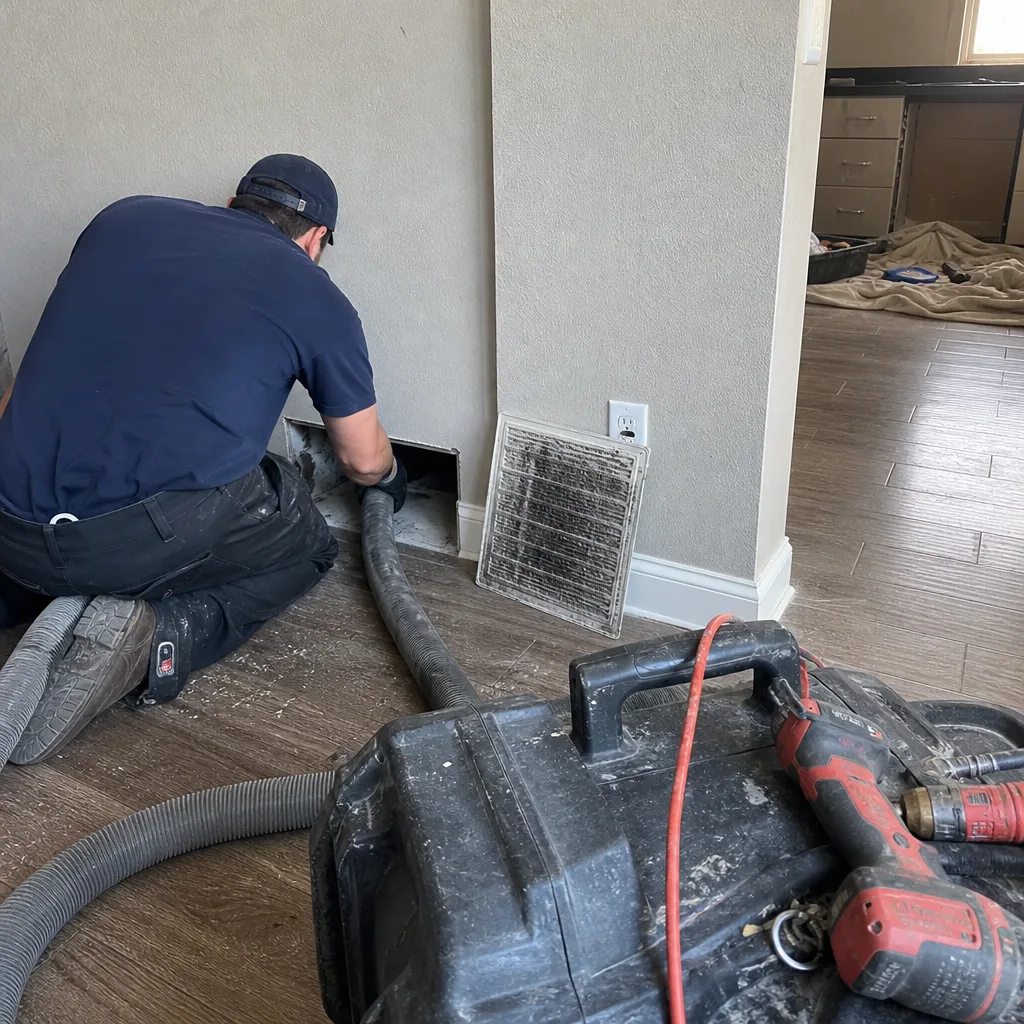 Before
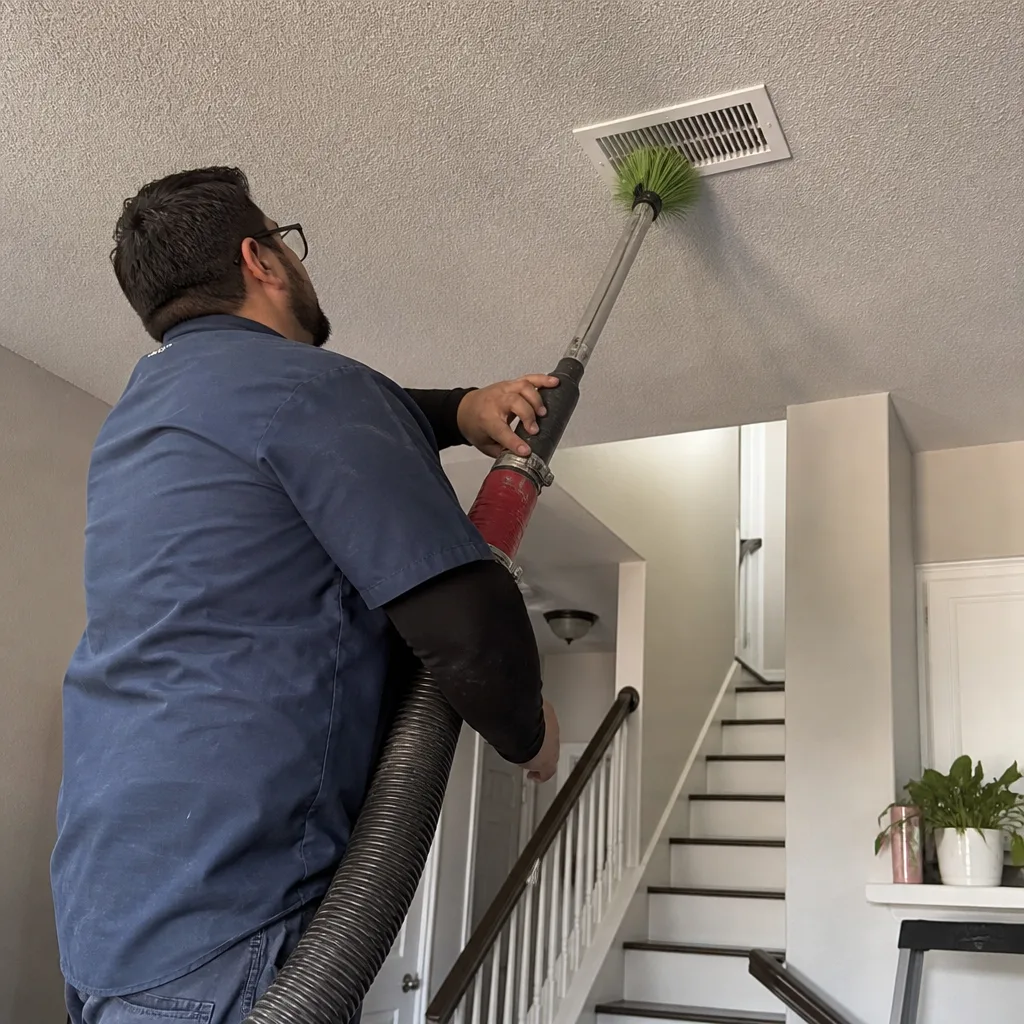 After
After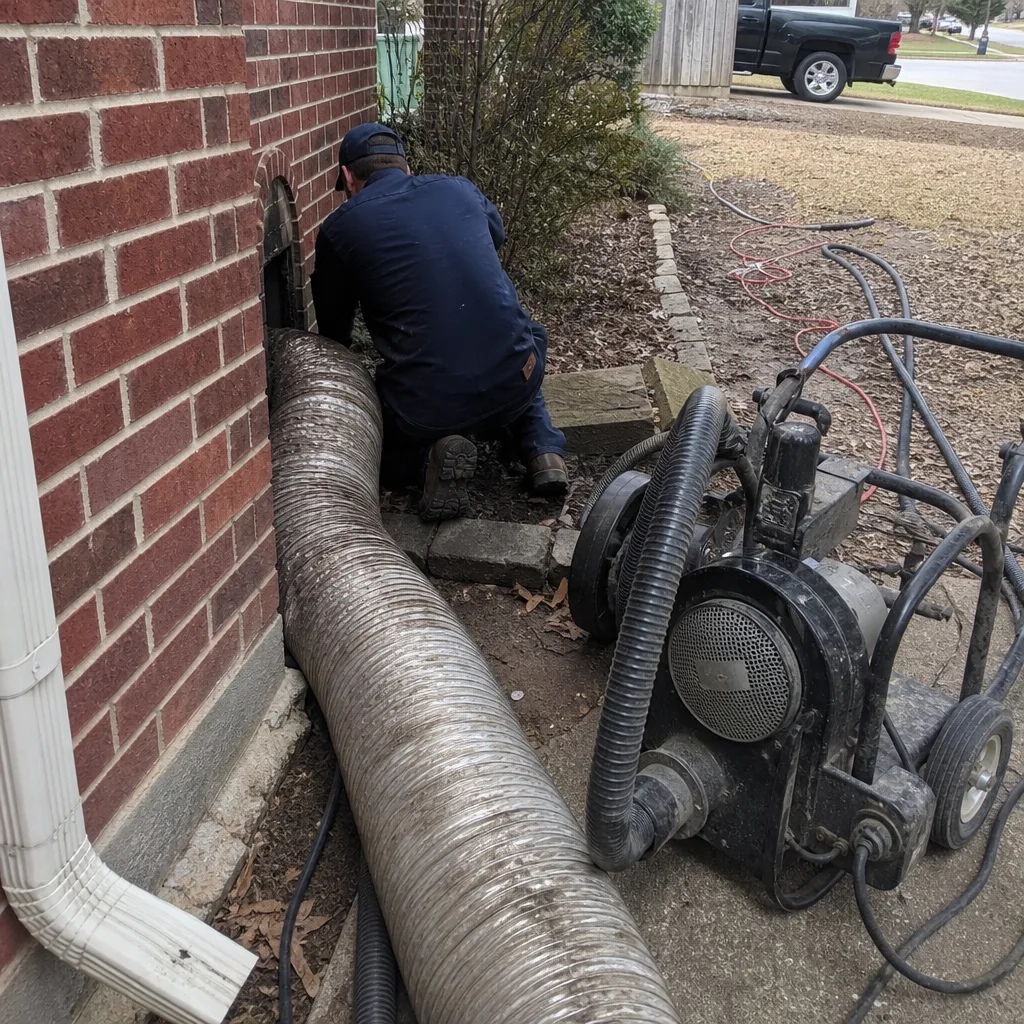 Before
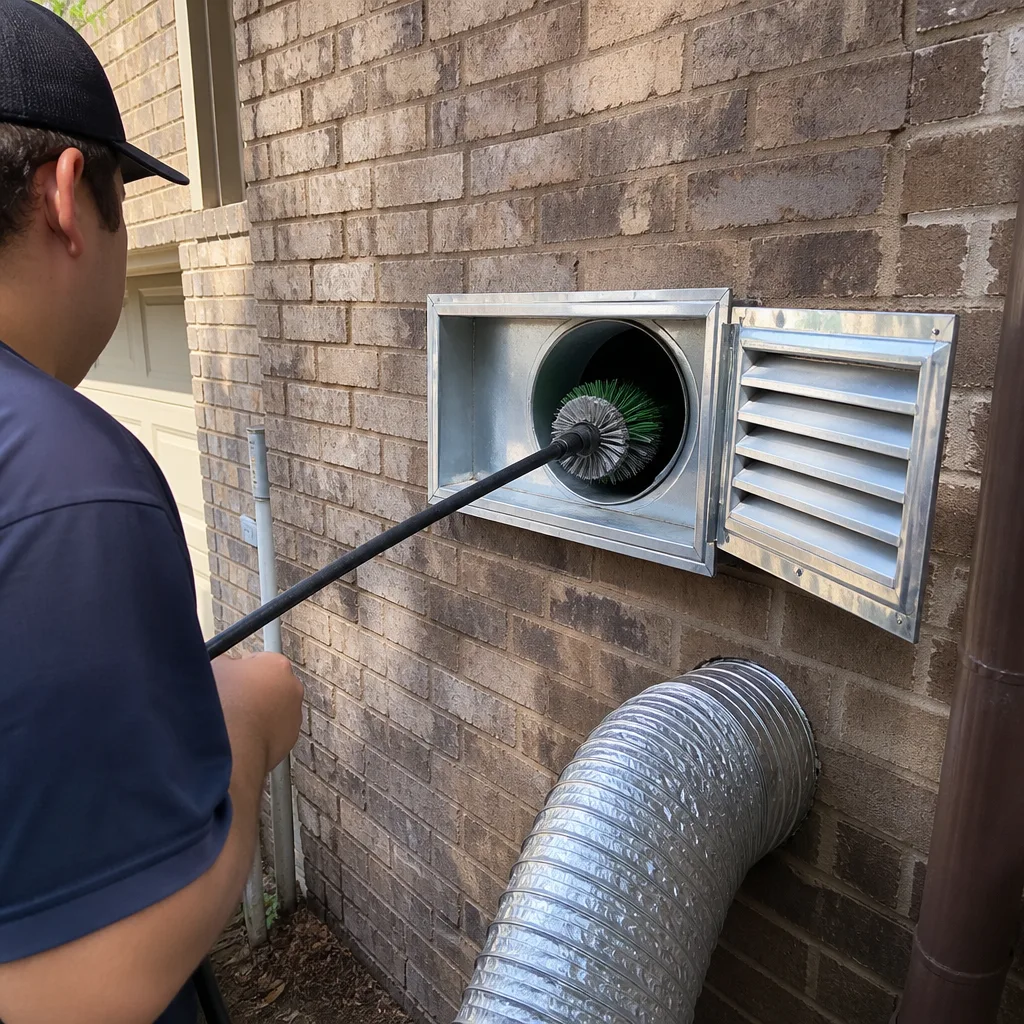 After
After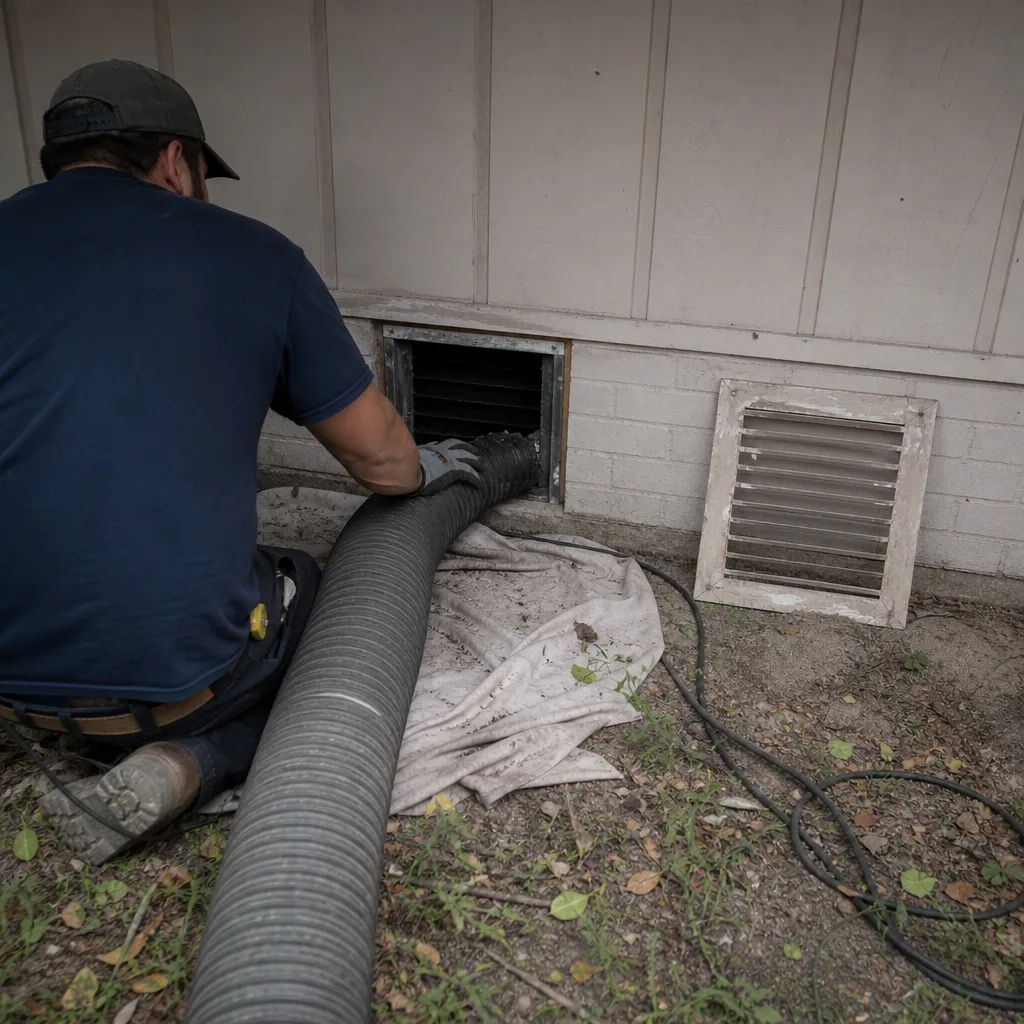 Before
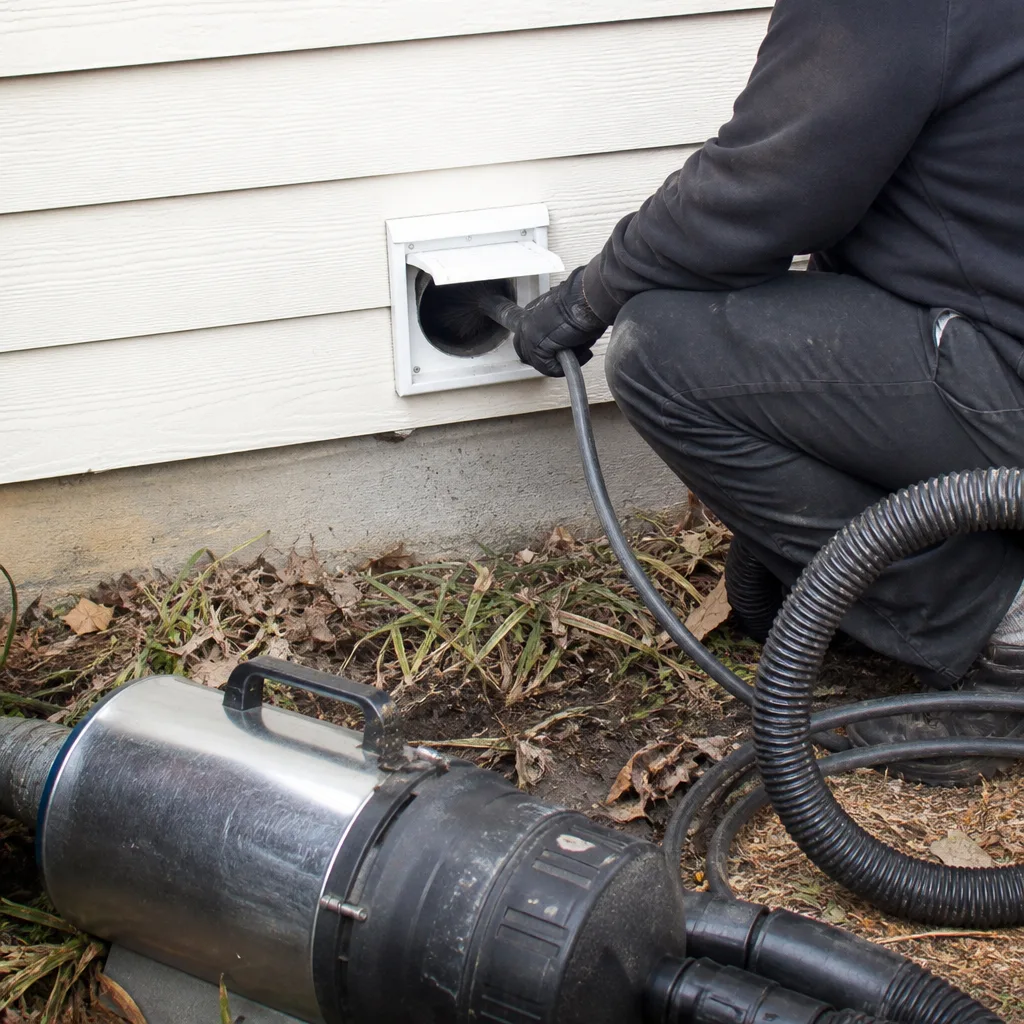 After
AfterReplacement Cost & What’s Included
Installed replacement pricing for Rotobrush register and grille cleaning parts in Dallas typically falls between $85 and $190. The lower end covers a standard replacement brush head installed on an aiR+ or R5000 while we’re already on-site for a cleaning. The upper end covers a complete hose-end register tool assembly with a new quick-connect fitting, which is the most common full failure we replace. What drives the spread is the part itself, whether your unit needs the adapter collar, and whether we’re doing a standalone trip or folding the work into a scheduled cleaning visit.
Every quote is a written price before any work starts. The price on the estimate is the price on the invoice, no exceptions. We install the part, test it on a register while you watch if you want, and leave the old part with you unless you tell us to haul it off. The work is covered by the 365-Day Done Right Promise in writing: if the part fails within a year, we replace it and come back at no charge. That includes a free second visit, and we don’t treat the second trip as some kind of inconvenience we’re doing you a favor on. It’s just what the guarantee says we’ll do, and the guarantee is on every job sheet.
DIY or Call Us?
You can safely inspect your own register tool without any special training. Pull it off the hose end, look at the bristles, check the quick-connect for wear, and spin the head by hand to feel for binding. That’s all straightforward and takes two minutes. What you shouldn’t do is attempt a repair on the internal bearing assembly or try to force a mismatched fitting into place. Rotobrush tools rotate under load, and a failed bearing that lets go mid-use can throw debris or damage the grille face.
If what you’re seeing matches the failure signs above, the fastest path is a phone call to (361) 309-6223. We’ll identify the model over the phone, confirm the part we’re bringing, and show up with a written price before any work starts. That’s a lot cheaper in time and frustration than guessing on a parts website and getting the wrong detent depth for your R2000.
FAQs
With regular residential use, expect two to three years of service life before the bristles start losing their spring and the quick-connect shows real wear. Dallas dust is fine and abrasive, and it shortens brush life compared to wetter climates where the dust is heavier and less powdery.
In most cases no. Once the bearing seat wears or the bristles flatten, the cost of a rebuild kit and the labor to install it often approaches the price of a new tool, and the rebuilt part doesn’t carry the same life expectancy. We’ll tell you straight if yours is borderline, but we won’t rebuild a part that should be replaced.
A straightforward register tool replacement takes 30 to 45 minutes on-site, including testing the new part on two or three registers and confirming the quick-connect releases cleanly. If your unit needs an adapter collar, add about 15 minutes.
We stock the most common Rotobrush register tools, brush heads, and quick-connect fittings for the aiR+, R5000, and R2000 series on our service vehicles. Less common adapter collars may require a parts run, and we’ll tell you before we head out if that’s the case for your model. We use Rotobrush equipment and also carry parts compatible with Lennox, Trane, and Carrier systems.
If your register tool is done, call (361) 309-6223. We’ll get the right part matched to your Rotobrush, give you a written price, and stand behind the work for a full year. That’s the standard, and it works the same whether you’re in Oak Cliff, near the Design District, or anywhere else in Dallas. Clean ducts, straight answers – that’s the whole job.
Written by Roy Castellanos, Owner, Hollis Air Duct Dallas at Hollis Air Duct Dallas, serving Dallas and nearby areas.