
Last updated October 15, 2026
 Whole-home duct cleaning
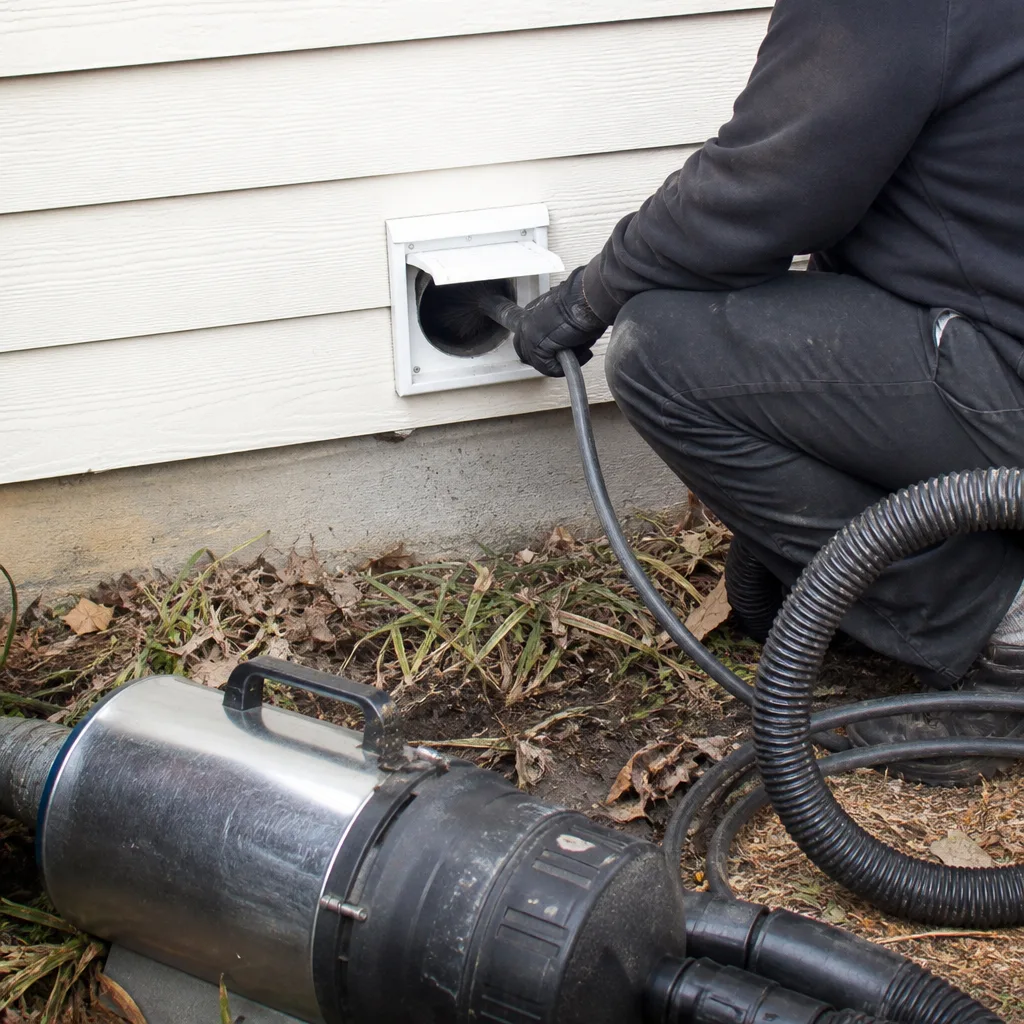
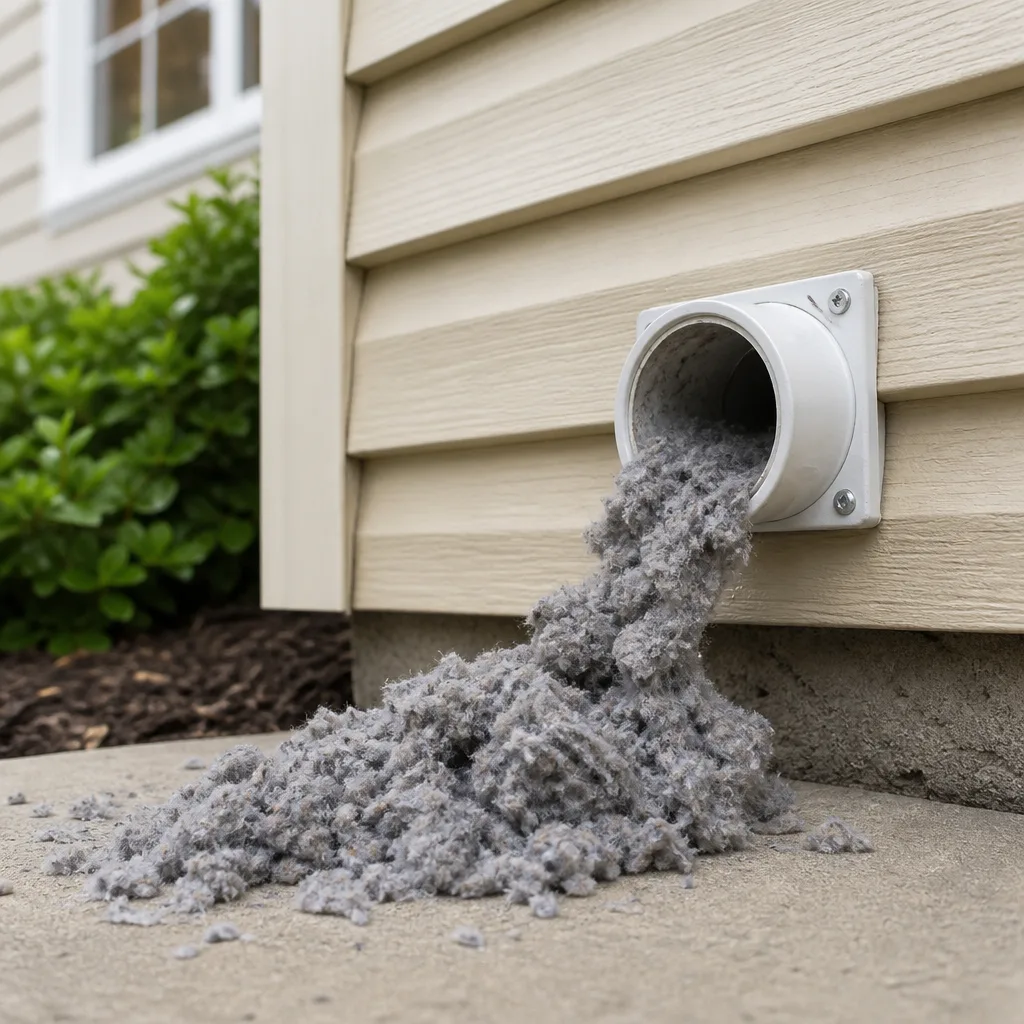 Dryer vent cleaning
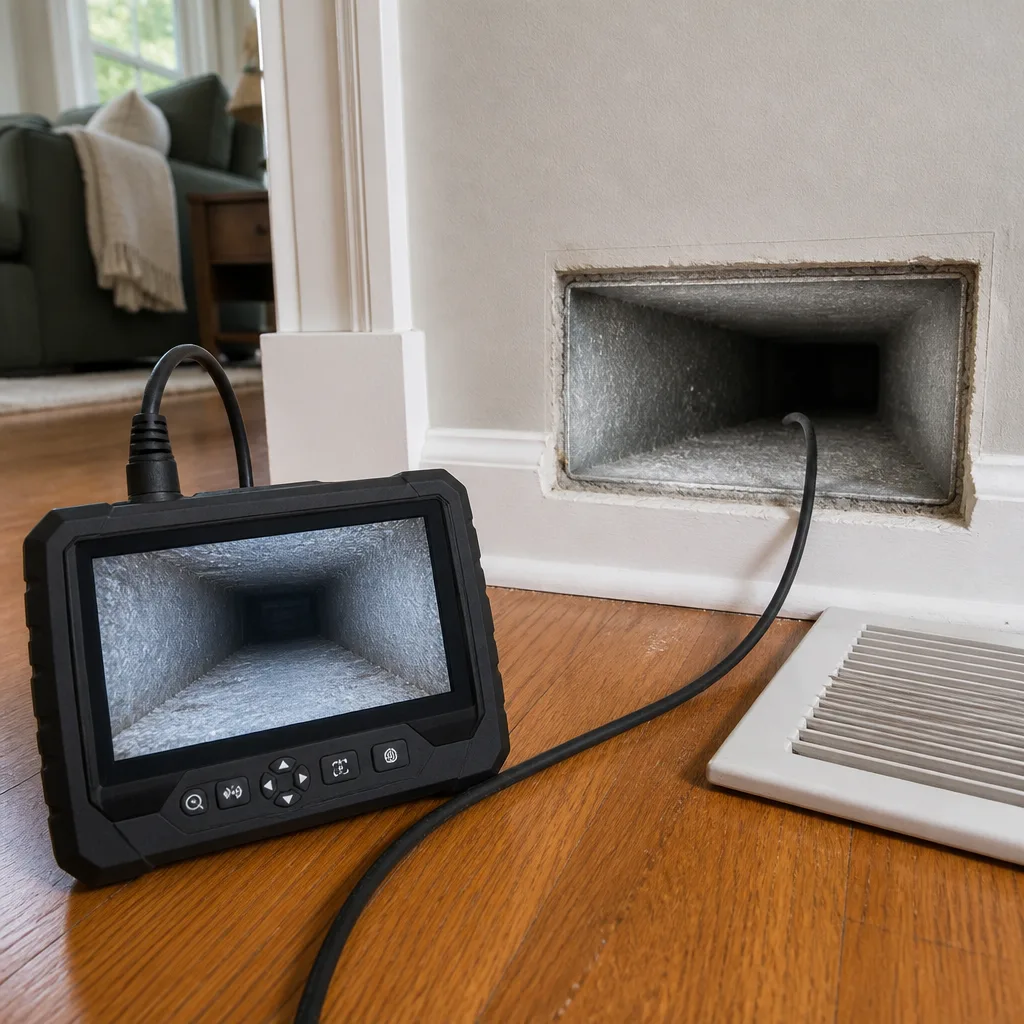 Camera inspection
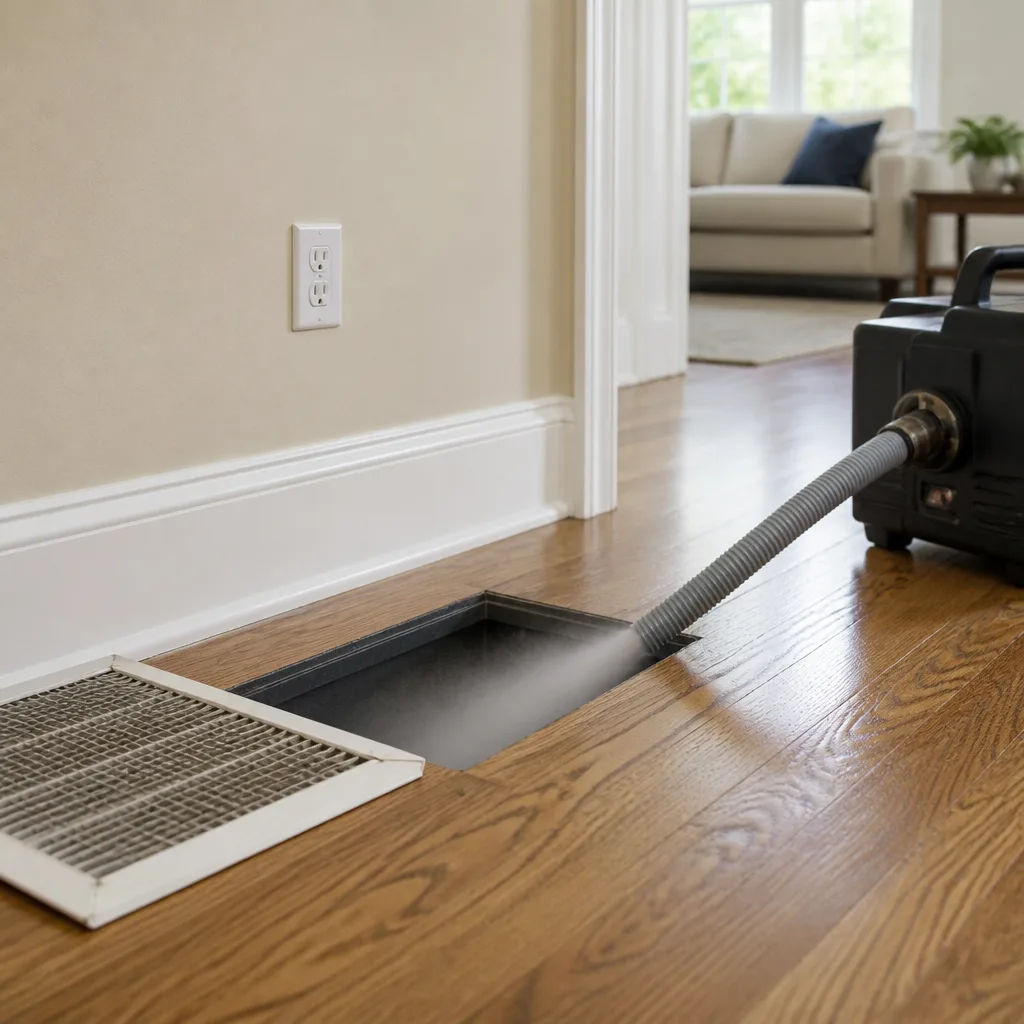 Sanitizing & deodorizing
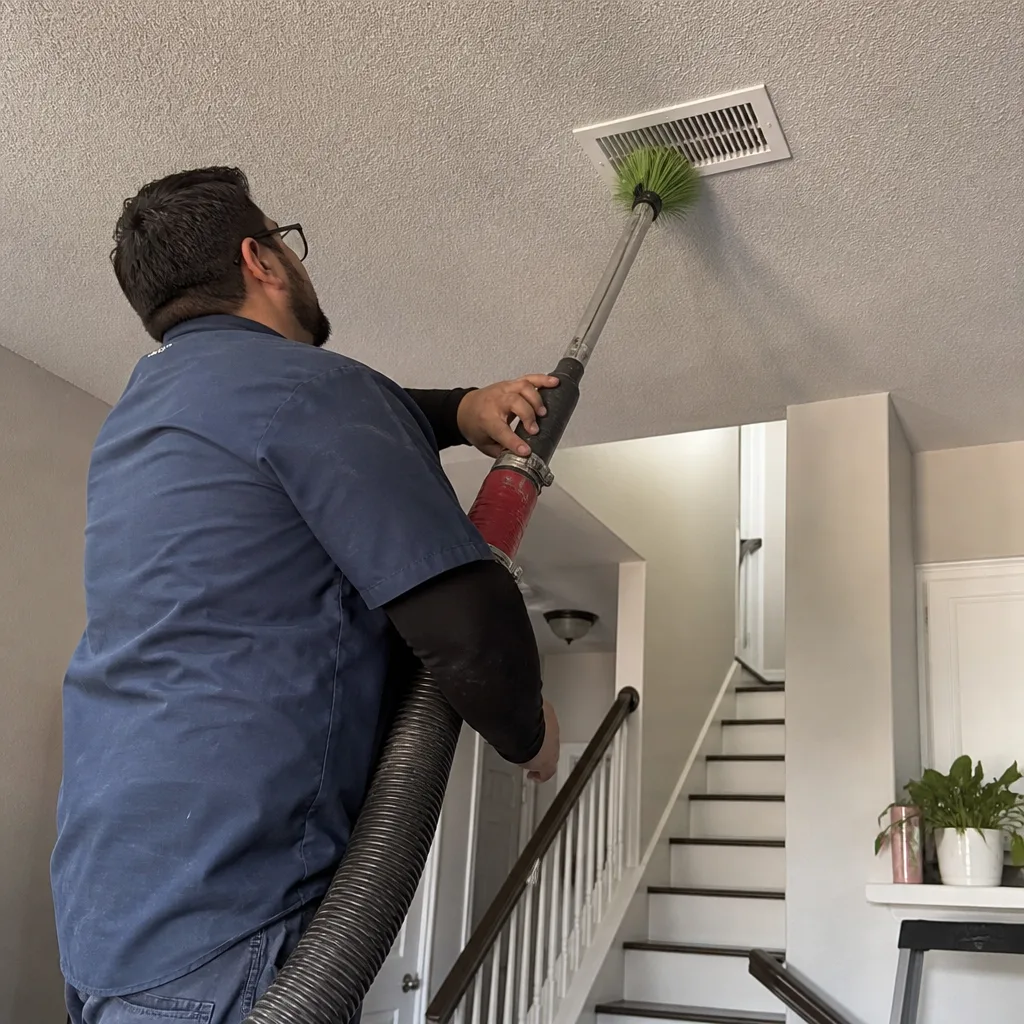
Whole-system duct and dryer vent check with before-and-after photos - you see exactly what came out of your vents
That "$99 whole-house special" is a bait ad - the real number appears once they are in your hallway, or the "clean" is a shop-vac at the register. We photograph the inside of your ducts before and after instead.
Seasonal Air Duct Cleaning Care for Dallas: Year-Round Homeowner’s Guide
Every national duct cleaning guide recommends spring or fall service. In Dallas, that advice ignores that March through May is peak cedar and oak pollen season and that your system is already pulling contaminated air at maximum volume. Timing matters more than most guides admit. Dallas doesn’t have four equal seasons – it has two extreme HVAC stress periods, a brief spring allergy surge, and a mild window that’s the single best time to service ductwork. This guide maps that reality onto a concrete maintenance calendar for your home in Dallas, so you know exactly what to check each month and when conditions cross from routine monitoring into work that needs a professional crew.
Styles & brands we work with
Quick Answer
In Dallas, the optimal window for air duct cleaning is late September through mid-October, after summer heat stress ends and before heating season begins. For most Dallas homes, professional duct cleaning every 3 to 5 years is sufficient, with visual inspections twice a year – once in early spring and once in early fall. Homes with pets, allergy sufferers, recent renovations, or smokers in the household should consider more frequent service. The single best habit a Dallas homeowner can build is a twice-yearly filter and vent inspection timed to the seasons that actually stress your system: summer humidity and winter ice storms. Air Duct Cleaning in Dallas typically costs $350-$650 for a whole-home job, explained in full later in this guide.
Table of Contents
- The Real Dallas Climate: Two Stress Seasons, Not Four
- A Month-by-Month Duct Care Calendar for Dallas Homeowners
- Why Late September Through Mid-October Is the Best Service Window
- Summer Protocols: Humidity, Attic Heat, and Microbial Risk
- Winter Ice Storms: What They Do to Vents, Returns, and Filters
- Spring Pollen Season: Why Your Ducts Carry More Than You Think
- The Seasonal Transition Checklist: What to Check and What to Document
- Common Mistakes to Avoid
- When to Call a Professional
- Frequently Asked Questions
- The Bottom Line
The Real Dallas Climate: Two Stress Seasons, Not Four
Dallas sits in a humid subtropical climate zone, but that label hides more than it reveals. What homeowners here actually experience is a long, hot summer that stretches from May into early October, punctuated by sudden winter cold snaps that can drop temperatures 40 degrees in a single day. Your HVAC system, and the ductwork attached to it, is built for one job: moving conditioned air through your home all year. The problem is that Dallas conditions create two distinct stress cycles that most seasonal advice never addresses.
The Summer Stress Cycle: From June through September, your air conditioner runs continuously. Attic temperatures in Dallas regularly exceed 140°F. Ductwork running through that attic space is exposed to extreme heat on the outside while carrying 55-60°F air on the inside. That temperature differential causes condensation where ducts pass through unconditioned spaces, and condensation is the starting point for microbial growth inside duct walls. Dust, pet dander, and debris that settle in ducts during the milder months become damp, then become a surface for mold and mildew. By late summer, a Dallas duct system can carry a layer of biological material that wasn’t there in May.
The Winter Shock Cycle: Dallas winters are short but violent. A January ice storm followed by a hard freeze forces your furnace into high-output mode after months of sitting idle. The sudden thermal expansion and contraction of metal ductwork can loosen joints, separate connections, and crack older duct sealing mastic. Those gaps leak conditioned air into the attic and pull unfiltered dust into the system. The cycle repeats every time a cold front sweeps through, which in Dallas winters is often three or four times per season. Each cycle widens those gaps slightly.
What this means in practice: your ducts are never static. They are actively degrading during the two periods when you think about them least. A seasonal care plan that ignores Dallas’s specific stress pattern simply doesn’t work. The Hollis Air Duct Dallas home team has walked through hundreds of Dallas attics after summer heat waves and winter freezes, and the patterns are consistent. The homes that get inspected twice a year at the right times have cleaner ducts, lower repair bills, and longer equipment life.
A Month-by-Month Duct Care Calendar for Dallas Homeowners
Here is a real maintenance calendar built around Dallas weather, not generic seasonal advice. Each month includes what to watch for and when to act. This is the same operational rhythm we recommend to every homeowner in the Dallas metro.
January: Post-Ice Storm Inspection Month
After any ice storm or hard freeze, walk your home and check every return vent and supply register. Look for frost lines, water stains, or a musty odor that suggests melted ice water found its way into the duct system. Ice dams on the roof can drip into attic ductwork. Check your air filter – in January, it often loads faster because your furnace runs more during cold snaps. A filter that was clean in December may be visibly gray by mid-January.
February: Filter Replacement and Visual Duct Check
February is the month to replace your filter regardless of how it looks. It has now spent two winter months filtering air through a system that cycles between furnace heat and off periods. Condensation on cold duct surfaces during this cycle picks up dust that then clings to the filter when the blower runs. While the filter is out, shine a flashlight into the return opening. If you can see a visible dust layer on the duct walls, note it. This is a condition worth discussing with a professional.
March: Pollen Season Begins
Dallas pollen counts start climbing in March as cedar and elm begin releasing. Your HVAC system is now pulling pollen into the return ducts every time it runs. Most of that pollen gets caught by the filter, but not all. Pollen grains that pass through settle in low-airflow sections of the ductwork, where they dry out and become part of the dust load. Check your filter weekly in March. If it clogs faster than normal, that’s a sign your system is pulling more particulate than a standard filter was designed to catch.
April: Peak Oak Pollen Month
Oak pollen in Dallas peaks in April. This is the month when you’ll see yellow-green dust on cars, patios, and window sills. That same dust is entering your home through doors, windows, and the HVAC system itself. If anyone in your home has allergies, April is the month to run your fan on “auto” instead of “on” to reduce continuous pollen circulation. It’s also the month to consider upgrading to a higher-MERV filter if you haven’t already. A MERV 11 or MERV 13 filter from a manufacturer like Honeywell or Aprilaire catches significantly more pollen than the basic fiberglass filters many Dallas homes still use.
May: Post-Pollen Recovery
By mid-May, the main pollen surge is over, but the damage is done. Your ductwork has now been pulling pollen-laden air for two months. Your filter has done the heavy lifting, but fine particulate has settled in the ducts. May is a good month to schedule a visual duct inspection, either yourself or with a professional. You’re looking for visible dust accumulation, especially near the return plenum and in the first few feet of trunk line where air velocity is highest.
June: Summer Mode Engages
June is when your AC transitions from occasional use to continuous operation. Before that happens, confirm your condensate drain line is clear. A clogged drain line causes water to back up into the evaporator coil area, and that moisture can migrate into nearby ductwork. This is a five-minute check you can do yourself: look for standing water in the drain pan under the indoor unit. If water is pooling, clear the line or call a professional. A wet evaporator area in June becomes a mold risk in August.
July: Peak Heat, Peak Duct Stress
July is the most punishing month for Dallas ductwork. Attic temperatures hit their annual peak, and your AC runs for hours at a time. This is the month when duct separation at joints is most likely to occur, because metal expands in heat and old mastic loses its grip. If you notice a room that’s suddenly warmer than the rest of the house, or a hissing sound from a vent that wasn’t there before, that’s often a separated duct. Document it, photograph it, and get it assessed.
August: The Humidity Ceiling
August brings the highest sustained humidity levels in Dallas. Your drain line works hardest this month, and any small leak or gap in duct insulation now becomes a condensation point. If you see water stains on ceiling areas below attic duct runs, or notice a musty smell when the AC turns on, that’s microbial activity starting in the duct system. This is not a DIY fix. Microbial growth inside ducts requires professional assessment with negative-air equipment, which is what a professional air duct cleaning service in Dallas uses to safely remove contaminated material rather than blowing it through your home.
September: The Transition Month
By mid-September, Dallas temperatures start easing. Your AC still runs during afternoons, but the overnight cooling means the system gets rest periods. This is the single best month to schedule a professional duct cleaning or duct inspection in Dallas. The system is post-summer, meaning all the heat stress and humidity loading is complete and visible. It’s also pre-heat season, so any cleaning or sealing work you do now will hold through the winter. Homeowners who work with Duct Sealing in Dallas during this window get the cleanest start to heating season.
October: Service Window Closes
Early October is the tail end of the optimal service window. Your heat runs for the first time, often pulling in that dusty “burning smell” that’s actually settled dust passing over the heat exchanger. If you scheduled duct cleaning in September, that first-heat smell will be minimal. If you didn’t, it’s a reminder of what’s accumulated. October is also a good month to check all supply registers and return grilles for dust buildup on the louvers – that’s visible proof of what’s been moving through the system.
November: Pre-Winter Checklist
Before the first hard freeze, walk through your home and verify every supply register is open and unobstructed. Blocked registers increase static pressure, which forces your furnace blower to work harder and can push conditioned air through any existing duct gaps. Confirm your filter is fresh, and check that the outdoor AC unit is clear of leaves and debris. A clean outdoor unit means cleaner air entering the system.
December: Winter Moisture Watch
December in Dallas brings rain and occasional freezing precipitation. Monitor your indoor humidity levels – if you have a hygrometer, you’re looking for 30-50% relative humidity. Higher humidity in winter means condensation risk inside ducts when warm furnace air meets cold duct surfaces. If you notice condensation on windows or walls near vents, that’s a signal your indoor humidity is too high for the duct system to handle. Address it before the January ice storm season arrives.
Why Late September Through Mid-October Is the Best Service Window
Most national guides tell you to clean ducts in spring or fall. In Dallas, that advice is half right. Spring is the worst possible time for a Dallas duct cleaning. Here’s why, and why the fall window wins every time.
Spring fails for three Dallas-specific reasons: First, March through May is peak pollen season. If you clean ducts in April, you’re giving pollen a clean surface to land on, and within weeks your freshly cleaned ducts are loaded again. Second, spring service doesn’t address summer heat stress, which is the single biggest cause of duct damage in Dallas. Cleaning ducts in March means they’ll be stressed by 140°F attic heat for five months before fall. Third, spring is the start of AC season, meaning any gaps or separations that formed over winter will only worsen during summer operation.
Late September through mid-October works because: Your system has just completed its most demanding season. All the summer heat stress, condensation, and particulate loading is done. A September cleaning removes everything that accumulated from June through August. Your heating system hasn’t yet been used for the season, so the ducts start clean before the furnace begins pushing air. Pollen counts in Dallas are at their annual lowest in October, meaning freshly cleaned ducts stay clean longer. And any duct sealing work performed in this window – which we perform with the same techniques covered in our duct sealing service – has the entire winter to set and cure in stable temperatures.
If you can only budget for one professional service per year, make it September or October. If you’re planning a duct sealing project, this is also the window when the mastic has the best conditions to cure correctly without the extreme heat of summer or the cold shock of winter.
Summer Protocols: Humidity, Attic Heat, and Microbial Risk
Summer is when Dallas ductwork takes the most damage, and most homeowners never see it because the damage is hidden in the attic. Here’s what actually happens to your ducts between June and September, and what you can do about each condition.
Attic Heat and Duct Separation: Dallas attic temperatures routinely exceed 140°F in July and August. Standard flexible ductwork has a maximum service temperature around 140-160°F depending on the manufacturer, but the connectors, tape, and mastic used to join sections often degrade earlier. When mastic fails, a duct joint separates, and conditioned air starts blowing into the attic instead of your living room. A single separated duct in a Dallas attic can waste 20-30% of the cooling energy your AC produces. Signs to watch for: one room that’s consistently warmer than the others, higher utility bills than the same months last year, or an unexplained drop in airflow from specific vents.
Condensation and Microbial Growth: When 55°F air moves through a duct running through a 140°F attic, the temperature differential creates condensation wherever insulation is thin or damaged. That moisture soaks into dust and debris inside the duct, creating the conditions for mold and mildew growth. This is why negative-air duct cleaning matters. Equipment like the Nikro negative-air machines we use pulls contaminated material out of the system rather than loosening it and leaving it to recirculate. When we clean ducts in Dallas homes after a humid summer, we commonly find microbial films inside return ducts that the homeowner never saw or smelled until the system was separated.
What to Do in Summer: Keep your filter clean and replace it monthly during peak heat. A dirty filter increases static pressure, which forces air through existing gaps and worsens separation. Check your drain line every two weeks for clogs. And if you notice any sign of moisture around vents or the evaporator, document it with photos and dates. Moisture that appears in June and is ignored will become a visible mold problem by August.
Winter Ice Storms: What They Do to Vents, Returns, and Filters
Dallas is one of the few major cities where a February ice storm can be followed by a 70°F day within the same week. That freeze-thaw cycle is brutal on ductwork, especially for homes built more than 15 years ago.
Ice and the Return System: Return vents pull air into the system. During an ice storm, freezing rain can accumulate around exterior returns and the outdoor HVAC components. When the ice melts, water can follow gravity into return ductwork through small gaps around the grill or through soffit vents. Homeowners often mistake the resulting musty odor for a filter problem, but the condition originates with water intrusion into the return path. After any Dallas ice event, inspect every return vent for water staining, rust marks, or moisture accumulation. Pull the filter and check for sogginess or warping – a wet filter means water got past the return grille.
Thermal Shock and Joint Failure: A Dallas duct system that spends most of the year at attic temperature suddenly carries 120°F air when the furnace kicks on after an ice storm. The rapid temperature change causes metal-to-metal connections to expand and contract at different rates than the surrounding materials. Over multiple freeze-thaw cycles, old foil tape loses adhesion and joint gaps form. This is why your heating bill spikes during Dallas winters even though the furnace is working as designed – heated air is leaking through failed connections before it reaches your living space.
Filter Loading Patterns: Winter in Dallas causes a unique filter pattern you won’t see mentioned in generic guides. Because your furnace cycles frequently during cold snaps, the blower turns on and off repeatedly. Each start and stop allows new particulate to settle and dehydrate. By late winter, Dallas filters often look darker and dustier than they do after a full summer of AC use. This is a normal pattern in the Dallas climate, not a sign of a problem. It does mean you should check the filter in January and February more often than the standard 90-day recommendation suggests.
Spring Pollen Season: Why Your Ducts Carry More Than You Think
Dallas pollen is a measured environmental fact. The city consistently ranks among the highest pollen count locations in Texas during March and April, driven by cedar, elm, and oak. What most homeowners don’t realize is how much of that pollen ends up inside the ductwork, and what it does once it’s there.
Pollen Particle Size and Filtration: Oak pollen grains measure 20-40 microns, which is actually large enough to be caught by a decent filter. Cedar pollen is smaller, around 10-20 microns, and passes through basic fiberglass filters easily. But the larger issue is that pollen breaks down after it enters the home. A single oak pollen grain can rupture and release starch granules and protein fragments smaller than 5 microns, which pass through even MERV 13 filters and settle deep in the duct system. Once there, they dry, desiccate, and become part of the fine dust that recirculates every time your blower runs. This is why pollen sensitivity sometimes persists even after allergy season ends – the allergen material stays in the system.
What Actually Helps: A high-efficiency filter from Honeywell or Aprilaire is the single most effective defense against Dallas pollen season. A MERV 11 pleated filter catches most pollen grains before they enter the duct system. A MERV 13 catches nearly all of them. The trade-off is airflow: higher-MERV filters restrict air more, which can increase static pressure and reduce system efficiency on older HVAC units. If you choose to run a MERV 13 filter during pollen season, verify your system can handle the pressure drop. During peak pollen months, run the fan on “auto” instead of continuous circulation. Continuous circulation keeps fine allergen particles airborne longer instead of letting them settle where you can clean them.
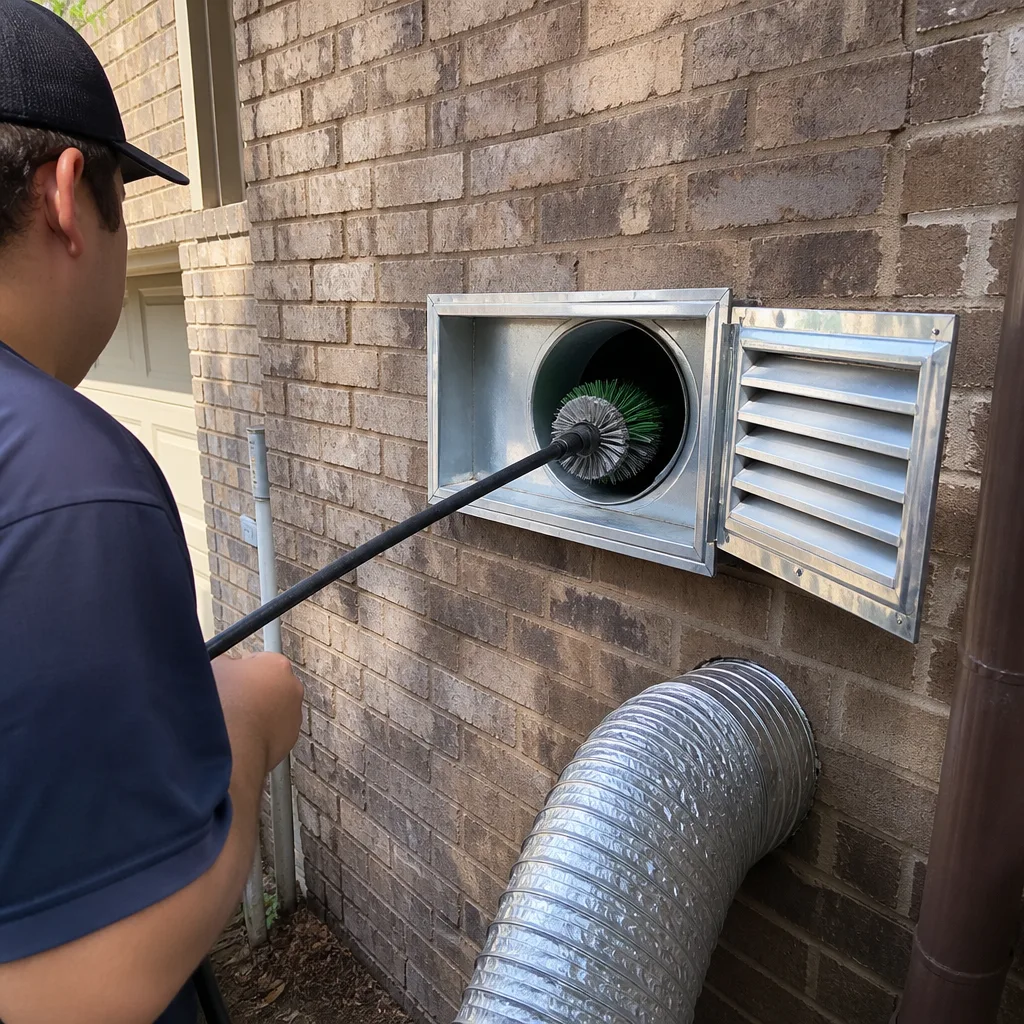
For homes with severe allergy sufferers in Dallas, we recommend duct cleaning in late May or early June after pollen season winds down. This removes the accumulated pollen fragments and biological material from the spring surge before summer heat and humidity compound the problem. Combined with dryer vent cleaning to remove lint and particulate from the exhaust path, this is a practical allergy management strategy for Dallas households.
The Seasonal Transition Checklist: What to Check and What to Document
Here’s a simple but complete checklist for each seasonal transition in Dallas. These items take 10-15 minutes per season and catch most duct problems before they become expensive failures. Document anything unusual with photos and dates – a repair history is the most useful tool a technician can have when diagnosing your system.
Late Winter to Early Spring (February-March)
- Replace the HVAC filter and record the date on the filter frame with a permanent marker.
- Inspect every return grille for water stains, rust, or discoloration from winter moisture.
- Flashlight-check visible duct surfaces through the return opening for dust accumulation.
- Turn the thermostat to “fan only” and listen at each supply register for hissing or whistling that indicates a duct gap.
- Examine the outdoor AC unit for ice damage, debris, or vegetation that blocked airflow during winter.
- If anyone in the home has spring allergies, install a new high-MERV filter before pollen season starts in March.
Spring to Summer (May-June)
- Verify the condensate drain line is clear and the drain pan under the indoor unit is dry.
- Replace the pollen-season filter with a fresh one, even if it looks clean – pollen loads invisible fine particulate.
- Run the AC for 15 minutes and check for musty odors coming from supply registers.
- Inspect flexible duct connectors in the attic for gaps, especially at the trunk line and plenum connections.
- Document any rooms that seem warmer than others during early AC operation.
- Schedule professional duct cleaning if your system hasn’t been cleaned in 5 years or if visible dust is present.
Summer to Fall (September-October)
- This is your professional service window. Schedule duct cleaning or duct sealing now.
- After summer, inspect attic duct runs for separation caused by heat expansion.
- Check all supply registers for dust buildup on louvers – this shows what summer and pollen season left behind.
- Replace the filter before heating season begins, even if the AC filter still looks serviceable.
- Verify that any duct sealing work performed during summer has cured and shows no visible cracks or gaps.
Fall to Winter (November-December)
- Open all supply registers and remove any furniture or obstructions blocking airflow.
- Set indoor humidity target to 30-50% using a hygrometer to monitor conditions.
- Inspect the duct system where it exits the furnace plenum for loose connections from the first heat cycles.
- Note the first-heat odor – a brief dusty smell is normal; a persistent burning or chemical smell is not.
- Prepare for ice storm season by clearing the area around outdoor HVAC components.
The rule of thumb: if any of these checks reveals a condition you can’t confidently explain or fix, document it and call a professional. Duct systems are not forgiving of guesswork. A disconnected return in a Dallas attic will pull 140°F air into your system and cook your cooling bill all summer before you realize what happened.
Common Mistakes to Avoid
- Cleaning ducts during spring pollen season. This is the most common seasonal mistake in Dallas. Cleaning in March or April gives pollen a clean surface to adhere to, and within weeks your system is loaded again. Service in late September or October, when pollen counts are at their annual low.
- Ignoring attic temperature. A 140°F attic is not normal operating conditions for ductwork; it’s an extreme stress environment. Homes with uninsulated attics above the ducts are at higher risk for separation and mastic failure. An attic ventilation upgrade can do more for duct longevity than any cleaning schedule.
- Replacing the filter only when it looks dirty. In Dallas, pollen and fine particulate load filters invisibly. A filter that looks white can be saturated with pollen fragments that only become visible when backlit or held up to light. Change filters on schedule, not on appearance.
- Running the fan continuously during high pollen season. Continuous fan operation keeps fine allergen particles airborne longer and pushes more particulate through the duct system. Use “auto” mode during March and April, or whenever outdoor pollen counts are elevated.
- Treating duct cleaning as a one-time event. Ducts in Dallas don’t get cleaned once and stay clean. The summer and winter stress cycles continuously load material back into the system. A seasonal inspection habit is more valuable than a single deep clean every decade.
- Ignoring moisture signs because they’re “small.” A small water stain on a ceiling below an attic duct run is a warning. By the time you can see mold or smell a musty odor, the microbial growth inside the duct is already established and requires professional negative-air remediation.
When to Call a Professional
Some duct conditions are safe to monitor and manage yourself. Others are not. Call a professional for any of these Dallas-specific scenarios: visible mold growth on or inside duct surfaces, water accumulation in the duct system or condensate tray after you’ve cleared obvious blockages, a persistent musty odor that doesn’t improve after filter replacement, a room that stays 5°F warmer or cooler than the rest of the house through multiple seasons, or any duct separation visible in the attic that’s beyond a simple tape repair. Duct sealing with professional mastic and negative-air cleaning with equipment from manufacturers like Rotobrush and Nikro are not DIY projects. Hollis Air Duct Dallas offers free estimates in Dallas – call (361) 309-6223 and we’ll assess the condition of your system and give you a written price before any work begins.
Frequently Asked Questions
In the Dallas market, whole-home air duct cleaning typically costs between $350 and $650 for a standard single-family home, depending on the number of vents, system size, and accessibility of the attic ductwork. Homes with multiple HVAC zones or significant contamination may run higher. A written price before work begins is the single most important thing to confirm – you should know the exact cost before a technician enters your home. Air duct cleaning in Dallas from an established company includes the full inspection, not a teaser price that grows at the door. Call (361) 309-6223 for an exact quote – estimates are free.
Because they’re not cleaning your ducts. The low-price ads you see in Dallas mailers – $49, $79, $99 whole-home specials – are lead generators. The technician arrives, opens one vent, tells you the system is “contaminated,” and the price becomes $800. The bait-and-switch is common enough in the Dallas market that the Texas Attorney General has investigated multiple duct cleaning operations. A legitimate whole-system cleaning with negative-air equipment takes 2-4 hours and costs real money. Any quote far below $300 in Dallas is not a real service. Call (361) 309-6223 to get a written price from a crew that doesn’t move the number at the door.
Before-and-after photos are the standard in professional duct cleaning. Our technicians use inspection cameras to document the interior duct surfaces before and after every job, so you see exactly what was removed and what the system looks like when we’re finished. A legitimate Dallas duct cleaning company will offer this without being asked. If a company refuses to show you photos or says they “don’t do that,” that’s a red flag. You should also receive a written report of what was found and what was done. Call (361) 309-6223 if you want a service that documents its work.
For most Dallas homes, every 3 to 5 years is appropriate. Homes with multiple pets, residents with severe allergies, recent renovation work, or smokers in the household may need service more frequently – every 2 to 3 years. Homes with visible mold, pest infestation, or major water intrusion need immediate professional assessment regardless of the last service date. The seasonal inspection habit is what matters more than any fixed schedule: check twice a year, and service when conditions warrant. Call (361) 309-6223 and we’ll help you determine whether your system is due.
Yes, but only if the timing is right. Duct cleaning in late May or early June removes the pollen fragments and biological material that accumulated during March and April. A cleaning performed before spring pollen season is a waste of money in Dallas because the system will be loaded again within weeks. Pair a post-pollen cleaning with a high-MERV filter from Honeywell or Aprilaire and you’ll see the cleanest indoor air possible for a Dallas household. Call (361) 309-6223 for specific recommendations for your home and household.
In Dallas, duct sealing is often a better financial decision than duct cleaning alone. Gaps in duct connections leak conditioned air into the attic, where it does nothing for your comfort but still shows up on your utility bill. Sealing those gaps with professional mastic – the same approach we use in our duct sealing service – typically pays for itself in reduced energy costs within 2-3 years in Dallas homes with significant leakage. If your attic ducts are accessible and you’ve noticed uneven room temperatures, sealing should be on your list. Call (361) 309-6223 for a free estimate.
The Bottom Line
Dallas ductwork lives in a climate that treats it hard. Summer heat pushes joints apart, winter freezes shock the metal, spring pollen loads the filters, and the humidity never fully goes away. The homeowners who pay the least over time are the ones who inspect twice a year, service in the September-to-October window, and call a professional whenever a condition crosses from routine to genuinely concerning. You don’t need to understand every detail of duct engineering to care for your system. You need a calendar, a flashlight, and a number to call when something looks wrong. In Dallas, that number is (361) 309-6223. We’ll give you a written price before the work starts, and stand behind it with our 365-Day Done Right Promise. If it’s not done right, we make it right – in writing, on every job.
Written by Roy Castellanos, Owner at Hollis Air Duct Dallas, serving Dallas since 2004.
See the difference
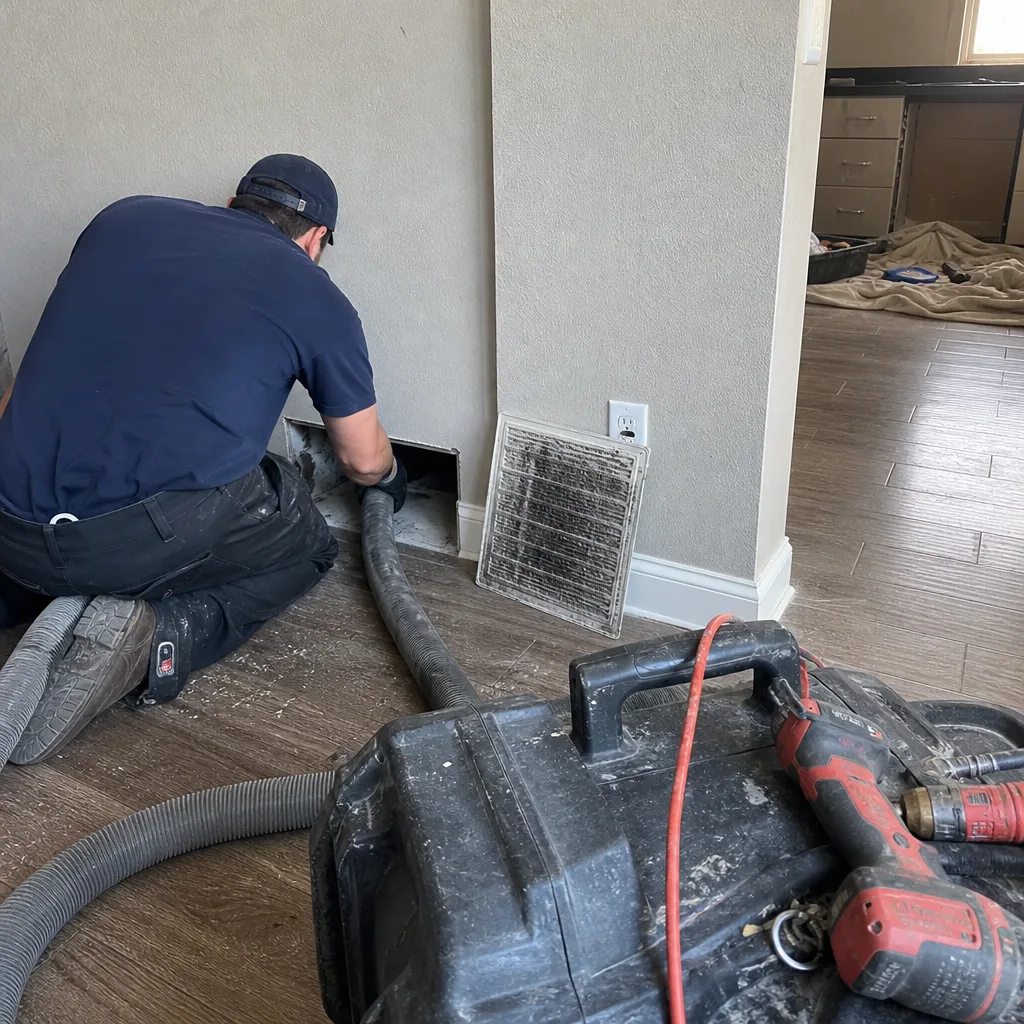 Before
 After
After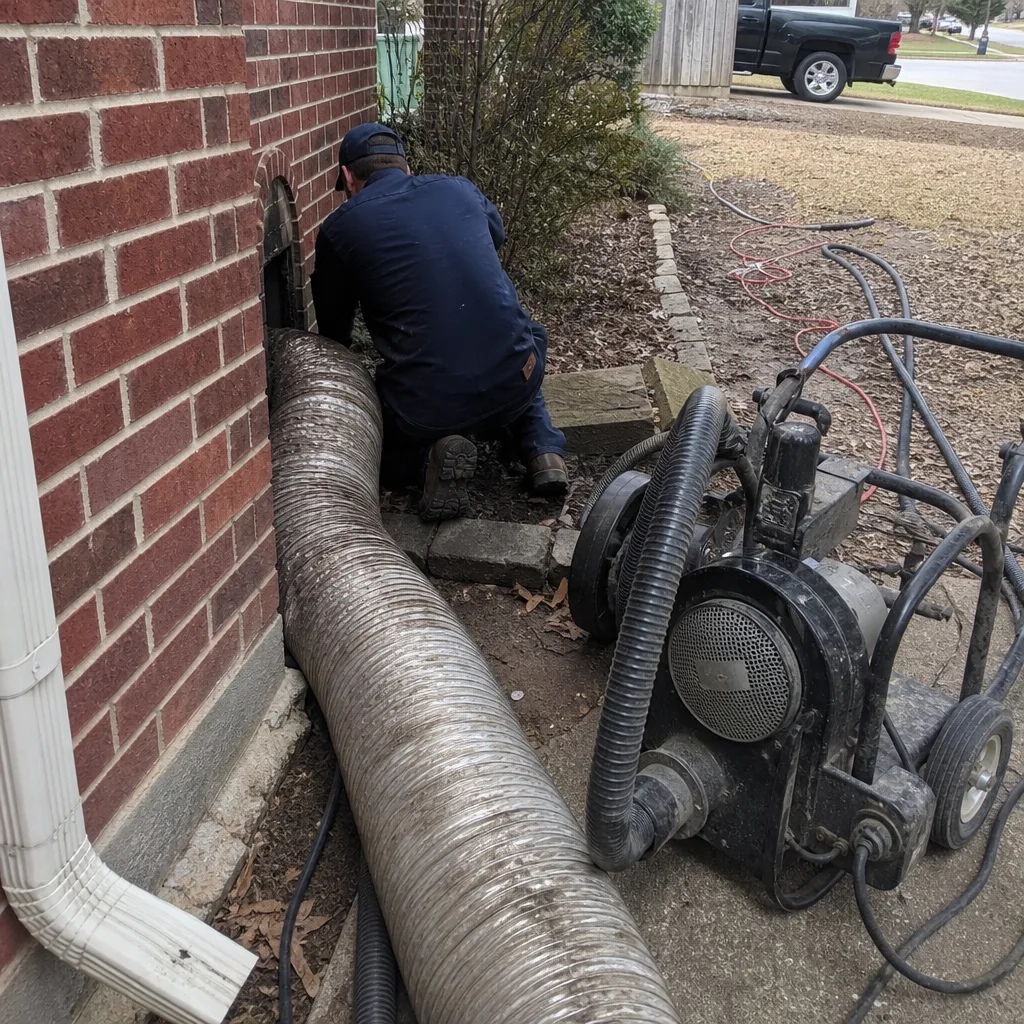 Before
 After
After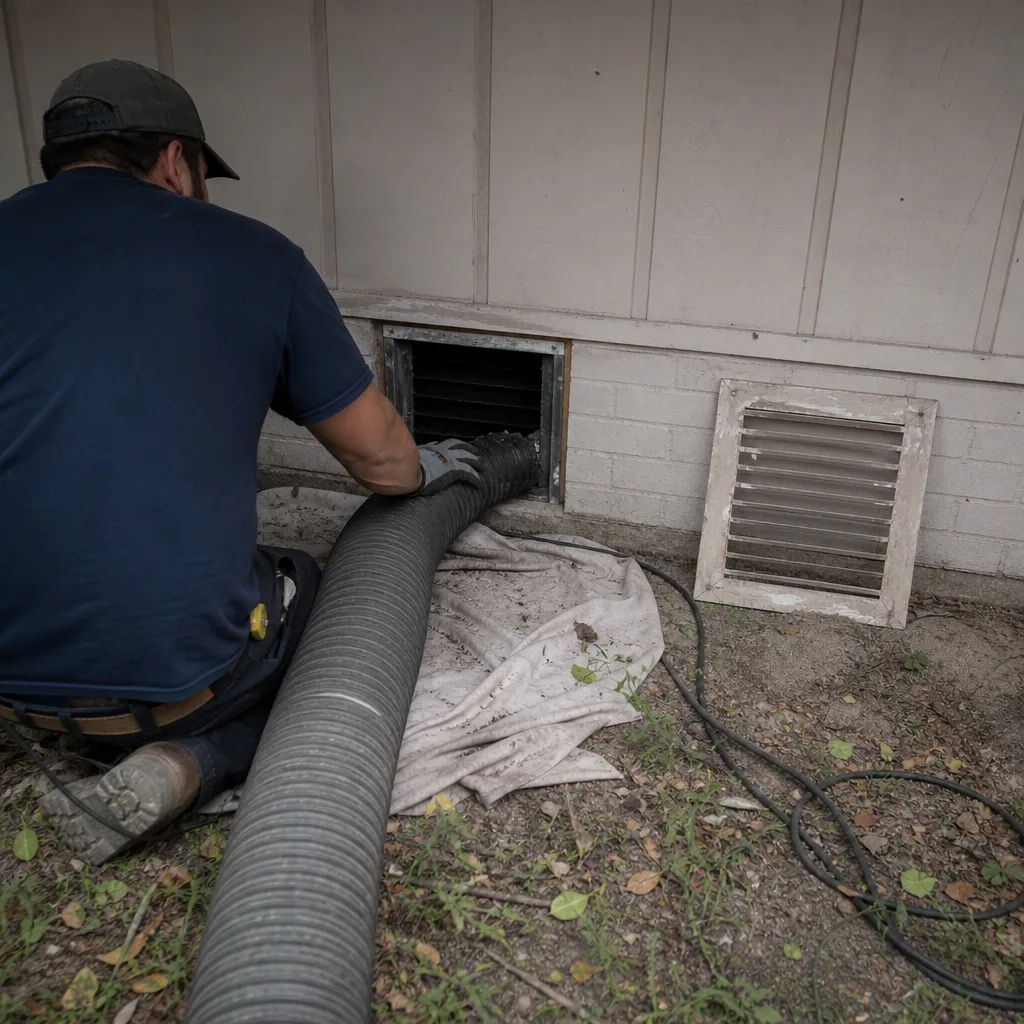 Before
 After
After