
Last updated October 15, 2026
 Whole-home duct cleaning
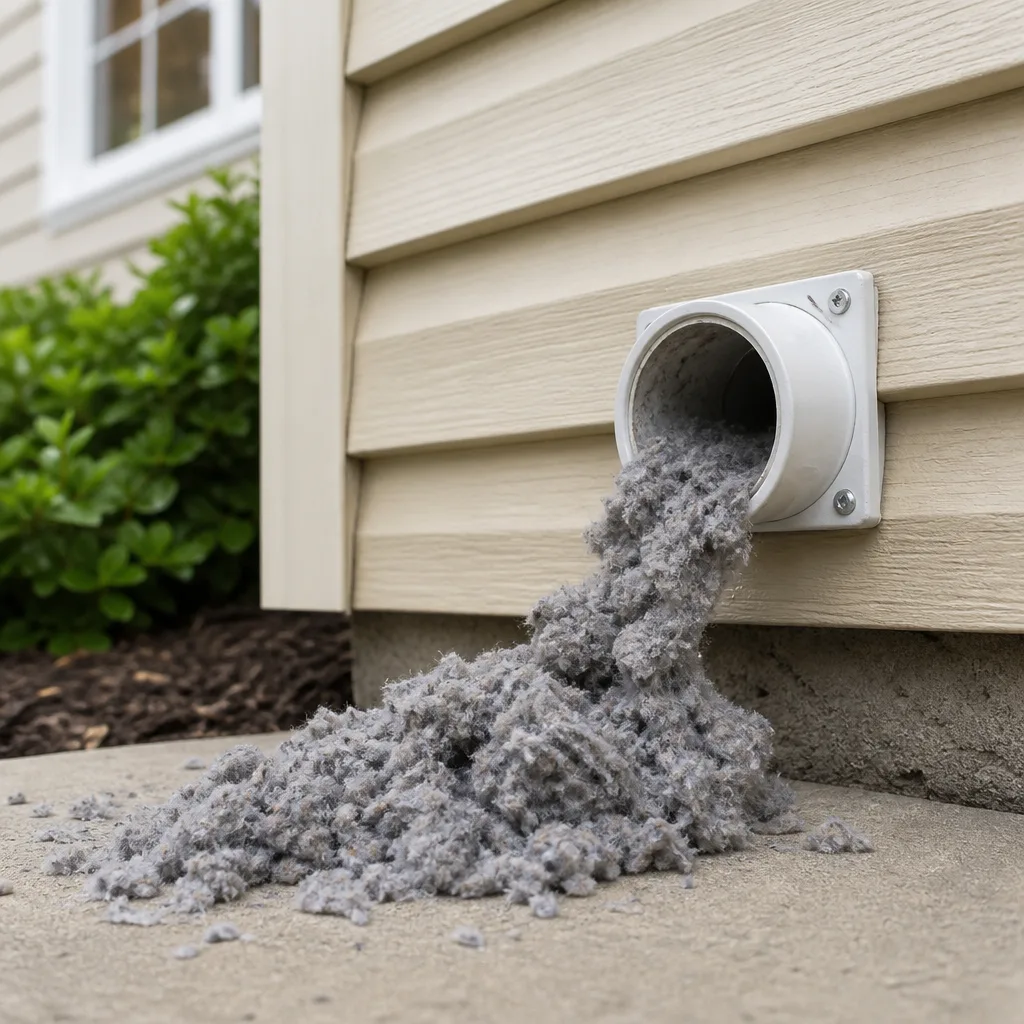 Dryer vent cleaning
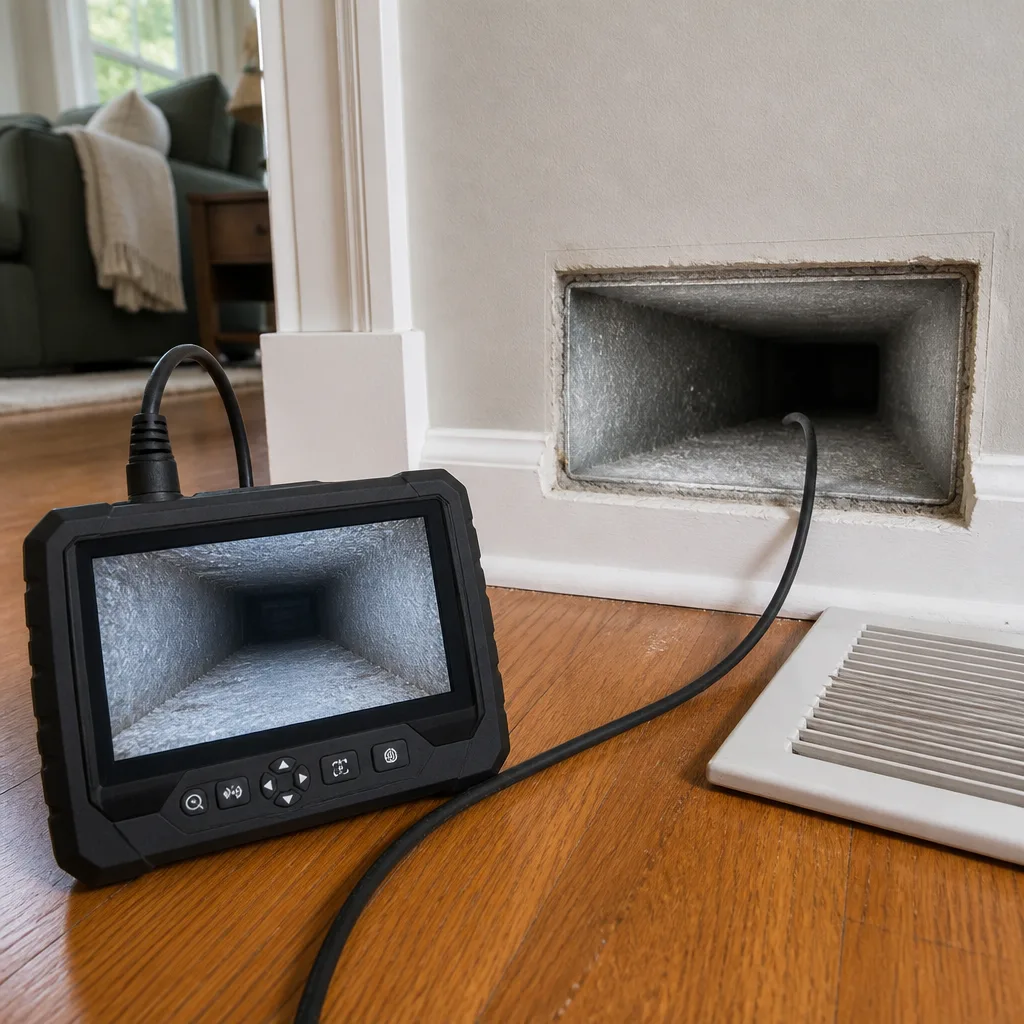 Camera inspection
 Sanitizing & deodorizing
Whole-system duct and dryer vent check with before-and-after photos - you see exactly what came out of your vents
That "$99 whole-house special" is a bait ad - the real number appears once they are in your hallway, or the "clean" is a shop-vac at the register. We photograph the inside of your ducts before and after instead.
Air Duct Cleaning Maintenance Checklist for Dallas Homeowners
Changing your filter every 90 days is the advice printed on the box. In Dallas, during cedar fever season or in the month after a kitchen renovation, that schedule can fail your ducts in under 30 days. And no checklist most homeowners have read tells you how to spot that before the damage is done. This guide is that checklist: a working maintenance calendar built specifically for Dallas conditions, from cedar pollen in January to the hundred-degree attic heat in August. By the time you finish, you’ll know what to check, when to check it, and what actually warrants a cleaning versus what doesn’t.
Styles & brands we work with
Quick Answer
Air duct cleaning in Dallas should be scheduled based on observable conditions, not just the calendar. In most Dallas homes, that means a professional cleaning every 3 to 5 years, with monthly physical inspections at return vents and registers to catch problems early. Cedar season (January through March) and high summer AC run cycles are the two periods when Dallas ductwork collects the most debris, and a checklist that does not account for those windows will leave you paying for problems instead of preventing them.
Table of Contents
- The Dallas-Specific Duct Maintenance Calendar
- The 15-Minute Monthly Inspection Routine
- How to Log Duct Conditions Over Time
- MERV Ratings: What Your Filter Actually Catches in Dallas
- What a Proper Duct Cleaning Involves
- Three Post-Cleaning Checkpoints Before You Sign Off
- Common Mistakes to Avoid
- When to Call a Professional
- Frequently Asked Questions
- The Bottom Line
The Dallas-Specific Duct Maintenance Calendar
A duct maintenance checklist only works if it reflects the weather that actually pushes debris into your system. Dallas has a mixed climate that cycles through mountain cedar, cottonwood, oak pollen, summer dust, and fall leaf litter, each of which stresses a different part of your HVAC system. Here is what each season demands of your ductwork in this city.
January to March: Cedar Season. Mountain cedar counts in Dallas routinely exceed 10,000 grains per cubic meter during peak weeks in January and February. That pollen is microscopic, sticky, and it does not all stop at the filter. If you run a basic fiberglass filter during cedar season, a meaningful portion of that pollen passes into the return duct, collects on the blower wheel, and recirculates through the supply side. During these months, walk your registers weekly. If you wipe a supply register and the cloth comes back with fine brown or yellowish dust within five days of the last wipe, your filtration is not holding against cedar. That is a documented condition you can act on, not a guess.
April to May: Post-Cedar Transition and Cottonwood. Cottonwood trees release airborne seed fibers that clog outdoor condenser coils and, in homes with leaky return plenums, pull into return ducting. This is also the window when many Dallas homeowners open windows for spring air. Open windows mean unfiltered air moving through the house, and any negative pressure from the HVAC system pulls that air into return vents. Two weeks of open-window season can deposit more dust in your ducts than three months of closed-window operation. Inspect return registers during this window. If the return grill is collecting fuzz, inspect the duct behind it with a flashlight.
June to September: Summer AC Overload. Dallas regularly sees 30 to 40 consecutive days over 95 degrees between June and September. That means the blower motor runs for 12 to 18 hours a day in many homes. More run time equals more air passing through the system, which equals faster accumulation of whatever is suspended in that air. Dust that would have taken four months to build under normal operation collects in six weeks during peak summer. This is the season when homes with older ductwork show visible dust blowing out of supply registers when the AC kicks on. The checklist item here is simple: stand at one supply register in mid-July, hold a white cloth two feet from the grill for 30 seconds after the blower starts. Visible dust on that cloth means particulate is circulating, and it is already entering the living space, not just sitting inert in the ductwork.
October to December: Leaf Intrusion and the Pre-Holiday Dust. Fall leaf litter around the foundation and near return grills gets tracked into the house on shoes and pets and ends up in the return side of the system. Homes with floor returns in high-traffic hallways collect more debris in this season than at any other time. Before the holiday season, when Dallas families bring seasonal decorations out of storage, dust load spikes. This is the window when a professional air duct cleaning in Dallas makes the most sense, because the system is about to handle the highest indoor foot traffic of the year.
Apply this calendar quarterly: cedar in January, cottonwood and open-window dust in April, summer overrun in July, and pre-holiday load in October. Four checkpoints a year, each tied to a specific Dallas condition, not to an arbitrary day on a calendar.
The 15-Minute Monthly Inspection Routine
You do not need special tools to inspect your ductwork at the registers, plenums, and filter slots. You need a flashlight, a white cloth, a phone camera, and about 15 minutes once a month. Do this routinely and you will catch duct problems before they become duct bills.
Here is the step-by-step routine:
- Remove the filter and photograph the slot. Look at the filter slot itself, not just the filter. Dust accumulated on the edges of the slot means air is bypassing the filter, and that bypass air is carrying particulate directly into the blower cabinet and the supply side. A filter slots should be clean metal or clean frame. Dust there means leakage.
- Inspect the return grill and the first 12 inches of the return duct. Use the flashlight. If the return duct behind the grill shows visible gray or brown buildup on the walls, documented with your phone camera, that is baseline evidence for when you eventually call a contractor for Hollis Air Duct Dallas home services.
- Open two supply registers in different rooms. Shine the flashlight into the register boot. The boot is the transition piece between the supply duct and the register grill. Surface dust there does not prove the whole duct is dirty, but visible dust and small debris in the boot during off cycles means the supply duct itself is carrying that debris past the point where you can see it.
- Wipe the inside of the supply register with the white cloth. A light gray film is normal. A thick, oily, or brown residue that returns within two weeks is not. Photograph the cloth next to the register so you have a time-stamped record.
- Check the plenum if it is accessible. In many Dallas homes the supply plenum sits in the attic or in a closet. If you can see the plenum seams where it meets the trunk line, look for dust streaks around the seams. Dust streaking outward from a seam means air is leaking there, and if air can leak out, unconditioned attic air can pull in. Leaky plenums are one of the most common findings on Dallas duct inspections, particularly in homes built before 1990.
- Listen for the difference. Run the system and walk the house once. A high-pitched hiss at a register boot means a seal has cracked or a boot has separated. Air noise at a closed register is fine. Air noise at an open register that was not there a year ago is a developing duct leak.
Do this once a month for three months and you will have a measured baseline. You will know what your system looks like when it is clean, which is the only way to know when it is dirty. Most Dallas homeowners skip this step entirely, which is why they end up trusting a contractor’s word instead of their own records.
How to Log Duct Conditions Over Time
Here is the part every other checklist leaves out, and it is the part that protects you from two things: a contractor who claims your ducts are filthy when they are not, and a contractor who claims they are clean when they are not. You need written evidence of what your ductwork looked like before and after any cleaning, and the way to get that evidence is a simple log.
In our experience with Dallas homes across every decade of construction, a homeowner who keeps even a rudimentary log makes better decisions than one who operates on feel alone. The log does not need to be elaborate. Use a notebook, a spreadsheet, or a phone note.
What to log each month:
- Date of inspection.
- Filter brand, MERV rating, and date last changed.
- Condition of return grill: clean, dusty, furred, or clogged.
- Condition of supply registers in the two rooms you inspect: clean, light film, or visible dust.
- Any unusual noise from the blower or registers.
- Any renovation activity in the house that month: sanding, drywall work, painting, flooring removal.
- Any allergy symptoms in the household that month, with the specific week they worsened.
Why this log matters:
If a contractor tells you your ducts need cleaning and your log shows clean returns, stable supply dust, and a fresh MERV 11 filter, you have a factual basis to decline. If your log shows three consecutive months of worsening register dust during a renovation, you have the documented reason to call for an honest quote. Without the log, every duct cleaning decision becomes a sales conversation. With it, the decision becomes an engineering conversation, and that is the conversation that saves you money.
When you do schedule a cleaning, your log also becomes the post-cleaning benchmark. The company should leave your system at or better than the cleanest condition recorded in your log. If they do not, you have written evidence and a photograph trail. That kind of documentation is exactly what a 365-Day Done Right Promise is designed to honor: if it is not done right, we make it right, in writing, and that promise only matters if you know what “right” looked like to begin with.
MERV Ratings: What Your Filter Actually Catches in Dallas
Your filter is the first line of defense for your ductwork, and most Dallas homes run one that is too thin to matter. Here is what each MERV rating catches in practical terms, what passes through into your ducts, and what the trade actually recommends for this climate.
The Minimum Efficiency Reporting Value (MERV) scale runs from 1 to 16. Higher numbers catch smaller particles. But higher numbers also add resistance, and that resistance matters for a system running 14 hours a day in a Dallas summer.
- MERV 1 to 4: Fiberglass throwaways. These catch nothing smaller than 10 microns. They protect the blower from large debris like pet hair and lint. They do almost nothing for your ducts. Most new construction homes in the Dallas metro ship with a MERV 2 installed. Our teams see these all the time, and they explain why registers in a three-year-old house can already show visible dust in the boot.
- MERV 5 to 8: Basic pleated filters. These catch particles down to 3 microns. That includes most visible household dust, mold spores in the larger size range, and some pollens. Cedar pollen grains run roughly 20 to 30 microns, so a MERV 8 catches a portion of it. But the finer cedar allergen fragments and cottonwood fibers still pass. Pleated MERV 8 is the minimum our technicians would recommend for any Dallas home.
- MERV 9 to 11: Mid-grade protection. These catch particles in the 1 to 3 micron range: the smaller pollen fragments, dust mite debris, and the fine dust you see on a white cloth two weeks after cleaning. For a Dallas homeowner with pets, allergies, or a home built before 1990 with aging ductwork, MERV 11 is the sweet spot. Filtration brands like Aprilaire build these to hold up better in high-humidity attics than big-box store equivalents.
- MERV 12 to 13: High-efficiency filtration. These catch particles below 1 micron, including smoke particles and some bacteria. They also create measurable air resistance. A 1-inch-thick MERV 13 in a standard residential slot can choke airflow enough to freeze a coil on a 100-degree Dallas afternoon. A Honeywell or Guardsman media cabinet built for MERV 13 is a different story, because the deeper media bed reduces pressure drop. But you should not simply slide a MERV 13 into a standard 1-inch slot and call it done.
What does this mean for your duct checklist? The filter is not a set-it-and-forget-it item. Match the MERV rating to the season: lower during the mild months if you want maximum airflow, higher during cedar season if you want filtration, and a MERV 8 to 11 during summer as the practical compromise between protection and system load. Check the filter slot for bypass dust every month no matter what rating you run. A MERV 13 filter that leaks around the edges is worse than a MERV 8 that seals properly, because it gives you the airflow penalty without the filtration benefit.
If you want to understand how your filter works, what a negative-air machine does, and what a rotary brush is actually doing to the inside of your duct, our air duct cleaning service page for Dallas explains the equipment and the method behind an honest cleaning.
What a Proper Duct Cleaning Involves
Before you build a maintenance checklist, you need to know what you are checking for and what a legitimate cleaning actually does. In the trade, there are two dominant methods, and Dallas homeowners should know the difference because it changes what a “cleaned” system means.
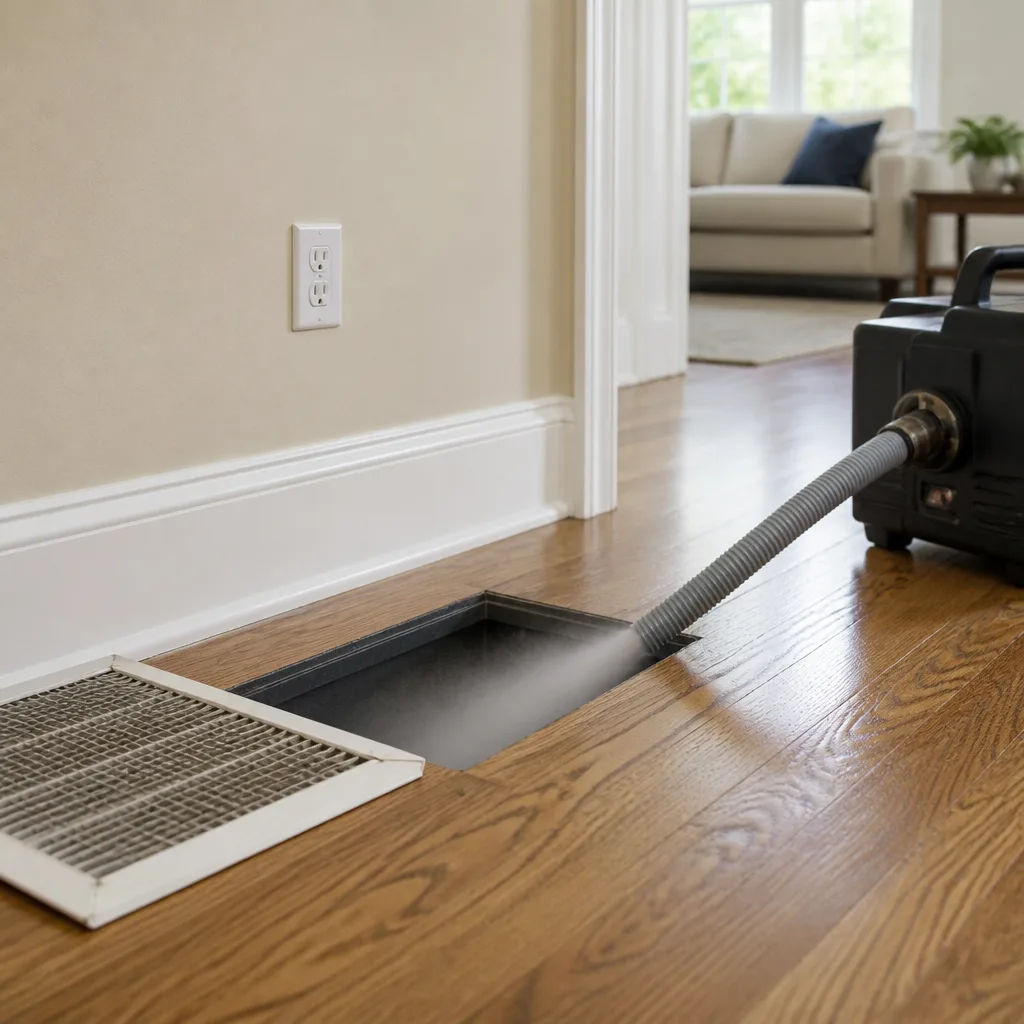
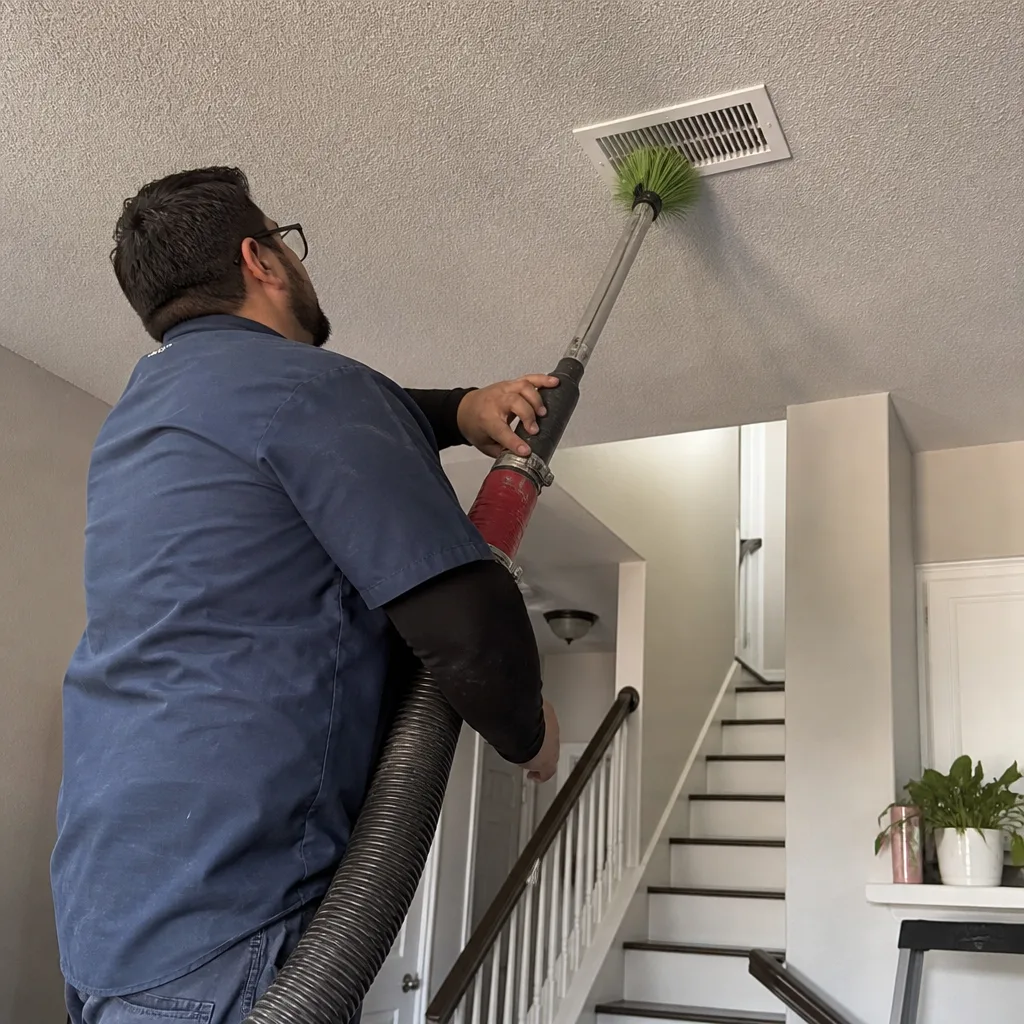
Negative-air cleaning is the commercial standard. A large vacuum unit, often a Nikro or Abatement Technologies machine, is connected to the duct system to create negative pressure. The system remains under vacuum while each duct is agitated section by section, loosening debris that the vacuum pulls out at the source. The air leaving the house during the cleaning is filtered by the machine, not recirculated into the living space. This is the method our crews use on the majority of Dallas homes, and it is the method that leaves a system measurably cleaner inside the trunk and branch lines.
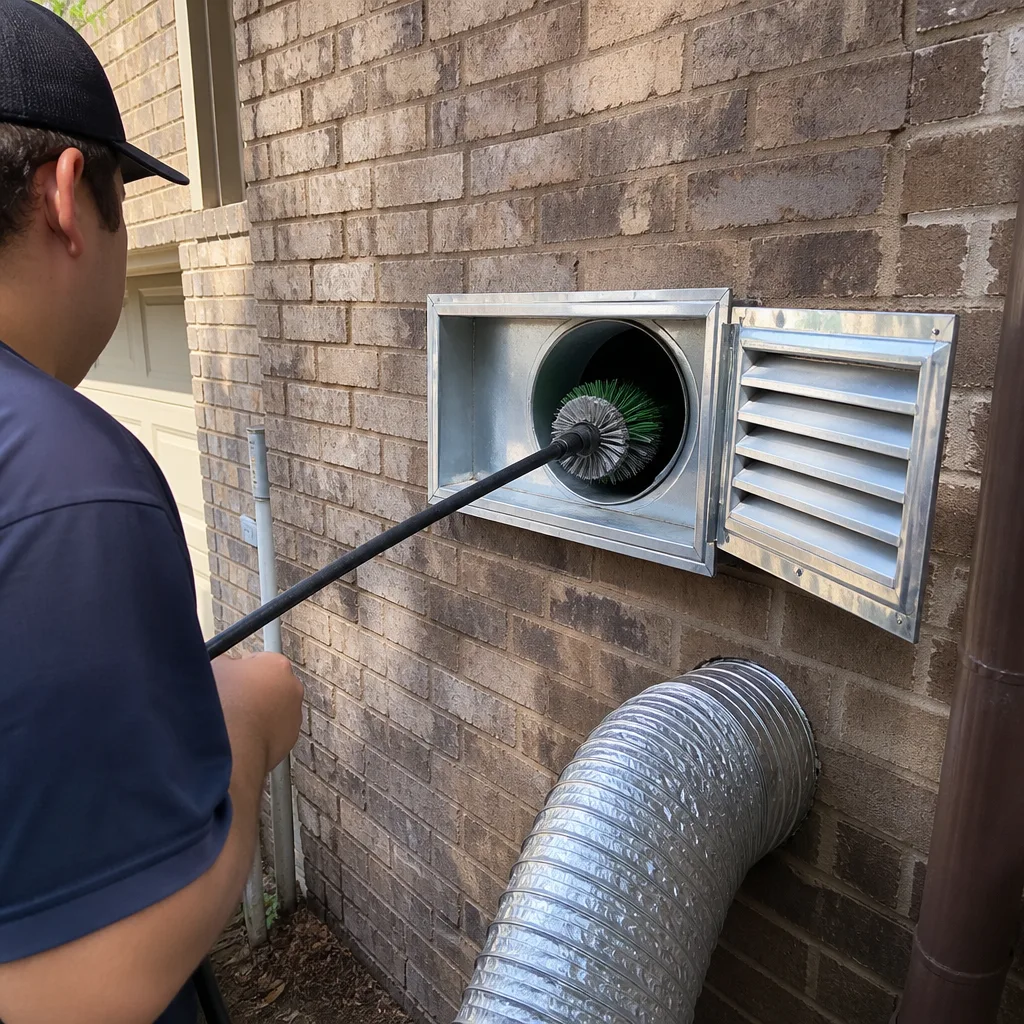
Rotary brush cleaning uses a motor-driven brush system, such as a Rotobrush, run through each duct line while the negative-air vacuum pulls loosened debris back toward the collection unit. This is effective for heavier debris loads, pet hair, and renovation dust that has compacted in the duct walls. Sometimes the right answer in an older Dallas home is a combination of both methods: negative air for the trunk line, rotary brush for the branch runs that have never been cleaned.
What you should never accept is a crew that runs a shop-vac hose into one return and calls the job done. That cleans the first few feet of accessible duct and leaves the rest exactly as it was. A proper cleaning accesses the trunk line, the branch runs, the return drop, the plenum, and the blower cabinet. If the quote does not include the blower wheel, it is not a full cleaning.
There is one more piece of the equation in Dallas specifically: duct sealing. If your log shows chronic dust accumulation no matter how often you change the filter, the issue may not be cleaning at all. Leaky return ducting in a dusty attic or crawlspace pulls unfiltered air into the system constantly. Sealing those leaks with mastic, a paste-like sealant that hardens to close the gaps, addresses the intake problem at the source. A cleaning without sealing a leaking return is a temporary fix. In many older Dallas homes, the honest recommendation is to seal first and clean second.
Three Post-Cleaning Checkpoints Before You Sign Off
Here are the three checkpoints every Dallas homeowner should verify before signing off that a cleaning is complete. None of these require special tools, and all three take less than five minutes total.
Checkpoint 1: The blower wheel is clean. Open the blower cabinet door and look at the wheel itself. A clean blower wheel looks like the day it was installed: bare metal or light plastic with no visible crud on the blades. If the wheel is still caked with dust, the cleaning was incomplete. The blower wheel is the single most important component to clean because it is the fan surface that pushes all your conditioned air. A dirty blower wheel re-suspends dust into the supply side immediately after a cleaning and makes the whole job pointless.
Checkpoint 2: The return drop is visibly clean. The return drop is the large duct section that runs from the return grill down or over to the air handler. Use your flashlight and look up or into that section. It should show clean sheet metal. If it still shows a gray or brown coat of dust, the most contaminated part of the system was skipped. Return ducts carry the dirtiest air in the house, which is why they are often the thickest with debris in Dallas homes, especially those with pets.
Checkpoint 3: No debris left in the supply boots. Walk the house and pull two supply registers in different rooms. Shine the flashlight into the boot. If the cleaning loosened debris but failed to evacuate it under negative pressure, that debris falls back into the boots and sits there. You should see clean metal, not a pile of dust at the bottom of the boot. Any debris left in a boot blows into your rooms the first time the system runs.
These checkpoints are not opinion. They are observable conditions. If any of them fail, the job failed, and a company that stands behind its work in writing will return to correct it. That is the entire point of a Dallas air duct cleaning service that writes a 365-Day Done Right Promise into every job: the guarantee exists so you have recourse when reality does not match the invoice.
Common Mistakes to Avoid
- Cleaning on a calendar instead of on conditions. Every three years is a rule of thumb, not a law. A Dallas home with two large dogs and floor returns may need cleaning twice as often as a condo with a single occupant and ceiling returns. Let your inspection log dictate the schedule, not the other way around. Cleaning a system that is still clean is money spent on nothing.
- Running the cheapest fiberglass filter during cedar season. A MERV 2 filter in January lets cedar pollen pass straight into the return duct, the blower wheel, and the supply side. If you do nothing else on this checklist, upgrading to a MERV 8 or better pleated filter from January through March will cut the worst seasonal load in half.
- Ignoring the return side entirely. Most homeowners focus on supply registers because those are the ones they see. But the return side is where the dirt enters the system. A clean supply side with a filthy return drop means the dirt is being pulled in constantly and pushed back out. Maintain the return before you ever worry about the supply.
- Treating filter slots as maintenance-free. The filter slot is a metal frame, and metal frames leak if they are bent, if the filter does not seat square, or if the access door warps. Dust on the filter slot edges is the early warning sign of filter bypass. Bypass air carries unfiltered particulate directly into the blower cabinet.
- Hiring on price alone. Dallas has no shortage of cheap duct cleaning offers. A $79 whole-house cleaning cannot pay for the equipment, the labor, and the time a proper job requires, which means corners get cut somewhere. The honest price for a proper cleaning of a typical Dallas home runs in the $400 to $800 range depending on system size, access, and the number of returns. A written flat price before work starts, plus a written guarantee after, protects you from a bill that moves at the door.
- Skipping the post-cleaning inspection. Signing off on a job because the crew was polite and the system is running quietly gives you no actual verification. The three checkpoints above take minutes and give you empirical proof. Do them before you sign anything.
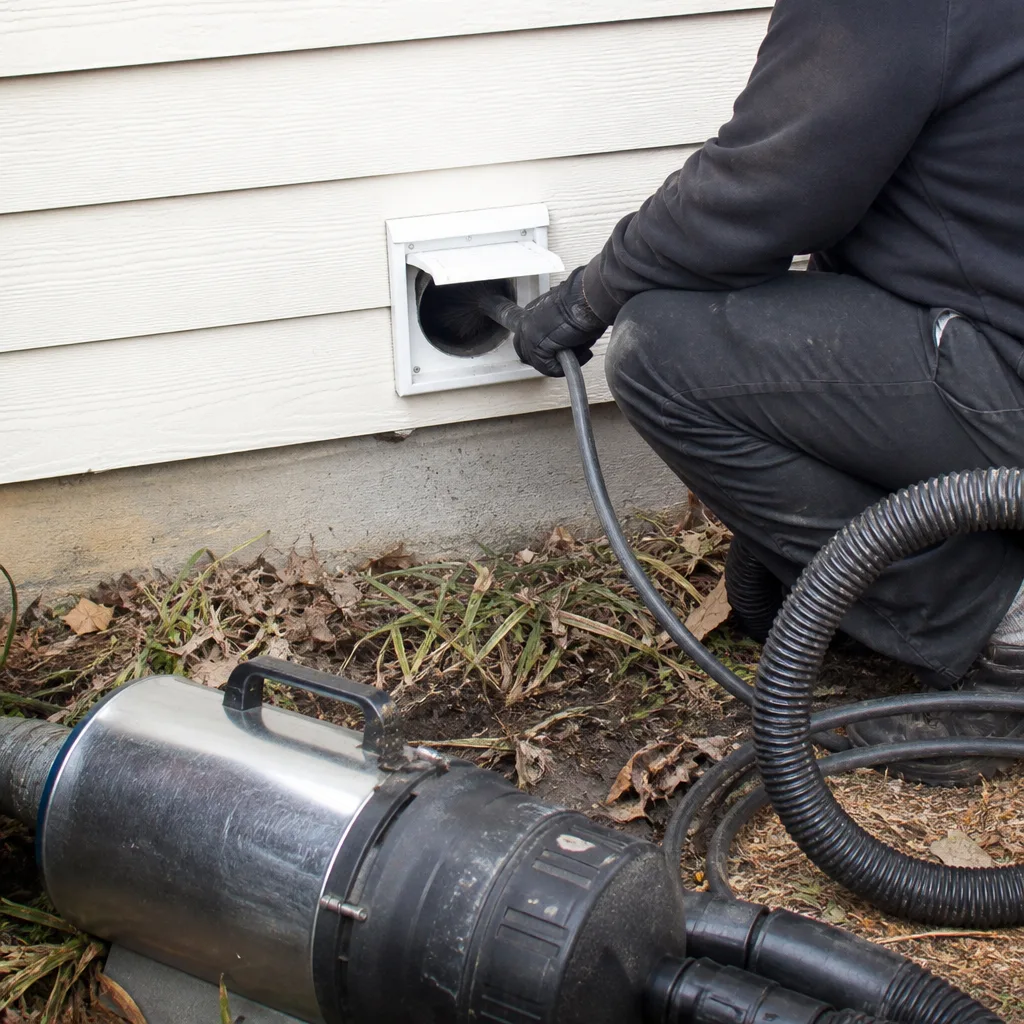
- Forgetting about the dryer vent. This is not an air duct issue, but it sits under the same roof. A clogged dryer vent in a Dallas laundry room is a fire risk and a moisture source, and a dirty dryer vent puts lint into the air your HVAC system recirculates. Dryer vent cleaning in Dallas belongs on the same maintenance calendar as the HVAC ducts.
When to Call a Professional
Your monthly inspection log will tell you when the time comes. Call a professional when you see any of these conditions: visible dust blowing from supply registers on system start, return ducts with a thick gray or brown coating visible behind the grill, a blower wheel caked with dirt, dust streaking from plenum seams, or a renovation that generated significant dust and was completed without system protection. Any one of these is a documented reason to get a quote.
Hollis Air Duct Dallas offers free estimates throughout Dallas. Every job gets a written price before any work begins, every crew is background-checked and uniformed, and every cleaning is covered by the 365-Day Done Right Promise: if it fails within a year, we return and make it right at no charge. Call (361) 309-6223 to schedule an estimate. The call is answered by a live person, and the price you hear is the price on the paperwork before we ever touch the system.
Frequently Asked Questions
A proper whole-house duct cleaning in Dallas typically runs between $400 and $800 for a standard single-family home with one air handler, depending on system size, number of returns, accessibility of the attic or crawlspace, and the cleaning method required. A legitimate quote is written as one flat price for the entire system, not a per-vent price that expands once the crew arrives. Call (361) 309-6223 for a written quote on your specific system, no per-vent pricing and no moving targets.
A $79 or $99 whole-house cleaning cannot cover the labor, equipment, and time a proper negative-air cleaning requires, so the cheap quote either excludes the blower wheel and return drop, uses a shop-vac instead of a negative-air machine, or becomes a high-pressure upsell once the technician is inside. The simplest test is to ask for a written price for the complete job, including the blower wheel, the return drop, and all supply boots, before the crew starts. If a company will not commit to that price in writing, the low number on the ad is not the price you will pay.
Most Dallas homes need professional duct cleaning every 3 to 5 years, but the actual interval depends on pets, renovation history, filter quality, and whether the family runs the AC all summer. A home with two large dogs, floor returns in a high-traffic hallway, and a MERV 2 filter may need cleaning every 2 years. A home with a MERV 11 filter, no pets, and ceiling returns may go 6 years or more. The monthly inspection routine in this guide gives you objective data instead of a calendar guess.
Verify it yourself before you sign anything. Open the blower cabinet and confirm the blower wheel is clean, shine a flashlight into the return drop and look for clean metal, and pull two supply boots to confirm no debris piles remain. If those three checkpoints pass, the cleaning was real. If any of them fails, the job was incomplete, and a company with a written guarantee will return to correct the work at no charge.
Duct cleaning removes accumulated pollen, dust, and debris from the system, which can reduce the recirculation of those particles when the AC or heat runs. It does not remove the allergen source outside the home, and it does not substitute for filtration. The most effective allergy strategy for a Dallas homeowner is a clean duct system paired with a properly sealed MERV 11 filter during cedar season, plus meeting the monthly inspection routine so you catch pollen intrusion early.
No. Air duct cleaning and dryer vent cleaning are separate services. The dryer vent is the exhaust line that carries hot, lint-laden air from your dryer to the outside, and it requires different equipment and access than HVAC ductwork. The two are often scheduled together because they share the same maintenance calendar and because a clogged dryer vent introduces lint and moisture into the laundry room air that your HVAC system then pulls in through the return. We offer both, and we price them separately so you know exactly what each one costs before work begins.
The Bottom Line
A duct cleaning maintenance checklist for Dallas homeowners is not a list of chores. It is a diagnostic calendar built on the specific conditions this climate creates: cedar pollen in January, cottonwood and open-window dust in April, 14-hour AC run time in July, and pre-holiday load in October. Run the monthly inspection routine at registers, plenums, and filter slots. Log what you find. Match your filter to the season. And when the evidence in your log says the system has crossed the line, call a contractor who writes the price before the work starts and backs the job in writing for a full year. That discipline is what separates a cleaning that earns its price from one that just takes your money.
Written by Roy Castellanos, Owner at Hollis Air Duct Dallas, serving Dallas since 2004.
See the difference
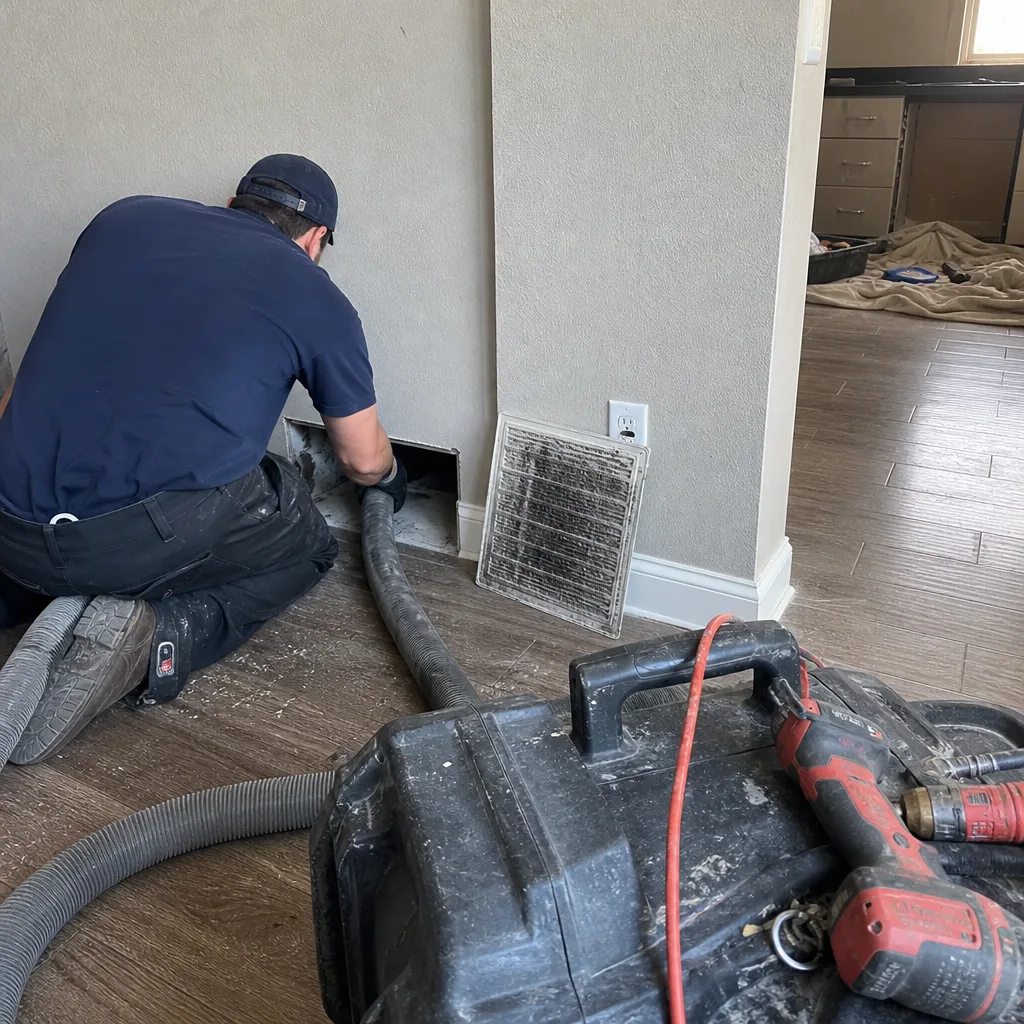 Before
 After
After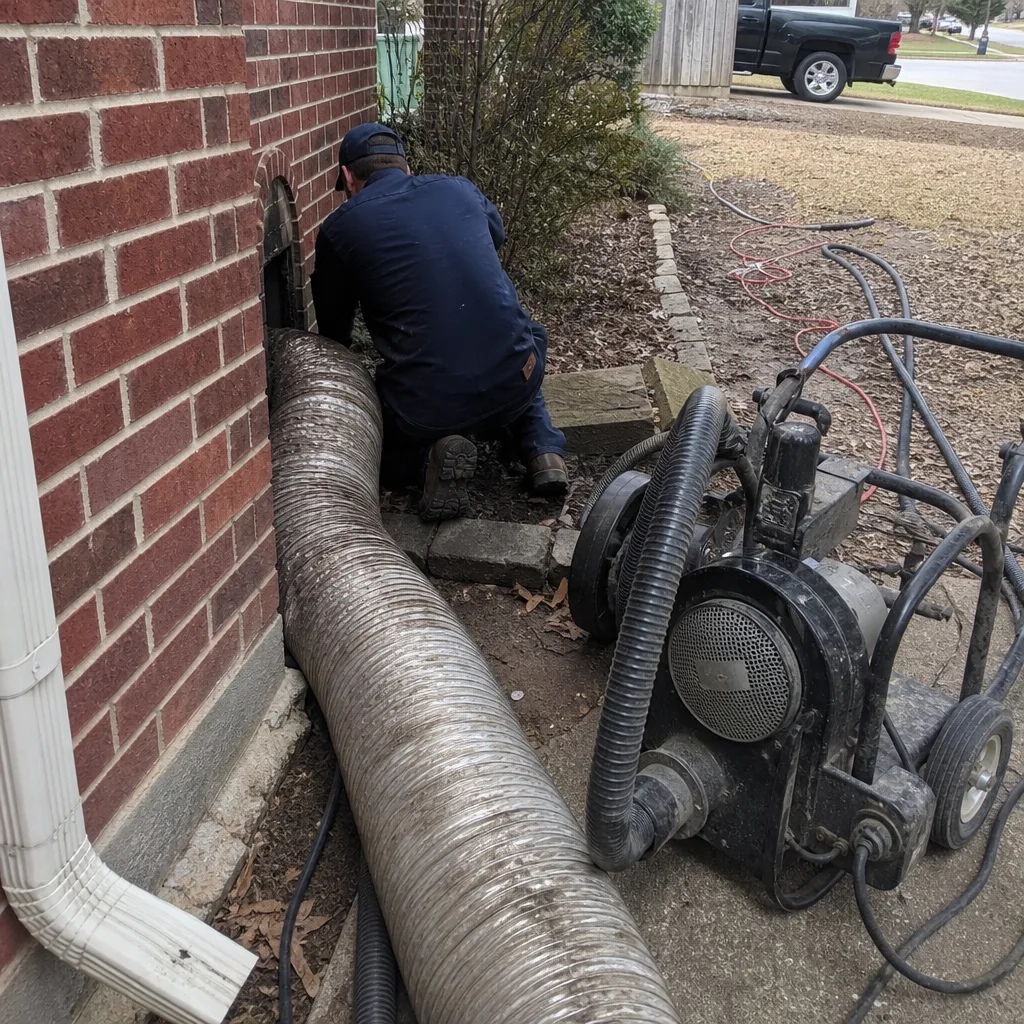 Before
 After
After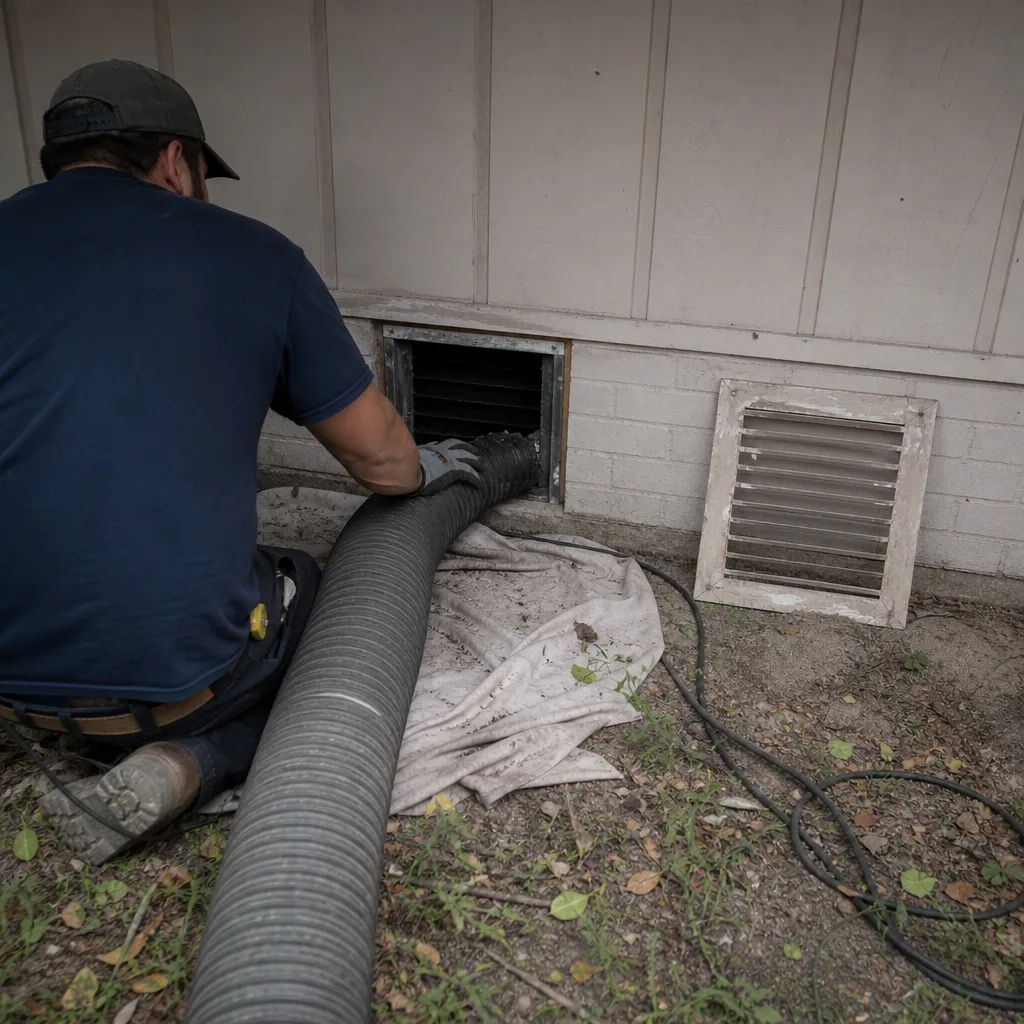 Before
 After
After