
Last updated October 15, 2026
 Whole-home duct cleaning
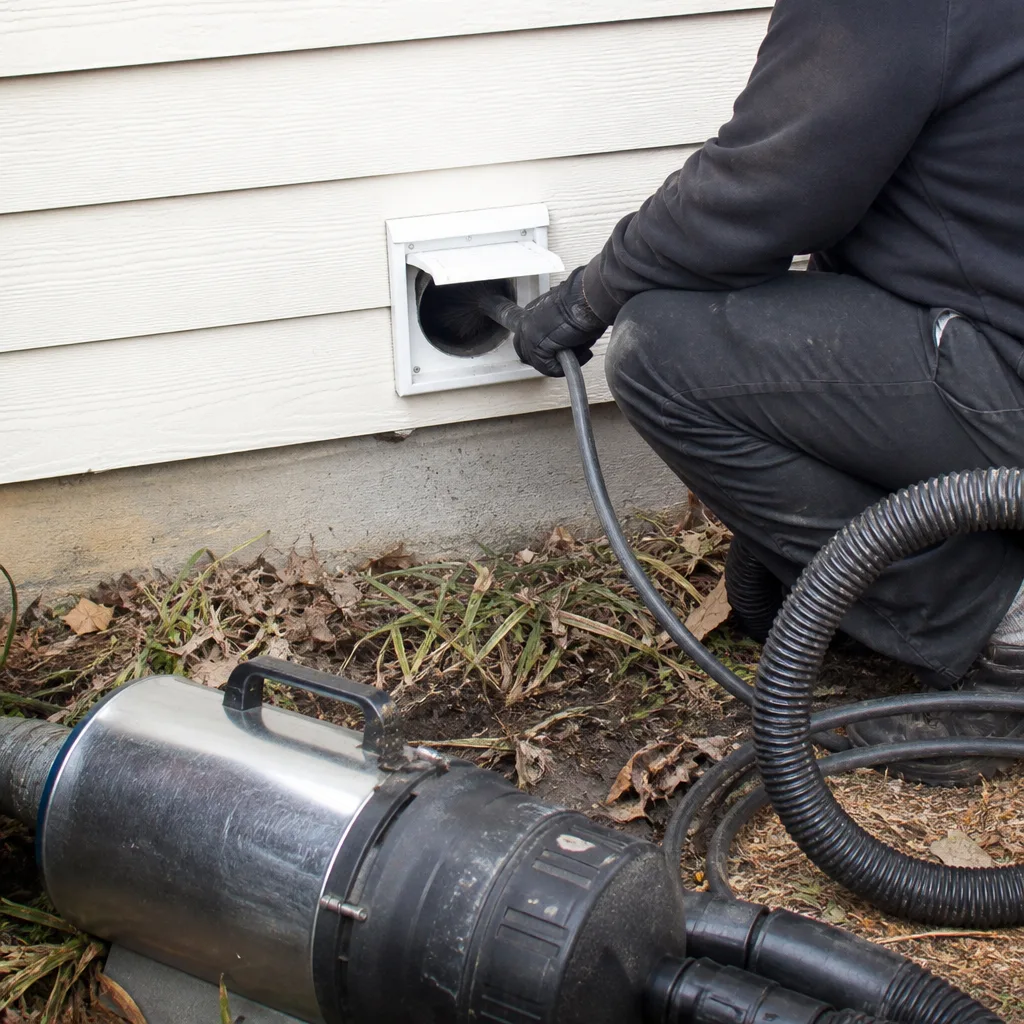
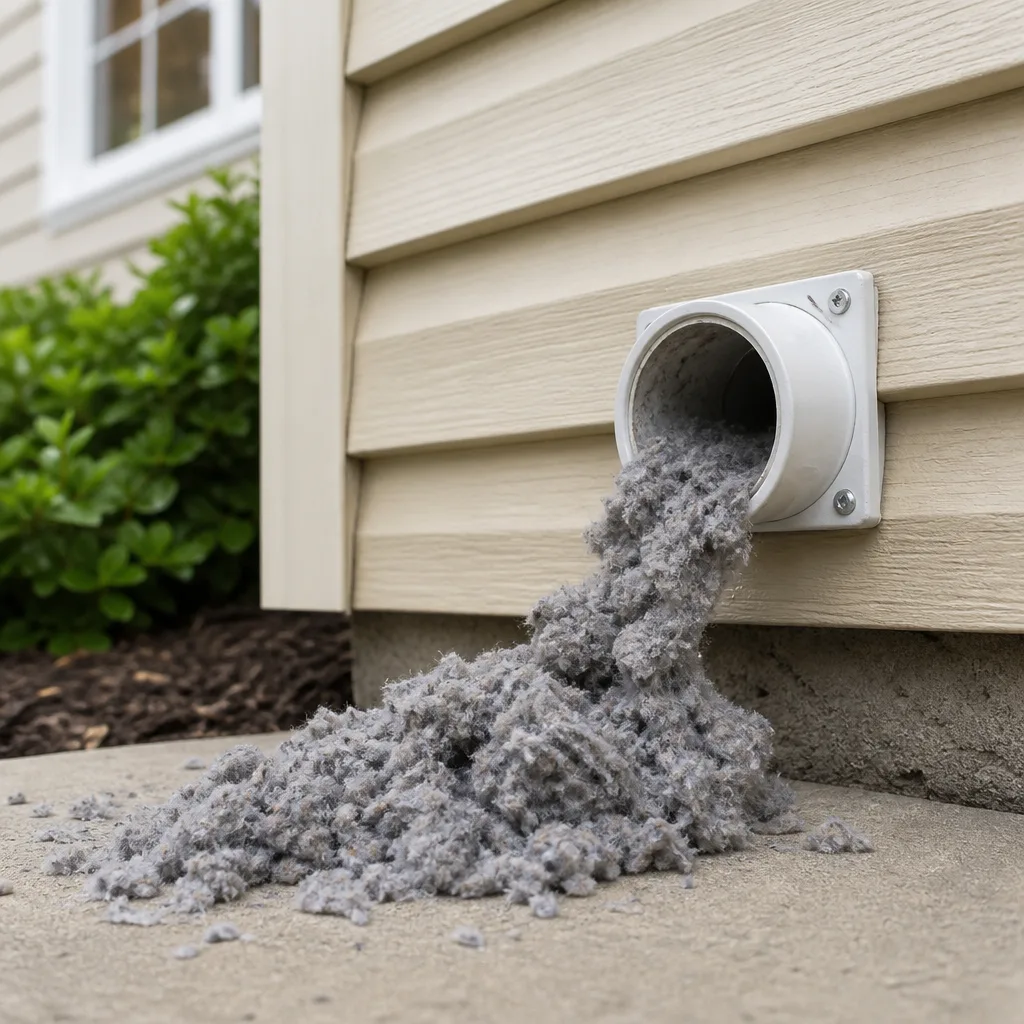 Dryer vent cleaning
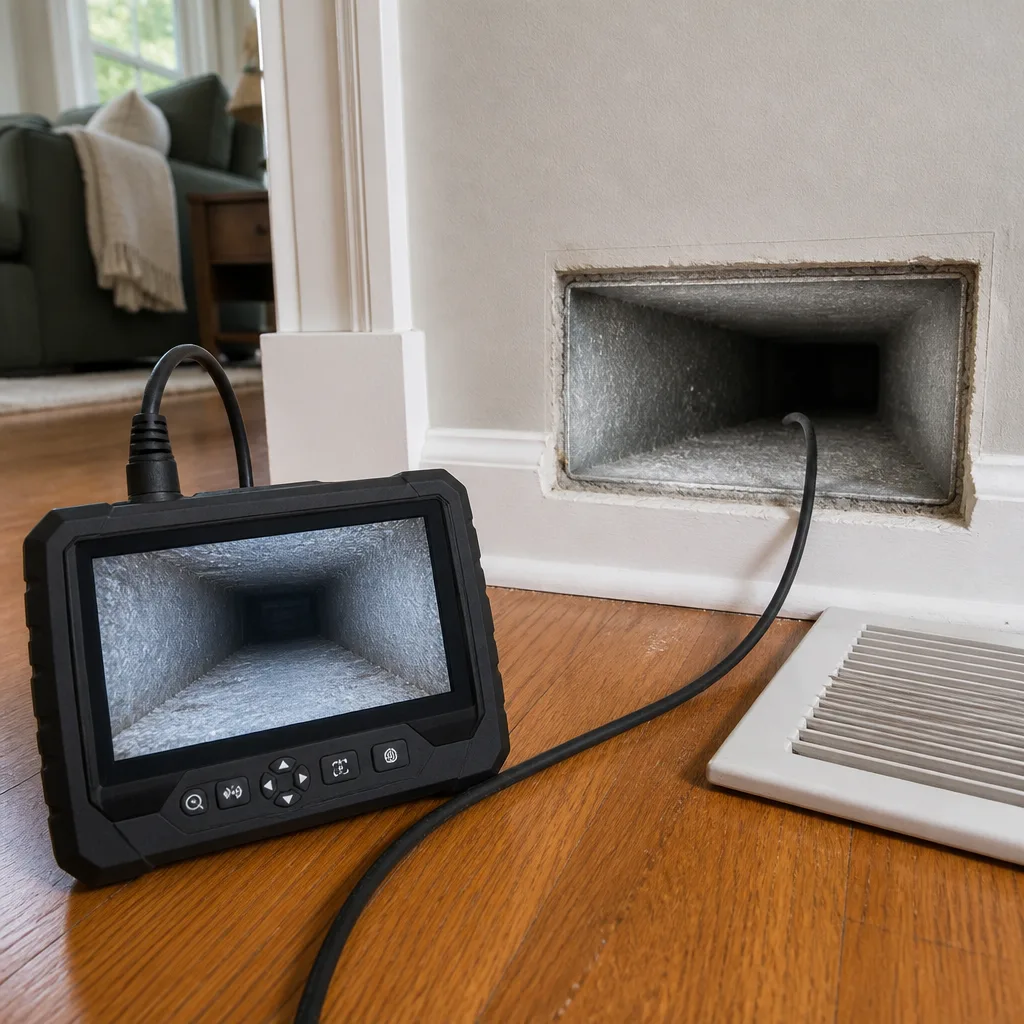 Camera inspection
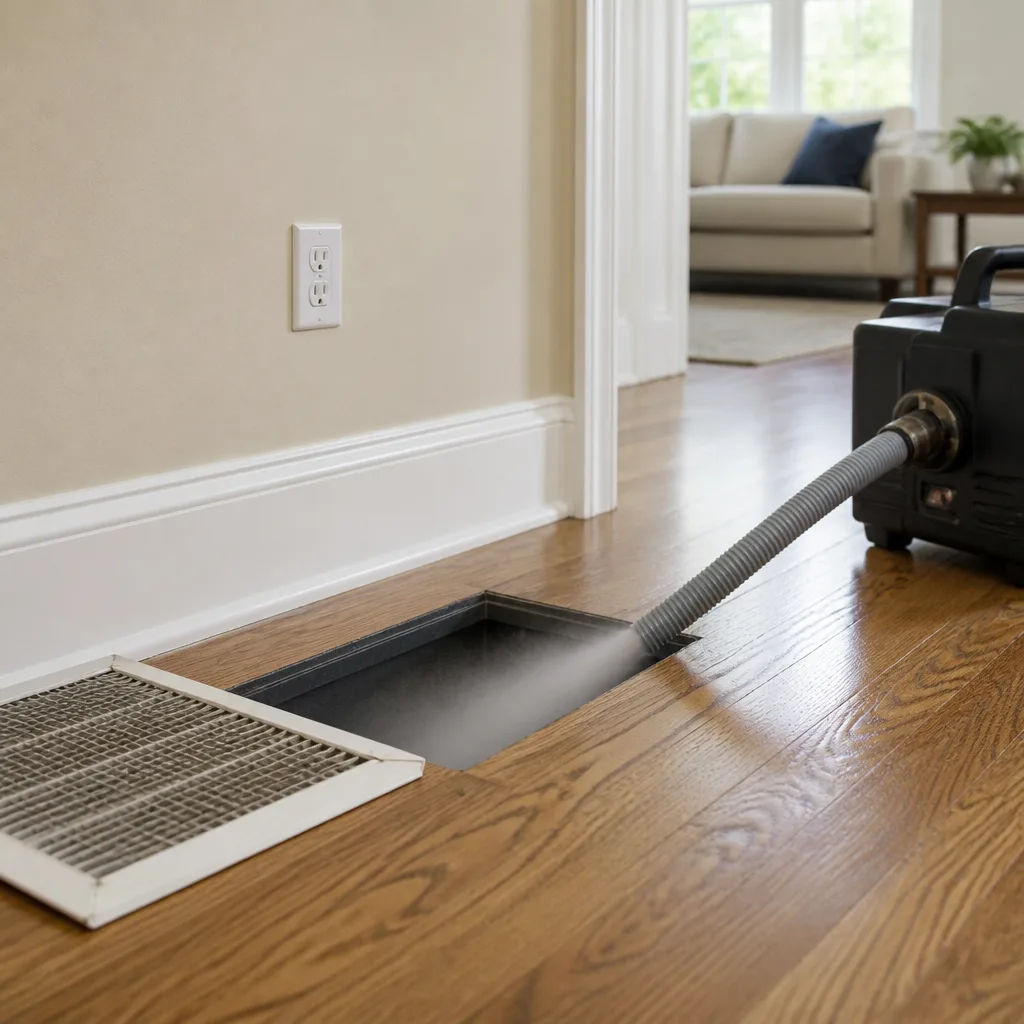 Sanitizing & deodorizing
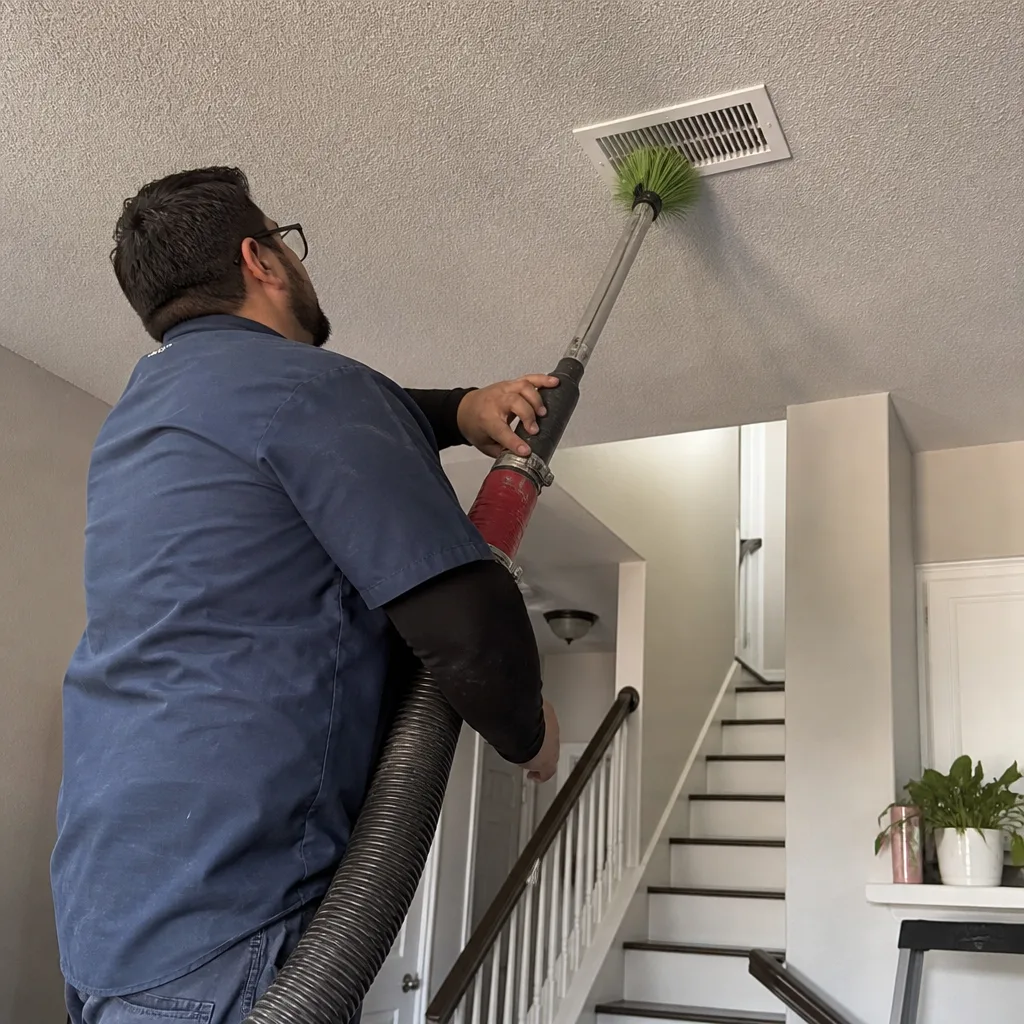
Whole-system duct and dryer vent check with before-and-after photos - you see exactly what came out of your vents
That "$99 whole-house special" is a bait ad - the real number appears once they are in your hallway, or the "clean" is a shop-vac at the register. We photograph the inside of your ducts before and after instead.
Air Duct Cleaning Warning Signs: A Dallas Homeowner’s Reference Guide
Dust on your registers is listed as a warning sign in almost every duct cleaning article. In Dallas in June, with the system running 14 hours a day, it’s also completely normal. The difference between a symptom worth acting on and one that isn’t is context. This guide treats each warning sign as a diagnostic clue: a specific cause, a specific threshold, and a specific next step. If you own a home in Dallas, where clay soil, construction dust, and long cooling seasons all push particulate through your HVAC system, you need a reference that accounts for local conditions, not generic advice written for a house in Ohio.
Quick Answer
The most reliable warning signs that your Dallas home needs air duct cleaning are visible dust buildup on the inside of register covers, a musty odor that appears only when the blower runs, allergy symptoms that spike when the system kicks on, and visible debris at the filter slot or air handler cabinet. If you notice two or more of these together, the ducts are contributing to your indoor air problem, not just passing through it. A professional inspection with a camera scope confirms what your eyes and nose are telling you.
Styles & brands we work with
Table of Contents
- Register Dust: Normal vs. Diagnostic
- Odor Diagnostics: Musty, Dusty, and Chemical Smells
- Rising Energy Bills and Duct Condition
- Allergy Symptom Timing as a Duct Health Indicator
- Signs at the Air Handler and Filter Slot
- How Often Do Dallas Ducts Really Need Cleaning?
- Common Mistakes to Avoid
- When to Call a Professional
- Frequently Asked Questions
Register Dust: Normal vs. Diagnostic
The short answer: some dust on your registers is normal. The useful question is what kind of dust, how much, and how fast it comes back. Here’s how to read what you’re seeing.
In Dallas, we deal with a specific dust profile. It includes fine clay particles tracked in from the blackland prairie soil, pollen from live oaks and mountain cedar during their respective seasons, and construction particulate from the constant infill development across the metro. Some of that will always reach your registers. A light, even film of gray dust on the outside of the register face is normal and usually just room dust settling. Wipe it with a damp cloth. If it takes three to four weeks to return, that’s your baseline for normal.
What is not normal is dust accumulating on the inside of the register, the part you can’t see without removing the cover. When dust cakes the interior vanes or the visible throat of the duct boot, that material is coming from inside the duct system, not the room. That’s duct contamination. The same applies to dust on the wall or ceiling immediately around the register, especially in a smudge or halo pattern. Air escaping around a loose register boot deposits fine particles on the surrounding surface. That pattern means air is bypassing the register seal and carrying duct debris with it.
The other diagnostic sign is texture. Room dust is fine and uniform. Duct dust tends to be coarser, sometimes clumped, and often includes fibers from insulation or carpet backing. If you see small gray clumps or fibrous material on your registers, that’s material being carried through the supply side of your system. That’s not normal anywhere, but it’s more common in Dallas homes with older flex duct runs that have begun to degrade in the attic heat. We have walked through inspections in Lake Highlands and Richardson where attic temperatures hit 140 degrees in August, and flex duct liners start to delaminate at those sustained temperatures.
Here’s a visual inspection method that takes about ten minutes and tells you more than any article can:
- Turn the system off at the thermostat.
- Remove two or three supply register covers in different rooms, preferably one in a bedroom and one in a main living area.
- Wipe the inside of each register with a clean white paper towel.
- Look at what comes off. Fine gray dust: normal. Dark, clumpy, or fibrous material: duct contamination.
- Reach into the register boot with a dry cloth and wipe the first six inches of exposed duct. If the cloth comes back coated, the buildup extends into the system, not just the register cover.
This is the same kind of check we perform with a camera scope during a free estimate, and it’s the difference between guessing and knowing. For a more detailed look at how professional cleaning addresses internal buildup in Dallas homes, see our guide to Air Duct Cleaning in Dallas.
Odor Diagnostics: Musty, Dusty, and Chemical Smells
Your nose is a legitimate diagnostic tool. The key is separating the three main odor types because each points to a different problem with a different urgency level.
Musty odors are the most common duct-related smell in Dallas and the most misunderstood. Musty means mold or mildew, but the question is where. In Dallas’s humid shoulder seasons, especially April through June and September through October, condensation forms where cooled supply air meets warm attic air at the register boots. That moisture allows mold to grow on dust inside the boot and the first few feet of duct. A musty smell that appears only when the blower runs points directly at the duct system. If the musty smell persists when the system is off, the problem is more likely in the evaporator coil drip pan or the condensate drain line. The distinction matters because duct cleaning addresses one, and HVAC service addresses the other. In our experience across North Dallas and Plano, homes with uninsulated metal register boots in vented attics get boot condensation every spring. The fix is often cleaning plus insulation, not just cleaning.
Dusty odors, sometimes described as a hot smell, smell like a furnace or an old attic when the system first kicks on. That’s fine particulate being heated as it passes through the blower and the heat exchanger. It’s usually worse in the first heating season after a long cooling season, because material that settled in the system gets baked off. A dusty smell that fades after a few minutes of run time is normal, though it may indicate enough buildup to consider cleaning. A dusty smell that persists or smells acrid is not normal and points to an overheating component or a badly loaded blower wheel. If you have a dusty smell plus visible debris at the filter slot, covered below, the scope of work has moved past routine cleaning.
Chemical smells are the rarest and the most urgent. A chemical odor from vents, often described as solvent-like or plastic-like, is not a duct cleaning issue. Turn the system off and call an HVAC technician. Common causes include a failing blower capacitor, a refrigerant leak reaching the coil, or off-gassing from a recent component replacement. Duct cleaning will not resolve a chemical smell. We will tell you that before we schedule anything, because the right call is an HVAC diagnostic, not a duct cleaning quote.
One more note on Dallas specifics: homes with crawl spaces, which are more common in older neighborhoods like East Dallas and Kessler Park, can develop a persistent earthy smell from damp crawl space air being drawn into the return side through gaps in the ductwork. That is a duct sealing issue as much as a cleaning issue. Our guide to Duct Sealing in Dallas covers how return-side leaks pull unconditioned air into the system.
Rising Energy Bills and Duct Condition
High electricity bills are real in Dallas. Summers are long and the grid is what it is. But the connection between energy cost and duct condition is more specific than most guides make it.
Dirty ducts do not meaningfully restrict airflow in a properly sized and sealed system. A thin layer of dust on the interior of a duct does not create enough resistance to make your blower work harder. The real energy cost of neglected ducts comes from three things: leaks, collapsed sections, and a loaded blower wheel.
Leaks are the big one. Duct leakage in Dallas attics, where the temperature difference between supply air and attic air can exceed 40 degrees in July, is expensive. The Department of Energy’s average estimate is that typical homes lose 20 to 30 percent of conditioned air to duct leaks. In Dallas, with our hot attics and long run times, that number holds up. A sealed system keeps what you paid for inside the envelope. A leaking system conditions your attic. That’s why Duct Sealing in Dallas often cuts utility costs more than cleaning alone. The two services work together: seal the leaks, then clean the system so you’re not circulating whatever accumulated while it was leaking.
Collapsed or kinked flex duct is a different energy problem. When flex runs are crushed by attic storage or improperly hung, airflow drops in that branch. The system compensates by running longer to satisfy the thermostat. Longer run time means higher bills, but the root cause is duct damage, not dirt.
A loaded blower wheel is where dirt does directly cost you money. In systems that have run for years with cheap or missing filtration, fine dust builds up on the blower fan blades. That unbalances the wheel, reduces airflow, and can eventually burn out the motor. A blower that’s caked with debris is a cleaning issue, not an equipment replacement issue, though if it goes too long, it becomes both.
To separate duct problems from equipment efficiency problems, track one simple metric: your kWh usage against cooling degree days. If your bill is up but your usage is flat, it’s a rate problem. If your usage is up but the system is the same age and the thermostat setpoint hasn’t changed, look for leaks, a dirty coil, or a failing capacitor. If you’ve already ruled out the coil and the capacitor, the ducts are the next place to look. For Dallas, where our cooling season runs roughly May through October, the best time to evaluate this is August, when any duct deficiency shows up clearly in your usage data.
Allergy Symptom Timing as a Duct Health Indicator
Dallas is a rough place for allergy sufferers. Live oak pollen in March, mountain cedar in December and January, ragweed in the fall. The challenge is separating ambient allergies from duct-contributed symptoms. The timing of your symptoms is the diagnostic key.
Seasonal allergies, the kind driven by what’s blooming outside, tend to be at least as bad outside the house as inside. They’re also fairly constant throughout the day when you’re home. Duct-related symptoms have a different signature. If your eyes itch and your nose runs most noticeably within ten to fifteen minutes of the system kicking on, and if those symptoms ease when the system cycles off, the air handler is delivering something to you that ambient pollen alone does not explain. That pattern, symptoms that track with system cycles rather than with outside exposure, is a specific reason to inspect the ducts.
There’s a mechanical explanation. Your return side draws air from inside the home, filters it, conditions it, and sends it back through the supply ducts. If supply ducts contain accumulated dust, pet dander, or, in homes with a history of water intrusion at the boots, mold fragments, the blower pushes those particles into the living space every time it runs. The system becomes the delivery mechanism for whatever lives in the ducts. A family in Frisco called us after two allergy seasons of escalating symptoms. The camera scope showed a thick layer of pet dander and fibers inside the supply side that had been recirculating for years. After cleaning, their cycle-triggered symptoms dropped noticeably within a week.
Upgrading filtration helps, and we work with filtration from Honeywell and Aprilaire for that very reason. But a high-MERV filter on the return side can’t remove material that’s already downstream in the supply ducts. Cleaning removes the load. Filtration reduces the future load. The order of operations matters.
If symptoms spike when the system kicks on and you have pets, carpet, or visible register buildup, the ducts are worth an inspection. If symptoms are constant regardless of system cycling, your allergies are likely ambient, and the fix is a better filter or a different allergy management approach. Don’t spend money on duct cleaning without confirming that the symptom pattern matches the system pattern.
Signs at the Air Handler and Filter Slot
The filter slot and air handler cabinet are where contamination becomes visible after it has moved past the registers. If you see buildup here, the system is loaded, and the scope of work has expanded.
The filter slot tells you how well the system has been protecting itself. A filter that’s caked with dust after three or four weeks of summer run time is normal. A filter slot that’s full of dust bypass, meaning dust accumulated on the wrong side of the filter, is a problem. Dust bypass means air is going around the filter, usually because the filter is undersized, installed backwards, or simply not sealing in the slot. Every particle that bypasses the filter lands on the evaporator coil, the blower wheel, and inside the supply plenum. If you pull the filter and see a coating of dust on the upstream side of the coil, the system has been running unfiltered.
The blower compartment is the next indicator. On most residential air handlers, you can see at least part of the blower wheel through the access door. If the wheel blades look fuzzy, coated, or dark, that’s fine dust and fiber that’s been baked on over thousands of hours of run time. A loaded blower wheel means the system is circulating air through a dirty fan, which re-entrains particles and reduces airflow. That’s not a filter issue. That’s a cleaning issue.
Here’s a three-step check you can do at the air handler:
- With the system off, pull the filter and look past the filter slot toward the coil. You’re looking for a visible dust blanket on the coil face. A thin gray film is normal. A fuzzy coating is not.
- Shine a flashlight into the blower compartment and inspect the wheel. Clean metal with sharp edges is good. Rounded, fuzzy, or dark blades mean buildup.
- Check for debris inside the return plenum. In a downflow configuration, where the return enters the top of the cabinet, you’ll often see dust and debris that has fallen down from the return side. That material gets drawn right back into the blower.
What you’re looking for is whether the system is internally clean or internally loaded. A system that’s loaded at the coil and blower needs more than a duct cleaning. It needs component cleaning: the coil, the blower wheel, the plenums, and the ducts. That’s a full system service, and it’s where the real difference between contractors shows up. The equipment we run is professional-grade: Rotobrush rotary brush systems for the duct interiors and Nikro negative air machines for whole-system extraction, along with filtration products from Abatement Technologies and Guardsman. That hardware matters because a loaded blower has to be cleaned under negative pressure, or you just move the contamination around.
How Often Do Dallas Ducts Really Need Cleaning?
The honest answer for a Dallas house is every three to five years. But that range only means something with context. A single adult with no pets, hardwood floors, a MERV 11 filter, and a well-sealed house in Far North Dallas can go seven years. A family with two dogs, carpet, a MERV 8 filter, and kids tracking in clay soil from the backyard might need cleaning every three years. Same metro, different answer.
Here’s a simple decision matrix based on what we see across the Dallas area:
- Every 3 years: Homes with multiple pets, smokers or vapers indoors, recent construction or renovation, or a family member with significant allergies or asthma.
- Every 4 to 5 years: Typical family homes with one pet or no pets, carpeted bedrooms, standard MERV 8 filtration, and normal DFW dust exposure.
- Every 5 to 7 years: Homes with no pets, hard flooring, upgraded filtration (MERV 11 or higher, ideally from a brand like Honeywell or Aprilaire), and well-sealed ductwork.
Construction is a separate trigger. If you’ve done a kitchen remodel or any drywall work, get the ducts cleaned when the job is done, regardless of schedule. Drywall dust is fine enough to pass through most filters, and once it’s inside the system, it settles on everything. We have seen brand new coil fouling in houses that went through a six-week remodel and then ran the system the whole time. If you do renovation, add a duct cleaning to the punch list. It’s cheaper than a coil replacement.
The other trigger is water. If you’ve had a supply duct boot sweating, a condensate overflow, or any water intrusion into the duct system, mold follows within days in Dallas humidity. Clean it, fix the moisture source, and don’t wait for the next scheduled cleaning. The Hollis Air Duct Dallas home page covers our full service area and what a standard cleaning includes.
Common Mistakes to Avoid
- Waiting until the registers look dirty to act. By the time register faces are visibly coated, the system interior is usually worse. The inside of the ducts is where the problem accumulates first. A camera inspection catches it before it becomes obvious.
- Assuming a high-MERV filter solves everything. A better filter reduces what enters the system, but it doesn’t remove what’s already there. If your ducts are loaded, upgrading filtration just means the new filter clogs faster while the old contamination keeps recirculating.
- Treating a musty smell with spray fresheners. Masking a mold odor with a scented product leaves the mold in place and tells you nothing about where it is. Find the source, fix the moisture, and clean the affected surfaces.
- Cleaning the ducts while ignoring the return leaks. If the return side is pulling attic air through gaps, cleaning the supply side just gives a cleaner path for contaminated air to flow through. Seal first or seal in the same visit. That’s why we offer Duct Sealing in Dallas as a companion service.
- Calling an HVAC company for duct cleaning without checking their equipment. A shop vac and a brush from a hardware store cannot clean a 40-foot flex run under negative pressure. Ask what equipment they run. If they can’t name the system, keep looking.
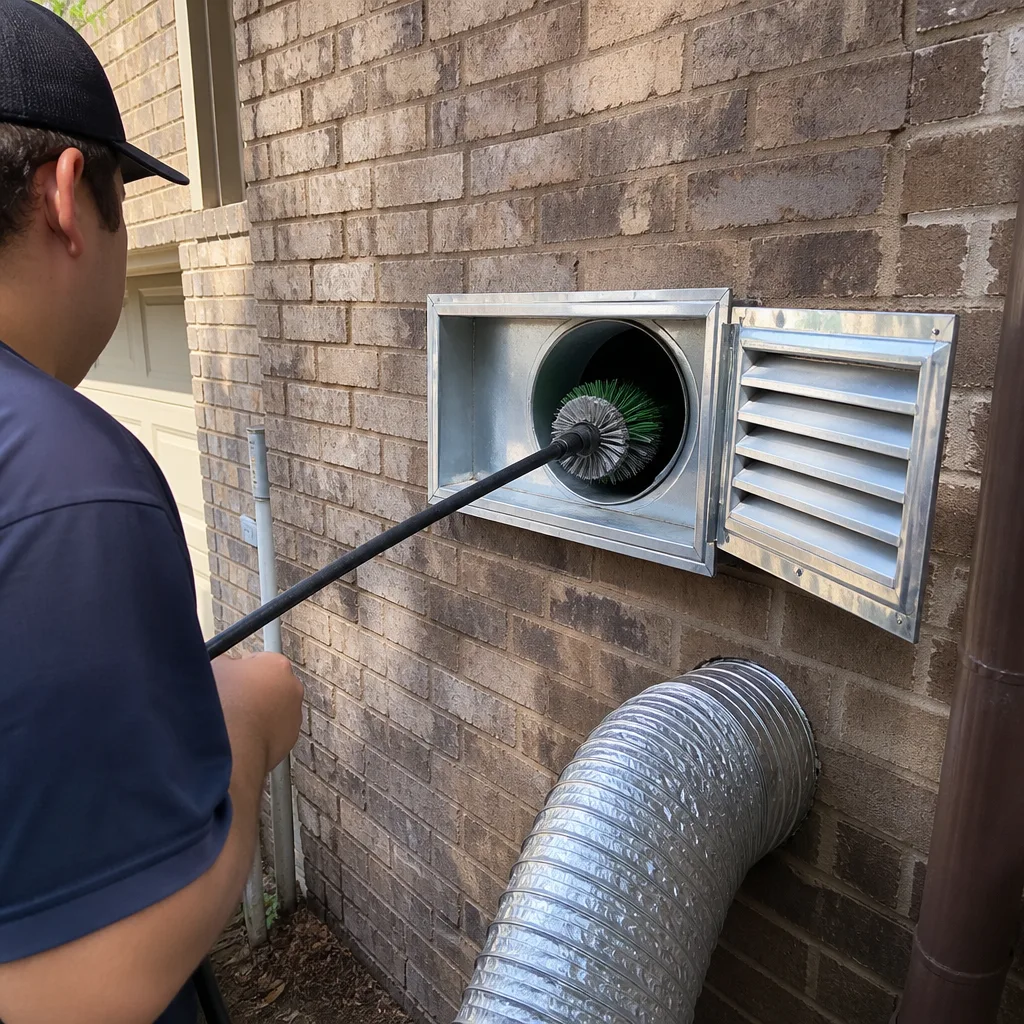
- Skipping the dryer vent while you’re at it. Dallas homes with utility rooms near the center of the house often have long dryer vent runs, and those runs collect lint the same way ducts collect dust. A clogged dryer vent is a fire risk. Our Dryer Vent Cleaning in Dallas page explains the specific risks for those longer runs.
When to Call a Professional
Some signs are worth noting, and some are worth making a phone call. Call a professional when you see visible buildup inside the registers that returns quickly after cleaning, when a musty odor appears specifically when the blower runs, when allergy symptoms spike on system start, or when your filter slot shows dust bypass and your blower wheel looks loaded. If you see any of these in a Dallas home, a camera inspection will tell you exactly what you’re dealing with. If you don’t like what you see on camera, you can see the before and after photos from your own system before you pay a dime. That’s the standard we work to on every job. Hollis Air Duct Dallas offers free estimates in Dallas, and every quote is a written price before we touch the system. Call (361) 309-6223 and we’ll walk you through what we’re looking at.
Frequently Asked Questions
Air duct cleaning for a typical Dallas home runs $380 to $650, depending on square footage, number of returns, and whether the coil and blower are included. A whole-system job on a two-story home with a loaded blower can run $700 or more. Anyone quoting a flat $99 whole-home cleaning is selling a trip charge, not a cleaning. The Air Duct Cleaning in Dallas page breaks down what determines the price. Call (361) 309-6223 for an exact quote on your system. Estimates are free.
Cheaper bids usually mean less work: a register-level vacuuming instead of a negative-air cleaning, no coil or blower service, and no duct sealing. Some companies use a low advertised price to get a crew inside, then upsell once they’re there. Our price structure is different: the written price covers the job we scoped, and that number doesn’t move when the crew arrives. If the camera shows more work than expected, you approve a new written price before anything changes.
You should get before and after photos of the inside of your own ducts, not a demo photo. Ask before you book. The Rotobrush and Nikro equipment we run includes camera access during the process, and we show you the before and after of your system when the job is finished. If a company cannot show you your own ducts after cleaning, you have no evidence the work happened.
Yes, if the symptom pattern matches system operation. If your symptoms spike when the system kicks on and ease when it cycles off, accumulated allergens inside the supply ducts are being delivered to you every time the blower runs. Ambient seasonal allergies don’t track with system cycles. That distinction tells you whether duct cleaning is likely to help or whether the problem is outside.
A standard whole-home duct cleaning for a 2,000 to 3,000 square foot Dallas house takes four to six hours. Adding the coil and blower adds another hour or two. Anyone who says they’ll be done in ninety minutes is not performing a full negative-air cleaning.
Not by itself. The energy savings come from finding and sealing leaks, fixing crushed flex runs, and cleaning a loaded blower wheel so the system doesn’t run longer than it needs to. Cleaning removes the contaminant load. Sealing removes the leak load. Together they can reduce run time and utility cost. Alone, a clean duct moves the same amount of air as a dirty one.
The Bottom Line
Warning signs are only useful if you know what they point to. Register dust that returns fast, odors that track with the blower, allergy symptoms that track with system cycles, and visible debris at the filter slot or blower wheel are the signs that matter in a Dallas house. Ambient dust, seasonal allergies, and normal filter loading are not. When you’re ready to find out which category your home falls into, the inspection tells you more than any guide can. Hollis Air Duct Dallas has served the Dallas area since 2004, and every job comes with a written price and a 365-Day Done Right Promise in writing. Call (361) 309-6223 for a free estimate.
Written by Roy Castellanos, Owner at Hollis Air Duct Dallas, serving Dallas since 2004.
See the difference
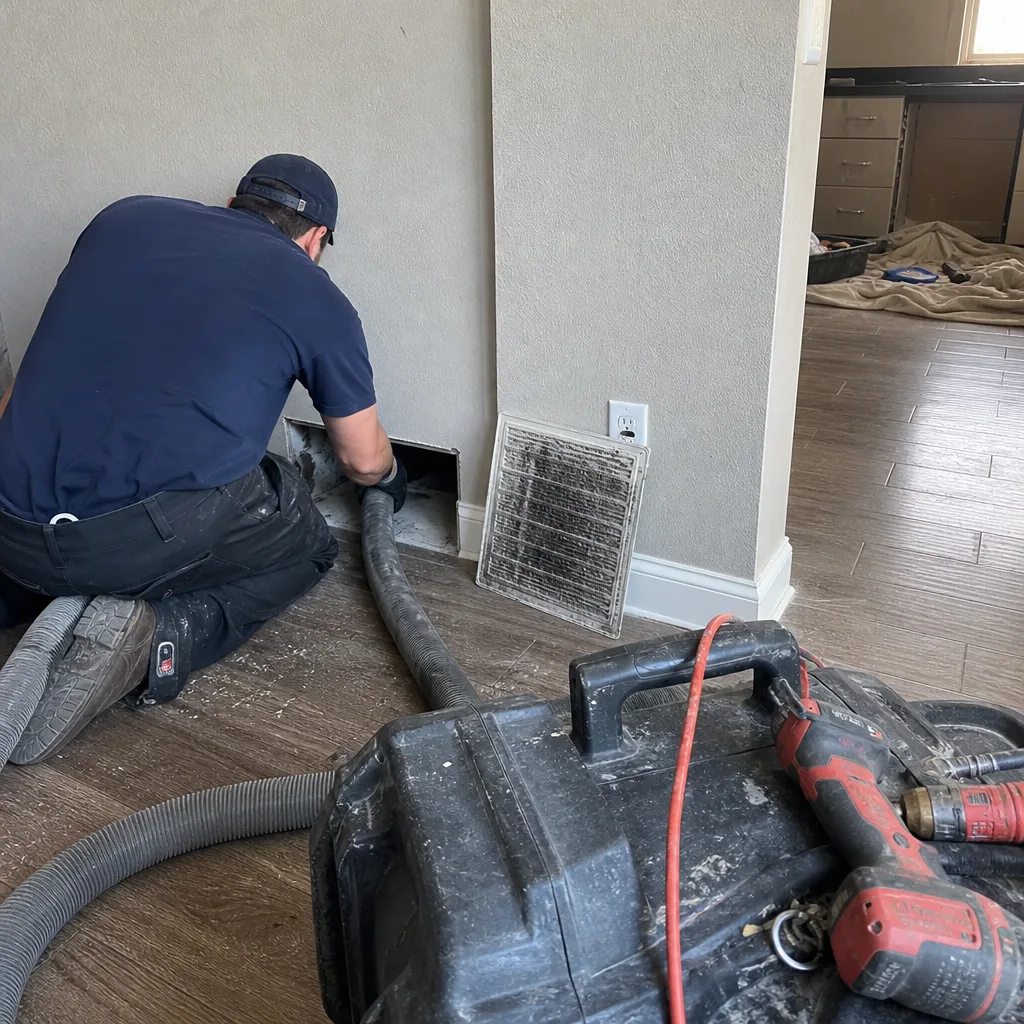 Before
 After
After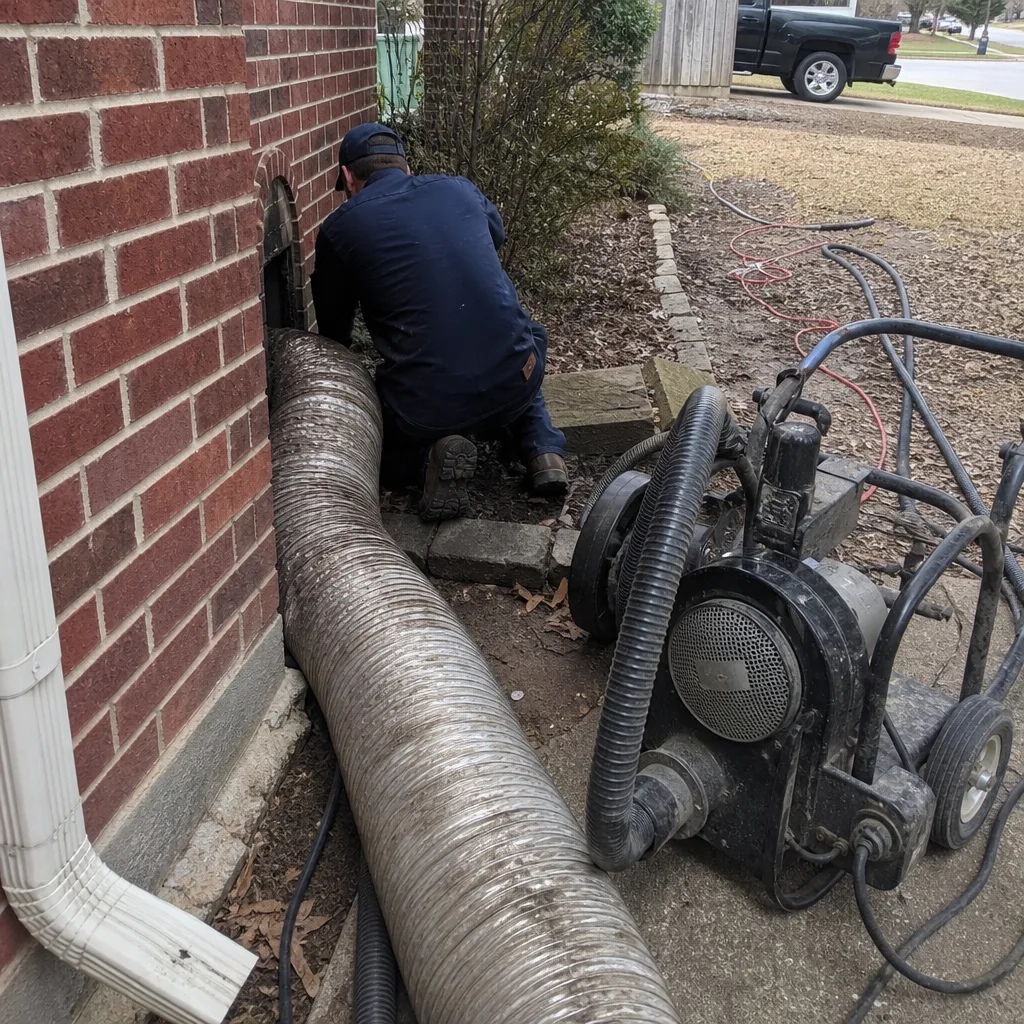 Before
 After
After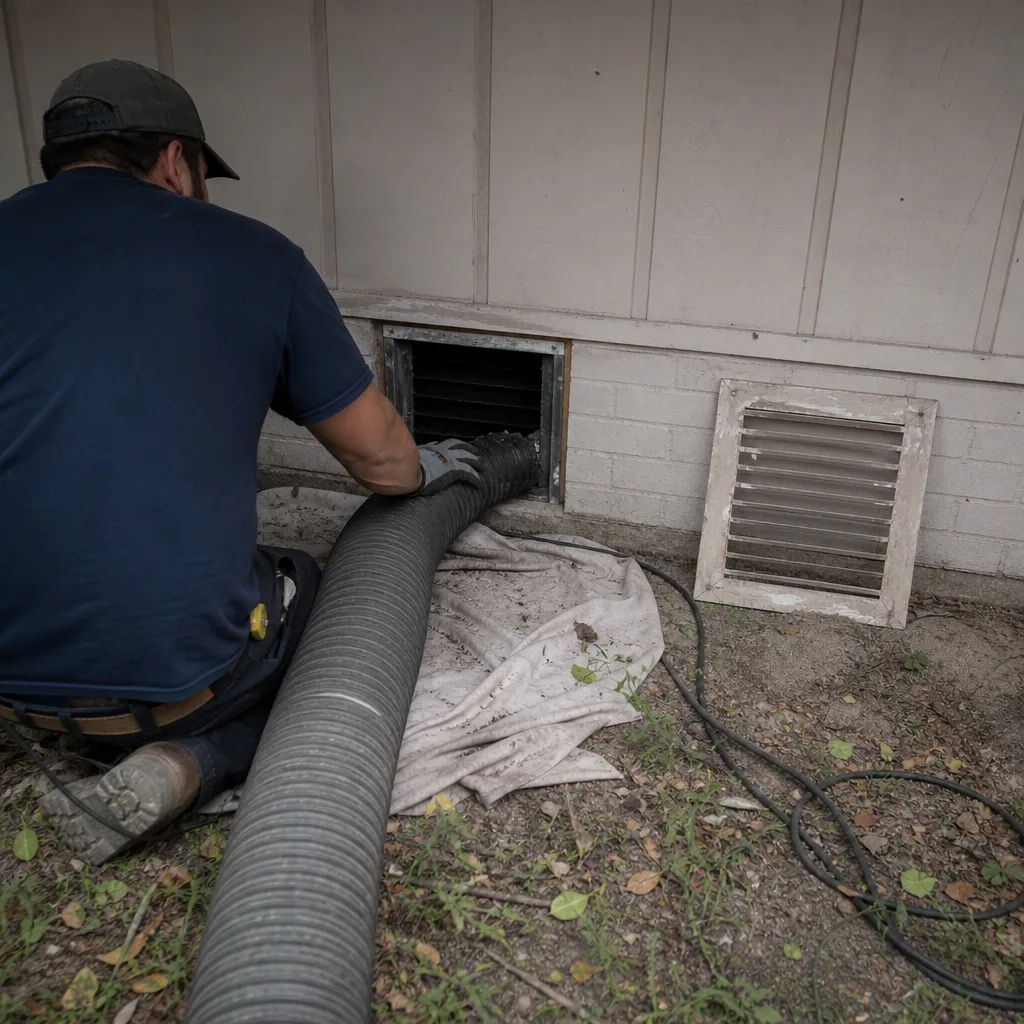 Before
 After
After