
Last updated October 15, 2026
 Whole-home duct cleaning
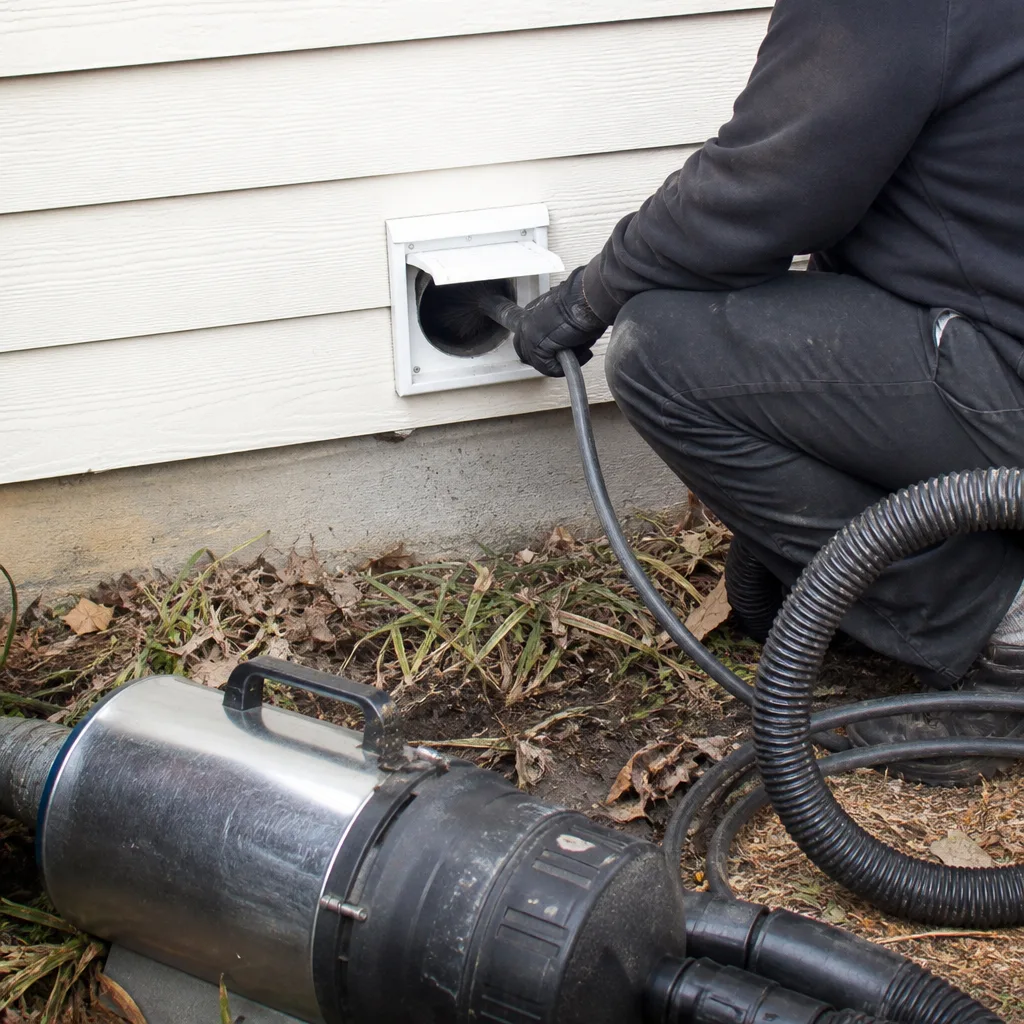
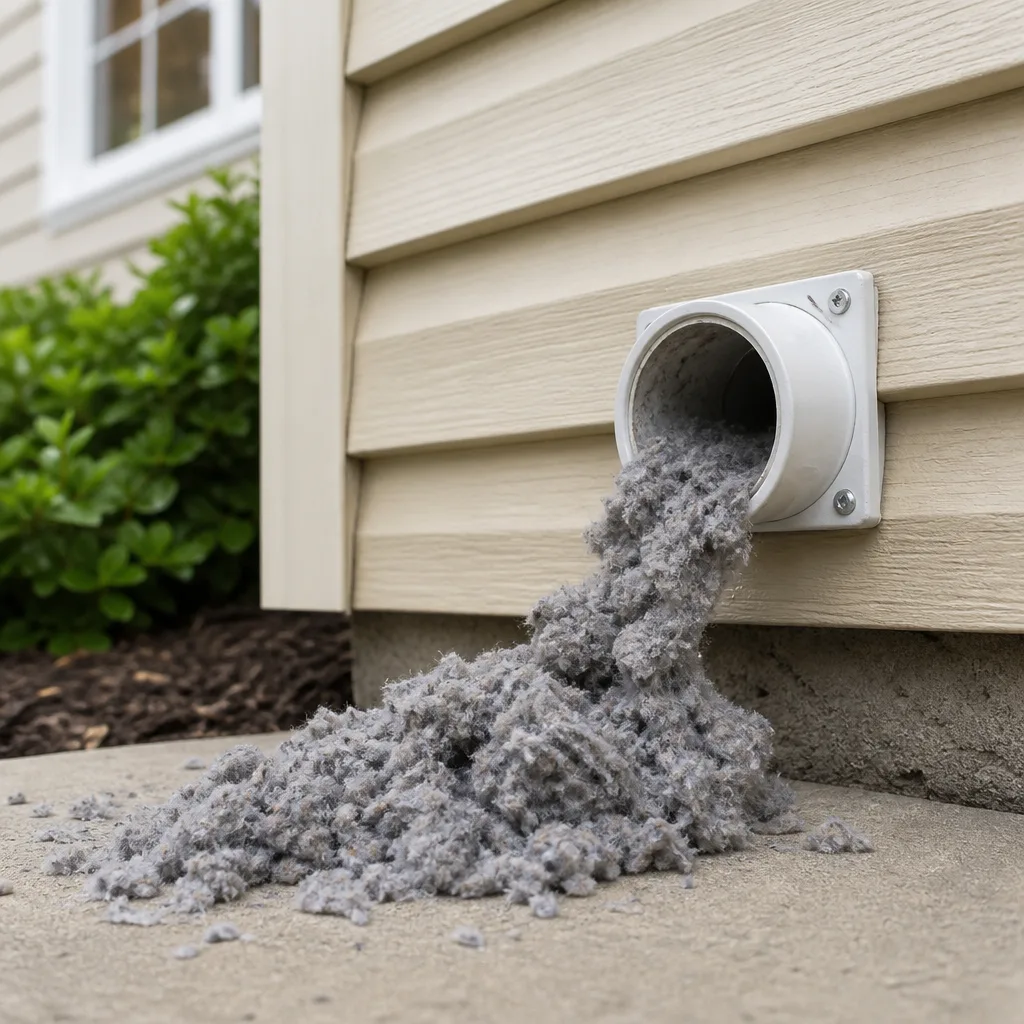 Dryer vent cleaning
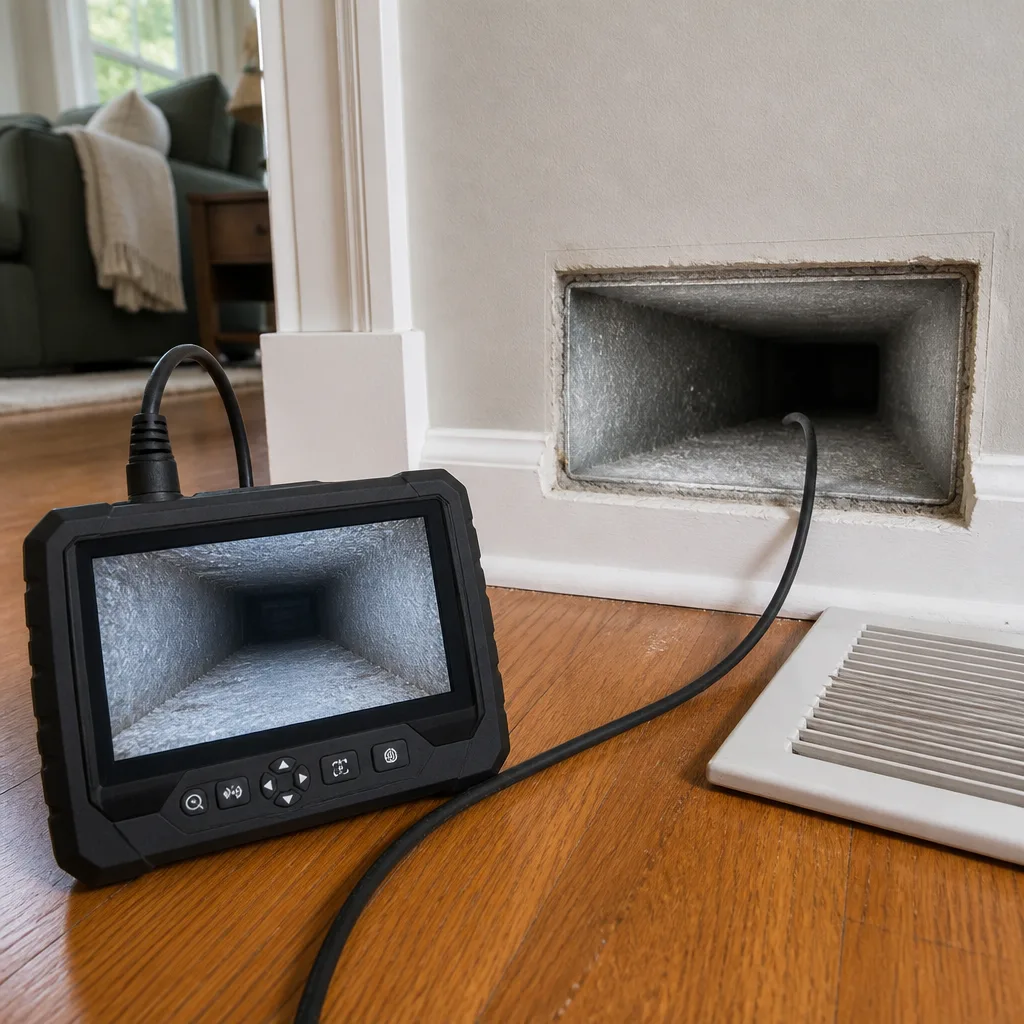 Camera inspection
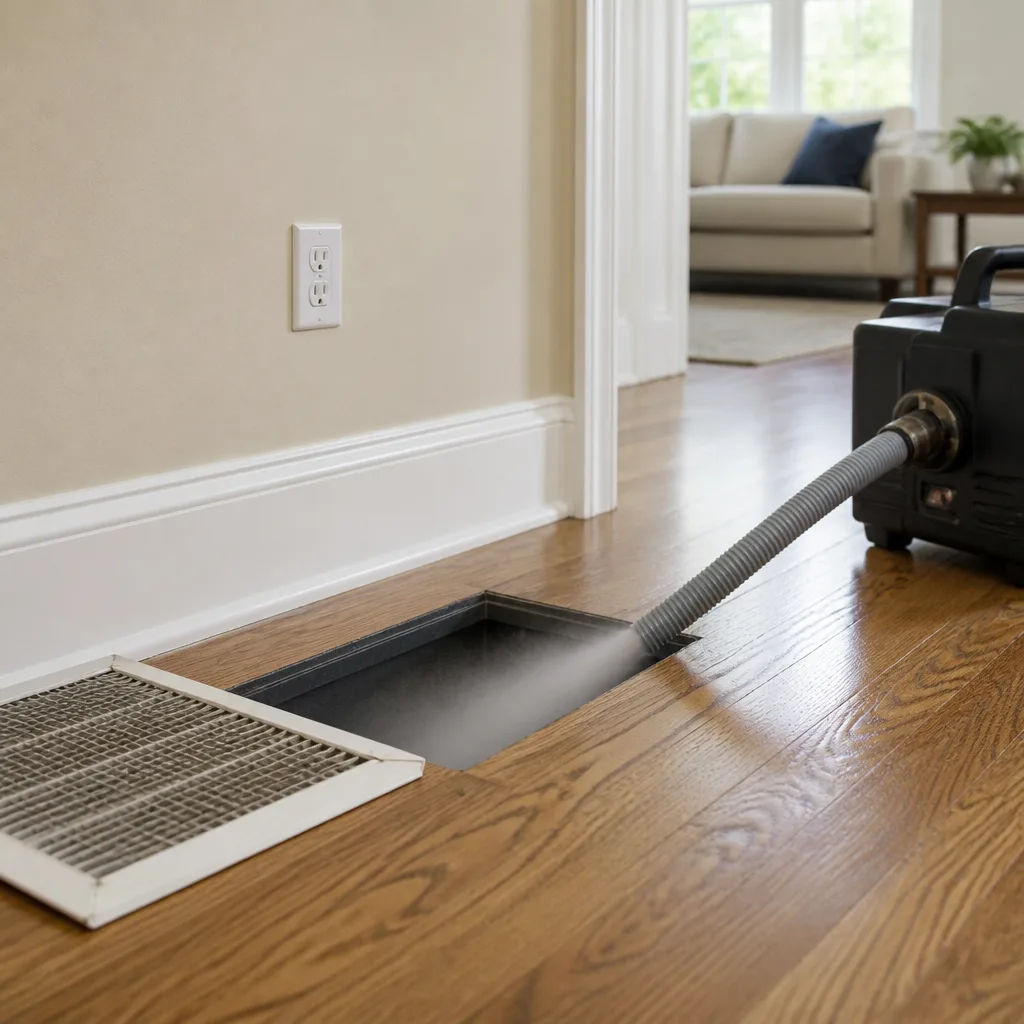 Sanitizing & deodorizing
Whole-system duct and dryer vent check with before-and-after photos - you see exactly what came out of your vents
That "$99 whole-house special" is a bait ad - the real number appears once they are in your hallway, or the "clean" is a shop-vac at the register. We photograph the inside of your ducts before and after instead.
Air Duct Cleaning Permits, Codes & Inspections in TX: What You Need to Know
Here’s something most Dallas homeowners don’t realize until it’s too late: the duct cleaning itself rarely needs a permit, but the moment a technician cuts into a duct, replaces a section, or adds an access panel, you’ve crossed into regulated territory. In some Dallas-area cities, that work requires a mechanical permit filed with the city. In others, it doesn’t. The difference can affect your homeowner’s insurance claim after a water leak and your resale inspection when you sell. This guide walks through what’s actually required in Texas, how Dallas and its suburbs differ, and what to ask before anyone touches your ductwork. For more detail, see our Complete Guide to Air Duct Cleaning in Dallas.
Styles & brands we work with
Quick Answer
Air duct cleaning in Texas typically requires no permit because it’s classified as maintenance, not modification. However, if the job involves replacing duct sections, adding access panels, cutting into the plenum, or remediating mold inside the system, a mechanical permit is often required under the Texas State Mechanical Code and local amendments in Dallas, Plano, Frisco, Irving, and Garland. Always ask your contractor whether the job will involve modification beyond cleaning, and verify any permit was actually pulled before paying the final invoice.
Table of Contents
- Cleaning vs. Modification: Where the Permit Line Actually Falls
- What the Texas State Mechanical Code Says About Duct Work
- How Dallas-area Cities Differ: Dallas, Plano, Frisco, Irving, Garland
- When Mold Remediation Intersects with Duct Work
- How to Verify a Permit Was Pulled (and Why It Matters)
- The Insurance and Resale Risk of Unpermitted Duct Work
- What to Ask Before Any Duct Work Begins
- Common Mistakes to Avoid
- When to Call a Professional
- Frequently Asked Questions
- The Bottom Line
Cleaning vs. Modification: Where the Permit Line Actually Falls
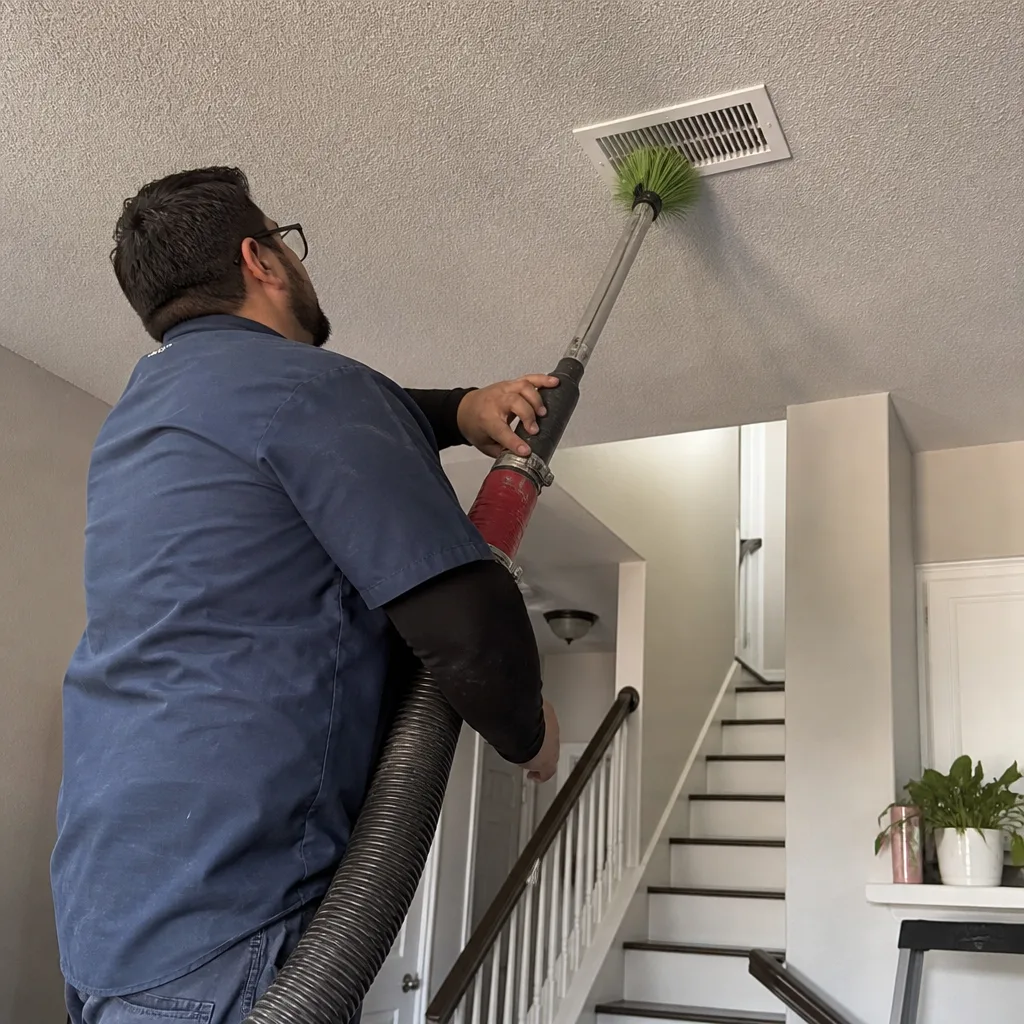
Most duct cleaning jobs in Dallas involve running a rotary brush system or negative-air machine through existing ductwork to remove dust, debris, and allergen buildup. That’s maintenance. Under Texas code and every major Dallas-area municipal code, maintenance work on existing equipment does not trigger a permit requirement. You can have your ducts cleaned every year for thirty years and never once need to visit City Hall.
The line gets crossed when the work changes the physical system. Here’s what we mean:
- Adding an access panel: If a technician cuts a new opening in the duct to reach a section the brush can’t get to, that’s a modification. Some Dallas-area inspectors consider this “alteration of a mechanical system” and want a permit.
- Replacing a duct section: If rust, water damage, or animal intrusion means a 6-foot section of flex duct needs to come out and a new section go in, you’re now in repair and replacement territory. Most Dallas suburbs require a mechanical permit for this.
- Cutting into the plenum: The plenum is the main distribution box connected to your air handler. Any modification here affects the whole system. Permit territory, full stop.
- Sealing with mastic or Aeroseal-type systems: Duct sealing is generally viewed as maintenance, not modification, because it doesn’t change the physical layout. But confirm this with your specific city, because Garland’s interpretation has differed from Plano’s in our experience.
In Dallas proper, the city’s building inspection division uses the 2018 International Mechanical Code with local amendments. The key phrase in the code is “alteration.” Cleaning doesn’t alter. Cutting, replacing, and adding do. If you’re on the fence about whether your job needs a permit, the safest question to ask is: “Are you changing the duct system or cleaning the duct system?” If the answer includes cutting or replacing, ask about permits.
What the Texas State Mechanical Code Says About Duct Work
Texas doesn’t have a single statewide licensing body for mechanical contractors the way it does for plumbers, but it does have a state mechanical code that municipalities can adopt, amend, or – in the case of unincorporated areas – largely ignore. Most incorporated cities in the Dallas metroplex have adopted some version of the International Mechanical Code (IMC) with local amendments layered on top.
Here’s what the state-level framework says that matters for duct work:
- Cleaning is maintenance. The IMC’s permit section exempts “ordinary repairs” and “maintenance” from the permit requirement. Cleaning existing ducts falls squarely in that bucket.
- Replacement is not exempt. Removing and replacing duct material, even if the new section is the same size and in the same location, is classified as alteration. The code’s definition of alteration includes “a resizing, relocating, or reconfiguration” – and most Dallas-area inspectors read “replacement” as reconfiguration.
- Access requires a permit. The Texas State Mechanical Code’s administrative chapter requires a permit for any cut into a mechanical system that creates a new opening. Adding an access panel for cleaning or inspection falls here.
- Sealing is borderline. The code doesn’t explicitly list duct sealing as permit-required work, but it does require that any sealing material meet fire and smoke standards. If you’re sealing ducts, the contractor should be using UL-listed mastic or tape – not hardware-store duct tape, which fails code inspections and breaks down inside of five years in Texas attic heat.
The practical takeaway for a Dallas homeowner: the state gives cities room to decide. Your city – not the state – is the authority that matters when a permit question comes up. And Dallas-area cities have made different choices.
How Dallas-area Cities Differ: Dallas, Plano, Frisco, Irving, Garland
This is where the rubber meets the road. If you live in one city and hire a contractor who does business in another, the permit rules that apply are yours – the city where the house sits. Here’s how the five biggest Dallas-area jurisdictions handle duct modification work.
Dallas
The City of Dallas requires a mechanical permit for any duct replacement, plenum modification, or new access panel installation through its Development Services Department. Permits are issued same-day for simple jobs in most cases, and the inspection is typically a quick visual check that the work matches the permit description. Dallas also requires that the person doing the work hold a valid state registration for mechanical work. Homeowners doing their own work in a single-family home follow a different, less strict path, but a contractor working on your home must be registered.
Plano
Plano has historically been more aggressive on enforcement than Dallas. The city’s building division requires a mechanical permit for duct replacement and will flag unpermitted work during resale inspections. Plano inspectors also pay particular attention to fire-damper clearance and smoke-detector interconnection when they’re in the attic for a mechanical inspection. If your Plano home gets a new duct section without a permit and the city finds out during a resale inspection, the buyer’s lender may hold up closing until the work is permitted retroactively – which costs more than the original permit would have.
Frisco
Frisco takes a middle path on paper but a strict path in practice. The city’s code requires permits for duct replacement and modification, but the bigger gotcha in Frisco is HOA involvement. Many Frisco HOAs – especially in newer developments like Phillips Creek Ranch, The Trails, and Richwoods – have architectural review committees that technically require notice for any mechanical modification visible from the exterior or requiring attic access through shared walls. It’s uncommon for an HOA to block a duct repair, but it’s also not unheard of for a neighbor complaint to trigger a review.
Irving
Irving’s mechanical permit threshold is similar to Plano’s. Duct replacement requires a permit, and Irving inspectors are known for checking that the replacement material matches the original spec – so if your home had R-6 flex duct and the contractor puts in R-4 to save money, the inspection fails. This is a real problem we’ve seen in Irving homes built in the 1980s and 1990s, where original duct insulation levels were higher than what some budget contractors quote today.
Garland
Garland’s published code is less explicit about duct modification than Plano’s or Irving’s, but the city’s inspection staff treats duct sealing differently than the others. Where Dallas and Plano have generally accepted duct sealing as maintenance, Garland inspectors have in some cases wanted a mechanical permit for whole-system sealing jobs that change airflow characteristics. If you’re in Garland and you’re getting more than a simple repair, call the city’s building inspection line and ask early, before the work starts. It’s a five-minute call that can save you a late-permit fee later.
When Mold Remediation Intersects with Duct Work
Mold changes the rulebook entirely. Once mold is found inside your duct system in Texas, the work stops being “cleaning” in any city’s definition and starts being “remediation” – a regulated activity under the Texas Department of State Health Services (DSHS) mold rules.
Here’s what that means practically for a Dallas homeowner:
- DSHS licensing kicks in. Texas requires mold assessment and mold remediation companies to be licensed by DSHS when the affected area exceeds 25 contiguous square feet. Below that threshold, a licensed company isn’t strictly required, but a contractor with mold-specific training is still the only sensible choice.
- The mitigation scope drives the permit question. If mold remediation requires cutting out and replacing a duct section – which it almost always does – the mechanical permit question returns. You now have two regulatory layers: DSHS for the mold work and your city’s building department for the duct replacement.
- Proof of licensing matters for insurance. If you file a homeowner’s insurance claim for mold damage and the remediation was done by an unlicensed contractor, the carrier has grounds to reduce or deny the claim. This is a real, documented pattern in Texas claims adjusters’ playbooks, and we’ve seen Dallas homeowners caught flat-footed by it.
- Post-remediation verification exists for a reason. A legitimate mold remediation job ends with a clearance test – an air sample that demonstrates spore counts returned to normal. Without it, you have no proof the problem is actually solved, and you’ll be asked for that paperwork when you sell.
If the word “mold” comes up in any context during a duct inspection in your Dallas home, stop and ask about licensing, clearance testing, and permit requirements before any work proceeds. Rushing that decision is how homeowners end up with five-figure remediation bills that their insurance won’t touch. Learn the warning signs in our Air Duct Cleaning Warning Signs: A Dallas Homeowner’s Reference Guide.
How to Verify a Permit Was Pulled (and Why It Matters)
You’d be surprised how often a contractor says “yeah, we pulled the permit” and didn’t. In Dallas and the suburbs, permit records are public, searchable online, and free to check. It takes less than ten minutes, and it’s the only way to confirm the work was actually filed with the city.
Here’s how to check:
- Go to your city’s permitting portal. Dallas uses the Development Services Department’s online search. Plano, Frisco, Irving, and Garland each have their own portals, all searchable by address.
- Search by your home address. Not by the contractor’s name, because contractors file under your address. If nothing comes up and the contractor told you they pulled a permit, ask for the permit number.
- Match the permit description to the work. The permit should say “mechanical” and describe the duct replacement or modification, not just “remodel” or “repair.” A vague permit is the most common way unpermitted work hides in plain sight.
- Confirm the final inspection was completed. A pulled permit is not the same as a closed permit. If the inspection never happened, the city considers the permit open – and open permits are exactly what title companies flag during a sale.
Why this matters beyond compliance: a closed permit is your proof that a city inspector looked at the work and signed off. It’s evidence. When you sell your Dallas-area home, the buyer’s title company will search your property’s permit history. Open permits, missing permits, and permits that don’t match the work all become items on the seller’s disclosure checklist. Fixing them retroactively costs more than doing it right the first time.
The Insurance and Resale Risk of Unpermitted Duct Work
This is the part nobody mentions at the time of booking. A duct cleaning is $400 to $700 on average in Dallas. The moment it becomes a duct replacement or modification without a permit, the downstream risk isn’t the city’s fine – it’s what happens when something goes wrong later.
Insurance implications
If your Dallas home has a water leak that damages a section of ductwork, and that ductwork was replaced two years earlier without a permit, your insurance company’s adjuster can deny the new claim on the grounds that the prior unpermitted work contributed to or caused the loss. Texas insurance policies typically exclude coverage for damage resulting from faulty workmanship, and unpermitted work is treated as evidence of faulty workmanship even if the actual craftsmanship was fine.
We’ve seen this pattern most often in older Dallas neighborhoods – East Dallas, Lakewood, and Casa View – where duct systems from the 1970s and 1980s start failing under Texas summer heat and homeowners patch sections without involving the city. A $200 unpermitted patch can become a $3,000 denied claim five years later.
Resale implications
Title companies in Texas pull permit histories as a standard part of the closing process. If the house you’re selling shows no permit for duct replacement that clearly happened – a sharp-eyed home inspector will spot new-looking flex duct in the attic – the buyer’s lender can require retroactive permitting before closing. Retroactive permits cost more than original permits, and the city will typically require an inspection of work that’s now buried under insulation. In some cases, the city can require the work be torn out and redone if the inspector can’t verify what’s underneath.
The discipline that protects you here is simple: if the job goes beyond cleaning, require a permit in writing before work starts. If the contractor balks, that’s information – and it’s information you want before the van pulls into your driveway, not after.
What to Ask Before Any Duct Work Begins
You don’t need to become a mechanical code expert to protect yourself. You need to ask five questions, get answers in writing, and walk away from any contractor who won’t answer them plainly.
- “Does this job involve any cutting, replacement, or modification to the duct system – or is it cleaning only?” If the answer is cleaning only, no permit concern. If the answer includes replacement, proceed to question two.
- “Will you pull the mechanical permit in my city, and what’s the permit number?” A contractor who regularly works in Dallas, Plano, Frisco, Irving, and Garland should know each city’s permit process without blinking. Vague answers are a red flag.
- “What material will you use for any replacement duct, and does it match the original insulation value?” R-value matters for both code compliance and your summer electric bill. Replacing R-6 duct with R-4 saves the contractor money and costs you efficiency.
- “If mold is involved, are you DSHS-licensed for remediation, or will you bring in a licensed remediation company?” If the answer is “mold is no big deal, we’ll just spray it,” get a second opinion.
- “Will I receive a copy of the final inspection report after the city signs off?” This is your permanent proof. File it with your home records and produce it when you sell.
At Hollis Air Duct Dallas, we answer these questions in writing before we start. Learn about our Air Duct Cleaning services and how we handle permits. That’s The Garrison Standard in practice: the price is written down before any work starts, and the scope – cleaning vs. modification – is spelled out in the same sentence as the cost. If a job crosses into permit territory, we file the permit, schedule the inspection, and hand you the closed permit at the end. No verbal assurances, no moving targets.
Common Mistakes to Avoid
- Assuming all duct work is exempt from permits. Cleaning is exempt. Replacement and modification are not in most Dallas-area cities. The assumption is the most expensive one to make.
- Taking the contractor’s word without checking the permit portal. Every Dallas-area city has an online search. Ten minutes verifies whether the permit actually exists.
- Trusting that “sealing” never needs a permit. In Garland especially, whole-system sealing has drawn inspection attention. Confirm with your city before the job starts.
- Treating mold as a cleaning problem. Once mold is present, Texas DSHS rules apply. An unlicensed spray-and-pray approach voids insurance coverage and complicates resale.
- Letting R-value slide on replacement duct. A contractor who installs R-4 where R-6 existed is technically not matching the original spec, and Irving inspectors will fail it. Even where no inspection happens, your cooling bills will notice.
- Not keeping the closed permit. The permit is your evidence. Losing it makes your resale disclosure harder and your insurance conversations more adversarial.
- Hiring by price alone for a job that crosses the permit line. The contractor who underbids everyone else is usually underbidding because they skipped the permit, the registration, or both. In Dallas, that savings evaporates the first time something goes wrong.
When to Call a Professional
If your duct cleaning uncovers rusted out sections, water damage from a roof leak, animal intrusion, or mold growth, you are no longer looking at a cleaning job. You’re looking at modification or remediation, and that work needs a contractor who knows the permit requirements in your specific Dallas-area city. The same is true if you’ve been quoted a “duct cleaning” that includes cutting access panels or replacing flex duct as part of the scope – that is not a cleaning, and it should not be priced or permitted like one. Hollis Air Duct Dallas offers free estimates across the metroplex, and every estimate includes written confirmation of whether the scope is cleaning-only or requires a mechanical permit in your city. Call (361) 309-6223 to get a straight answer before you get a sales pitch.
Frequently Asked Questions
No. Air duct cleaning that uses rotary brush or negative-air equipment on existing ductwork without cutting, removing, or replacing any section is classified as maintenance and requires no permit anywhere in Texas. If the cleaning uncovers damage that requires replacement, that replacement may require a mechanical permit depending on your city.
In Dallas, whole-home air duct cleaning typically ranges from $350 to $700 depending on the number of vents, the size of the system, and the level of buildup. Homes with multiple HVAC units, second-story or attic-run ductwork, or years of accumulated dust and pet dander will land at the higher end. For an exact written quote, call (361) 309-6223 – the price is written down before any work starts.
Yes. Plano requires a mechanical permit for duct replacement, and Plano inspectors verify that replacement material matches the original specification. Unpermitted duct replacement in Plano gets flagged during resale inspections and can delay closing until the work is retroactively permitted.
The title company’s permit search during closing will likely surface the discrepancy. An open or missing permit for visible duct replacement becomes a seller’s disclosure item, and the buyer’s lender can require retroactive permitting before releasing funds. Retroactive permits cost more than original permits and can require the city to inspect work that is already buried under attic insulation.
Coverage depends on the cause of the mold. If the mold resulted from a covered peril – like a sudden roof leak – you may have coverage. If the mold is from long-term humidity or neglected maintenance, most Texas policies exclude it. And if the mold remediation was done by a contractor without the DSHS license required for affected areas over 25 square feet, the carrier has grounds to deny the claim regardless of cause. Always verify licensing before mold work starts.
Visit your city’s online permit portal – Dallas Development Services, Plano Building Inspections, Frisco Permits, Irving Building Department, or Garland Building Inspections – and search by your home address. The permit should describe the specific mechanical work, not just “repair” or “remodel.” If the contractor said they pulled a permit and nothing appears, ask for the permit number before paying the final invoice. Call (361) 309-6223 if you want a straight answer about what your specific job should require.
The Bottom Line
Duct cleaning in Texas is maintenance – no permit required. Duct replacement, access panel installation, and plenum modification are a different category of work, and whether it triggers a permit depends on which Dallas-area city your home is in. Dallas, Plano, Frisco, Irving, and Garland all publish their requirements publicly, and all five are different enough that you cannot rely on one city’s rules in another. The discipline that protects you is simple: ask whether the scope includes modification, require a permit in writing if it does, verify the permit online, and keep the closed permit for your records. Do that, and the next time you revisit your ductwork – for air duct cleaning in Dallas, dryer vent cleaning, or duct sealing – the permit question is already answered.
Written by Roy Castellanos, Owner at Hollis Air Duct Dallas, serving Dallas since 2004. For more guides & resources, visit our blog.
See the difference
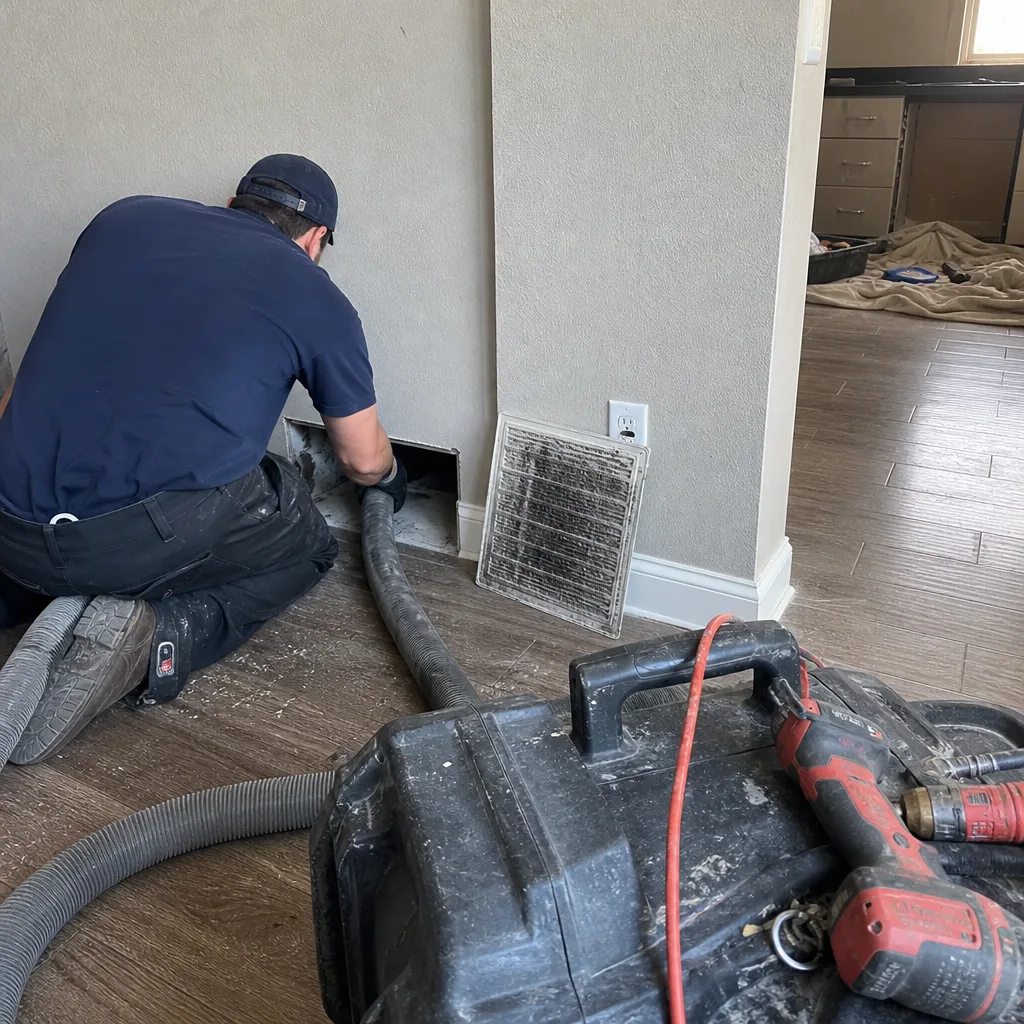 Before
 After
After Before
 After
After Before
 After
After